

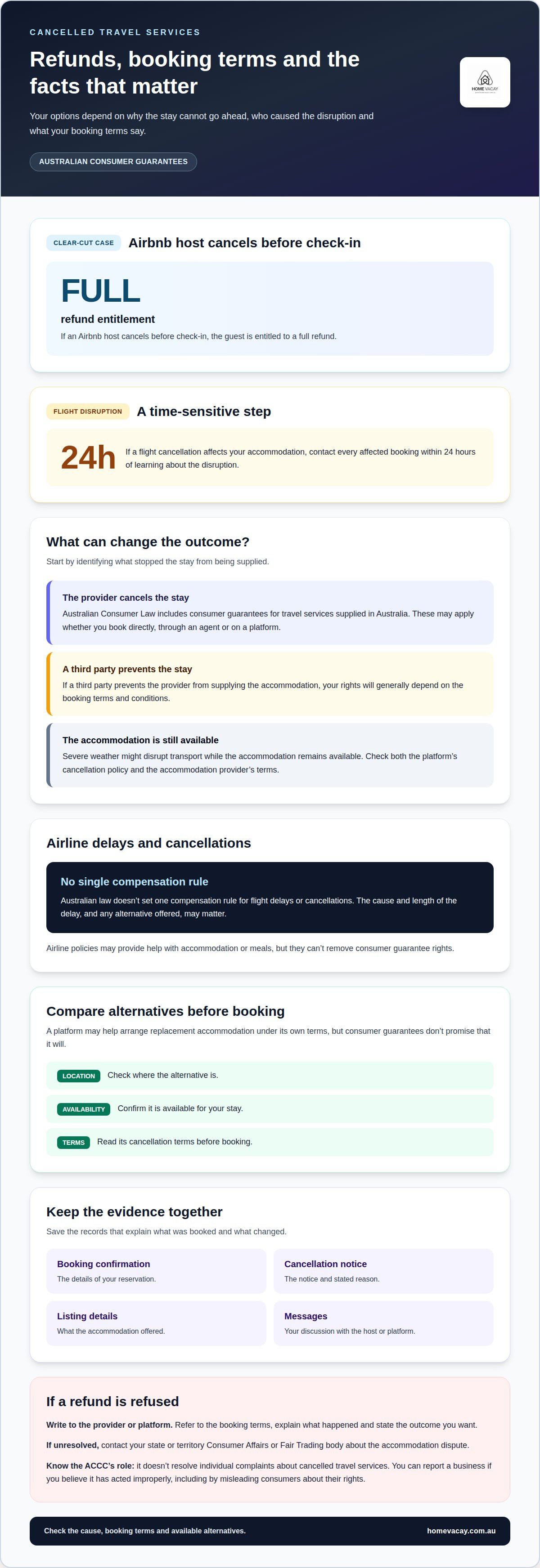
If you’re working out what to do if your short stay is cancelled, contact the host promptly, ask why and request a refund or suitable alternative. If an Airbnb host cancels before check-in, you’re entitled to a full refund. Also review the booking platform’s cancellation terms.
A cancelled stay can disrupt your trip, especially if bad weather has already affected travel. Your next steps depend on who cancelled, why the accommodation can’t be provided and the terms of your booking. Australian consumer guarantees may apply to travel bookings, while third-party disruptions can make the booking terms particularly important.
This article explains how to communicate with a host, what to document and how refund or replacement options may work. It also covers weather-related cancellations, what to consider if severe conditions make a stay impossible, and how travel insurance may apply. Gather the relevant details, then focus on finding a practical alternative and understanding your options.
Key Takeaways
- Contact the host promptly to ask why the booking was cancelled and whether they can offer an alternative.
- Refund or replacement options can depend on the booking terms, especially when a third party prevents the stay from going ahead.
- Save cancellation messages and booking records so you have the details to refer to when discussing next steps.
- If bad weather disrupts your plans, review the host’s and platform’s cancellation policies and check whether your travel insurance covers the cause.
Australian consumer guarantees for cancelled travel services
Australian Consumer Law may protect guests when travel services are cancelled, but the outcome depends on why the service can’t proceed. Booking terms also matter, particularly when a third party causes the disruption.
Australian Consumer Law and cancellations
Australian Consumer Law (ACL) includes consumer guarantees for travel services supplied in Australia. These rights may apply whether you book directly, through an agent or on a platform. They’re relevant when a host cancels at short notice: if an Airbnb host cancels before check-in, the guest is entitled to a full refund.
For flights, airlines must provide services within a reasonable time, but Australian law doesn’t set a single compensation rule for delays or cancellations. The cause and length of the delay, and any alternative offered, may matter. Airline policies may provide help with accommodation or meals, but they can’t remove consumer guarantee rights.
When refunds may not be available
A refund or replacement may not be required if you change your mind or miss a booking for a reason unrelated to the service. If a third party prevents the provider from supplying the stay, your rights will generally depend on the booking terms and conditions.
For example, severe weather might disrupt transport while the accommodation remains available. In that case, the provider may still be able to supply the booked service. Read the cancellation terms for both the platform and the accommodation provider. A platform’s policy doesn’t replace the primary provider’s terms.
Cancellation policies and replacement accommodation
Cancellation policies explain what happens to your booking and any refund or replacement options. To find accommodation quickly, search nearby alternatives while the platform handles your request. Compare each option’s location, availability and cancellation terms before booking.
A platform may help arrange a replacement under its own terms, but consumer guarantees don’t promise that it will. Whether travel insurance covers a host or platform cancellation depends on the policy wording, exclusions and limits. Ask your insurer whether the specific cause is covered.
Disputing fees and making complaints
To dispute a cancellation fee or a refused refund, write to the provider or platform. Refer to the booking terms, explain what happened and state the outcome you want. Keep the cancellation notice, booking confirmation and messages together as evidence.
If the issue remains unresolved, contact your state or territory’s Consumer Affairs or Fair Trading body about the accommodation dispute. The ACCC doesn’t resolve individual complaints about cancelled travel services. You can report a business to the ACCC if you believe it has acted improperly, including by misleading consumers about their rights.
Common reasons hosts cancel short stays
A calendar error can result in two guests being booked for the same dates. This may happen when reservations come through separate channels and availability isn’t updated. A double booking is different from a host deciding not to honour a confirmed stay. Ask which dates or property details led to the cancellation, and keep the reply with your booking records.
Damage or urgent maintenance can make accommodation temporarily unusable. A leaking pipe, failed essential appliance or unsafe access may prevent the host from preparing the property. Bad weather can also affect roads, utilities or the building itself. Ask whether the issue affects the accommodation, your journey there or both. This helps clarify what has actually been cancelled.
A host’s personal circumstances can change too. Illness or a family emergency may mean they can’t provide the agreed stay. The situation may be genuine, but the explanation alone doesn’t determine what happens to your booking. Read the cancellation terms and ask whether the host or platform has offered another property or a refund.
Some cancellations result from a third party’s decision. For example, a building operator may restrict access during repairs, or a local authority may close an area because of hazardous conditions. The host may then be unable to provide the service, even if the accommodation itself is intact. Australian Consumer Law and the booking terms may be relevant, so establish who made the decision and when.
Look for a clear reason in the cancellation notice. If it says “unavailable” without explaining why, ask for the circumstances in writing. Keep screenshots of the listing, booking confirmation and messages. These details help you compare the host’s explanation with the advertised stay and assess any alternative offered. The reason matters, but it doesn’t by itself settle your rights or next steps.
Communicating with the host
Contact the host as soon as you receive a cancellation notice. A clear written exchange can establish the reason, available alternatives and next steps.
Contacting the host
Write through the booking platform where possible, so your message stays with the reservation. Ask why the original booking was cancelled, whether another stay is offered, and how the host will handle a refund. If a flight cancellation affects your accommodation, contact every affected booking within 24 hours of learning about the flight disruption.
Keep your message calm and specific. For example: “Please explain why my booking was cancelled and confirm whether you can offer equivalent accommodation or a refund.” If the host proposes different dates or a different property, compare its location and key terms with your original booking. If the reply doesn’t address your request, ask the platform to clarify its policies and terms. Compensation isn’t automatic, so make a refund request separately from any request for extra costs.
Keeping cancellation evidence
Keep the booking confirmation, cancellation notice, listing details and messages with the host or platform. These records help answer, “What evidence should I keep when accommodation is cancelled?” Save screenshots showing the original dates, property description, cancellation reason and any alternative offered. Retain receipts for replacement accommodation or other expenses if you later make an insurance claim.
Organise records by booking, especially if a cancelled flight affects several reservations. Note when you received each notice and contacted each host. A written timeline shows how promptly you acted and what response followed. Keep copies of the policy wording and cancellation terms that applied when you booked, rather than relying on a later version. If the host refuses a refund, these details help explain why you believe you’re entitled to one. They also give the platform or insurer a clear account of the outcome you’re seeking.
Bad weather and short-stay cancellations
Bad weather can disrupt a short stay in different ways. Flooding may close the road to a booked property, while a storm could damage the accommodation itself. Establish whether the host cancelled the stay, access to the destination is blocked, or your own travel plans changed. Each situation can affect your options differently.
Review both the booking platform’s cancellation policy and the host’s policy. Look for terms covering severe weather, closures, travel disruption and alternative accommodation. A forecast may be treated differently from an event that makes the booked stay impossible. For example, a road closure may prevent access even when the property remains usable.
Focus on whether the weather makes the agreed stay impossible or simply changes your travel plans. If a storm closes the property, ask the host what arrangements apply under your booking terms. If flights are disrupted but the accommodation remains available, the cancellation policy may treat that differently.
Read your travel insurance policy and ask your insurer whether it covers the specific cause. A host cancellation, transport interruption and personal decision not to travel may be treated differently under the policy. Keep the cancellation notice, closure information, booking confirmation and insurer correspondence together for any claim.
Research other accommodation as a backup if your reservation is cancelled. Compare access, location and cancellation terms before booking. If the host offers another property, consider whether it’s reachable and suitable for your trip. A different destination may not help if local roads or services remain disrupted.
Keep your questions focused on what the weather changed. Ask whether the property is unavailable, access is unsafe or local restrictions prevent the stay. This helps distinguish a cancelled accommodation service from a journey that can’t proceed as expected. Use the answer to decide whether to request a refund, consider an alternative stay or contact your insurer.
Home Vacay: Capitol Apartments in Canberra City
Home Vacay offers short-term apartment stays for business and leisure travellers across various destinations. If a cancelled booking has disrupted your Australian travel plans, Capitol Apartments in Canberra City may be an option to consider alongside alternative regions. Families can also explore Peaceful Coombs Apartment for Families, while Luxury Apartment in Braddon Precinct offers another short-stay choice.
Compare each apartment’s details with your travel plans before choosing. Consider who is travelling and what you need from your stay. These options can give you another place to consider while you reorganise your arrangements.
Contact Home Vacay to discuss an apartment stay that suits your plans.
Plan your next stay with more confidence
Knowing what to do if your short stay is cancelled can shape how you plan your next trip. Before booking, consider whether your dates could shift, whether your journey depends on weather-sensitive roads or flights, and which cancellation terms suit your plans. Keep the relevant policy details with your itinerary so they’re easy to find if arrangements change.
Plan ahead by choosing a backup destination, considering what might disrupt your journey and understanding what your travel insurance covers. A little preparation can make it easier to adjust your arrangements while keeping sight of the trip you wanted.
If you’re planning a stay in Australia, explore Home Vacay’s apartment options and choose one that suits your plans. Contact Home Vacay to discuss your stay, and take the next step at your own pace.
Frequently Asked Questions
What should I do immediately if my short-stay accommodation booking is cancelled in Australia?
First, confirm whether the notice means your booking is cancelled or requires action from you. If you’re deciding what to do if your short stay is cancelled, keep the booking open on the platform and use its cancellation support channel. Check that any proposed replacement covers your dates and essential needs before accepting. If you’re due to arrive soon, look for another stay while waiting for a clear response.
What are my rights if an Australian hotel or short-stay host cancels my booking?
Your rights depend on the service, the reason for cancellation and the booking terms. Australian Consumer Law consumer guarantees can apply to travel services in Australia. If an Airbnb host cancels before check-in, the guest is entitled to a full refund. If a third party prevents the provider from supplying the stay, the terms and conditions will generally shape refund or replacement options.
How can I get a refund for cancelled accommodation in Australia?
Request a refund in writing through the channel where you booked, and identify the reservation and cancelled dates. State whether you’re seeking money back or considering an offered credit, then ask for the decision and its basis in writing. If the platform or host refuses, use its complaint process and refer to the terms that applied when you booked. The ACCC doesn’t resolve individual cancellation disputes.
What are my options if accommodation is cancelled at short notice during a public holiday or major event?
Look for available stays nearby and check transport links, not just distance from your event. Contact the booking platform about its replacement process while comparing alternatives yourself. Before paying, review the new booking’s dates, location and cancellation terms. If you have to stay farther away, consider whether you can still reach the event and whether your travel insurance covers extra accommodation costs caused by the cancellation.


