

A glowing rating isn’t enough to trust a holiday apartment. The clearest red flags when booking holiday apartments include repeated complaints in recent reviews, vague property details and pressure to pay or book quickly. Look beyond the overall score for patterns in what past guests report.
It’s sensible to want a place that matches its photos, suits your plans and is straightforward to book. A few balanced reviews can reveal more than a stream of praise, especially when they describe the same issue or explain how the host handled a problem. This guide will help you assess the reviews before deciding.
You’ll also learn how to compare the listed price with extra fees, check whether the location suits your stay, and understand payment terms and deadlines before booking. A careful read can make the choice simpler, whether you’re travelling for work or planning a family break.
Key Takeaways
- Compare the total cost, property details and booking conditions, not just the nightly rate.
- Read recent reviews for recurring concerns, and treat requests to pay outside the booking platform with caution.
- Check the neighbourhood’s location against the places you plan to visit and how you’ll get there.
- Note the deposit and final payment deadlines alongside the cancellation terms before you book.
1. Avoiding the cheapest option without checking its condition
A low nightly rate can look appealing, but compare it with the listing details before booking. A thin description, missing property information or a price that seems unusually low can be warning signs. Check the address, extra fees, amenities, restrictions, minimum-stay requirement and cancellation policy. The headline rate may not show the full cost if cleaning or other charges appear later in the booking process.
Photos and descriptions should tell the same story. If a listing describes a separate bedroom, look for a photo of that room, not just a sofa bed in the living area. Check for photos of every bedroom and bathroom, and note any images that don’t match the written description. A reverse image search can help reveal whether photos appear on unrelated websites or listings.
Before booking, compare the advertised essentials with your plans. If you need Wi-Fi for travel or work, check that it’s listed and how guests access it. If breakfast matters, establish whether it’s included or costs extra. Check the stated check-in process, kitchen equipment and laundry facilities instead of assuming they’re provided.
What should I check about cleanliness, safety, security and maintenance before booking? Read reviews for specific comments about cleanliness, working appliances, locks and maintenance, then compare them with the property description. Check whether the listing clearly shows the bathroom, kitchen and entrance. Ask about any visible repair or safety feature that isn’t explained.
What warning signs suggest holiday apartment photos or descriptions are misleading? Look for mismatched room counts, amenities shown in photos but missing from the description, or images that appear on unrelated listings. These inconsistencies are red flags when booking holiday apartments.
What questions should I ask the host before booking? Ask for the exact address, a breakdown of extra fees, and clear details about Wi-Fi, breakfast, check-in and house rules. If a rule prohibits parties, explain your plans plainly so the host can confirm whether they comply.
Review the host profile as well as the apartment. An unusual or incomplete name, a peculiar email address, or a new profile with few reviews may warrant caution. Read the house rules before messaging; questions or plans that conflict with them can signal a poor fit for both host and guests.
2. Can you trust the reviews?
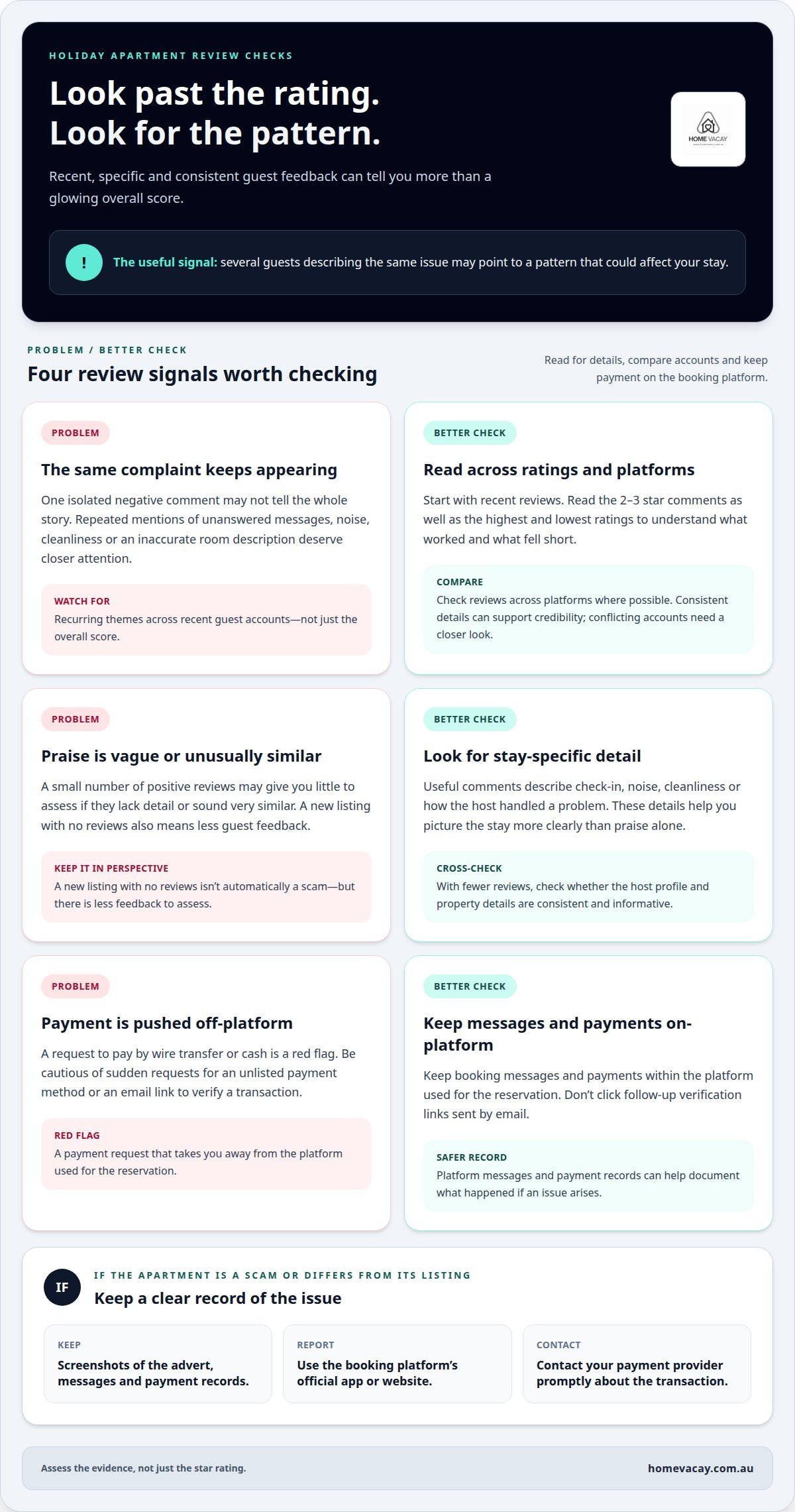
Start with recent reviews, then look for details that help you picture the stay. Comments about check-in, noise, cleanliness or how the host handled a problem are more useful than praise alone. Compare reviews across platforms where possible. Consistent details can support a listing’s credibility, while conflicting accounts deserve closer attention.
Read the two- or three-star reviews as well as the highest and lowest ratings. They may explain what worked and what fell short. Look for repeated themes rather than one isolated complaint. For example, several guests mentioning unanswered messages or an inaccurate room description may point to a pattern that could affect your stay.
A new listing with no reviews isn’t automatically a scam, but it gives you less guest feedback to assess. Check whether the host profile and property details are consistent and whether the listing provides enough information to make a considered choice. Treat a small number of positive reviews cautiously if they lack detail or sound very similar.
Payment requests matter too. A host asking you to pay outside the booking platform, by wire transfer or in cash is a red flag. So is a sudden request to use an unlisted payment method or click an email link to verify a transaction. Keep booking messages and payments within the platform used for the reservation.
If the apartment turns out to be a scam or differs from its listing, save screenshots of the advert, messages and payment records. Report the issue through the booking platform’s official app or website, and contact your payment provider promptly about the transaction. Don’t click follow-up verification links sent by email.
If Canberra suits your plans, you can also compare Canberra apartment stays against the location and review details that matter to you.
3. Assessing the surrounding neighbourhood
Check the apartment’s location against the places you’ll visit, not just its suburb name. Enter the address in a map and compare routes to your main destination, such as a conference venue, beach or family attraction. Check walking routes and public transport options. A short distance on the map could still mean a steep walk, a busy road crossing or a route that doesn’t suit your plans.
Next, check what’s nearby. Search for supermarkets, cafes, public transport stops and places to eat, then consider which matter during your stay. A business traveller may value a direct route to meetings, while a family may prefer easy access to food and activities. Read reviews of nearby venues for context, but don’t treat them as a guarantee of what your stay will be like.
Think about how distance may shape your daily routine. If you’ve booked an apartment away from your main attraction, for example, consider whether you’ll return between outings or spend the day elsewhere. Map the route and check the travel options you’d use at the times you expect to be out. This helps you judge whether the location suits your plans, not just whether it looks close on a screen.
Consider arrival and departure too. If you’ll arrive late, check how you’ll travel from the airport or station and whether nearby food options suit that arrival time. If you’re travelling with children or carrying luggage, assess the walking route rather than relying only on the map’s distance estimate. A location that suits sightseeing may feel less practical with early starts or several trips each day.
Before you book, read the listing and reviews for comments about noise, construction or access. Search the street name alongside terms such as “roadworks” or “nightlife” to identify details that could affect your stay. Then compare those findings with your itinerary. A few minutes spent checking the surroundings can help you choose an apartment that fits how you plan to travel around Australia.
4. Deposit and final payment deadlines
Before you pay, find the deposit amount, payment schedule and final balance deadline in the booking terms. Check whether the deposit is deducted from the total or charged separately. Note the currency, payment method and any stated processing fees. The schedule should make clear what you owe now, what remains due and when each payment must reach the host.
In Australia, cancellation, refund and deposit terms depend on the booking conditions you accept. Read the cancellation window, any refund limits and what happens to your deposit if you cancel or change dates. Save a copy of those terms with your confirmation so you can refer to the exact conditions if your plans change.
Check the final payment date against your travel plans and budget. Add it to your calendar as soon as your reservation is confirmed, and set a reminder before it’s due. If the payment date, amount or deposit treatment is unclear, ask the host through the booking platform and keep the written reply with your records.
Use the payment route shown in your confirmed reservation. A sudden request to pay a different account or through an unrelated link doesn’t match the agreed schedule. Check the payment page and confirmation for the property or booking details. Keep your card receipt and booking messages together instead of relying on a text message alone.
Review the full amount before authorising payment. Compare the booking total with the deposit already paid and the remaining balance. If a new charge appears, check its description against the terms you saved. An unexplained fee that appears after you’ve booked needs clarification before you pay it.
Keep your booking confirmation, payment receipts and cancellation terms somewhere easy to find during travel. If you’re comparing accommodation for a Canberra stay, review apartment stay options alongside the payment conditions that suit your plans.
Home Vacay: Capitol Apartments in Canberra City
Home Vacay offers Capitol Apartments in Canberra City for travellers seeking a short-term stay in the capital. It’s a practical option if the location suits your plans and you’ve checked the listing details and payment conditions that matter to you.
For a family stay, consider Peaceful Coombs Apartment for Families. Luxury Apartment in Braddon Precinct is another option. Compare each property’s location with your itinerary, then review the listing information and booking terms before reserving.
A holiday apartment should fit the way you plan to travel, whether you’re visiting for work or leisure. Home Vacay’s Canberra options give you a place to start comparing your stay. Visit homevacay.com.au to explore the apartments.
Make your next booking with a clear plan
Before you reserve, decide what will make the stay work for you. Your travel purpose, daily routine and comfort priorities can guide your choice. Keep your notes on red flags when booking holiday apartments nearby, and use them to make a considered decision instead of rushing towards the first appealing listing.
A good booking is one that fits the trip you actually want to take. Give yourself time to compare your options and choose a place that feels right for your plans. If you’re considering a Canberra stay, Home Vacay offers options for business and leisure travellers, including family accommodation. The next step can be a simple conversation about finding a suitable stay.
Contact Home Vacay to find your stay, and look forward to planning your time away with confidence.
Frequently Asked Questions
Can you trust the reviews?
Reviews are useful evidence, but they can’t prove every detail of a future stay. Give more weight to accounts that describe a specific experience and explain its context. A complaint about noise during a local event, for example, may matter differently from regular reports of noise. Check whether comments reflect your priorities, such as quiet evenings or reliable work space.
How do holiday rental scams happen?
Holiday rental scams can involve fake listings, misleading property details or messages designed to redirect a guest’s payment. An unexpected change to payment instructions is especially concerning if it arrives after you’ve booked. Return to your original reservation through the platform’s app or website to review the booking, instead of acting on a message that creates urgency.
Should you prepay?
Pay in advance only according to the schedule shown in your booking terms. A payment due at reservation may be part of the agreed booking, while an unplanned request is different. Before authorising a charge, compare its amount and timing with your confirmation. Keep the receipt so you can match it to the booking record later.
What are the most common red flags when booking a holiday apartment?
Warning signs include pressure to decide quickly, unclear booking conditions and details that conflict between the listing and host messages. Consider the overall pattern rather than treating one unusual detail as proof of fraud. If the host’s explanation changes or leaves a key booking condition unresolved, pause and review the reservation before committing further.
How can I check whether a holiday apartment listing and host are genuine?
Check that the host’s messages, profile and listing tell a consistent story. Use the booking platform’s reservation area to confirm the property name, dates and payment status. Compare the advertised address with the map location and look for clear answers to practical questions. Keep key communications in writing for reference.
What fees and charges should I check before booking a holiday apartment in Australia?
Check the booking breakdown for cleaning, linen, parking, extra guests, late arrival and any bond. Charges may appear separately from the nightly rate, so review the final total before confirming. Also note whether a bond is refundable and when it’s due back under the stated terms. Save the breakdown with your reservation details.


