

School holiday accommodation for peak periods is best booked early, often 8–16 weeks ahead. Knowing how far in advance to book school holiday accommodation gives you more choice, especially for summer stays and dates that overlap with a public holiday or local event. In Australia, school holiday dates change from year to year and can differ between states and school systems.
Planning ahead matters because families across the country may travel at different times. Shifting your dates slightly can open up more options, while waiting for a last-minute deal may leave you with fewer places to choose from.
This guide explains when to book for summer and other peak periods, how school holiday calendars affect your plans, and when waiting might be worth considering. You’ll also find practical ways to balance flexibility, preferred accommodation and the possibility of a better deal.
Key Takeaways
- For many Australian destinations in non-peak periods, booking 2–4 weeks ahead can balance choice and price.
- Flexible travel dates may help you find better options. Consider travelling a day or two after the school break begins or returning before it ends.
- Last-minute deals can be tempting, but waiting may mean fewer places to choose from and higher prices.
- Before reserving, weigh up the cancellation terms, any minimum-stay requirements and whether your preferred accommodation type is likely to be in demand.
1. Recommended booking windows for peak and off-peak travel
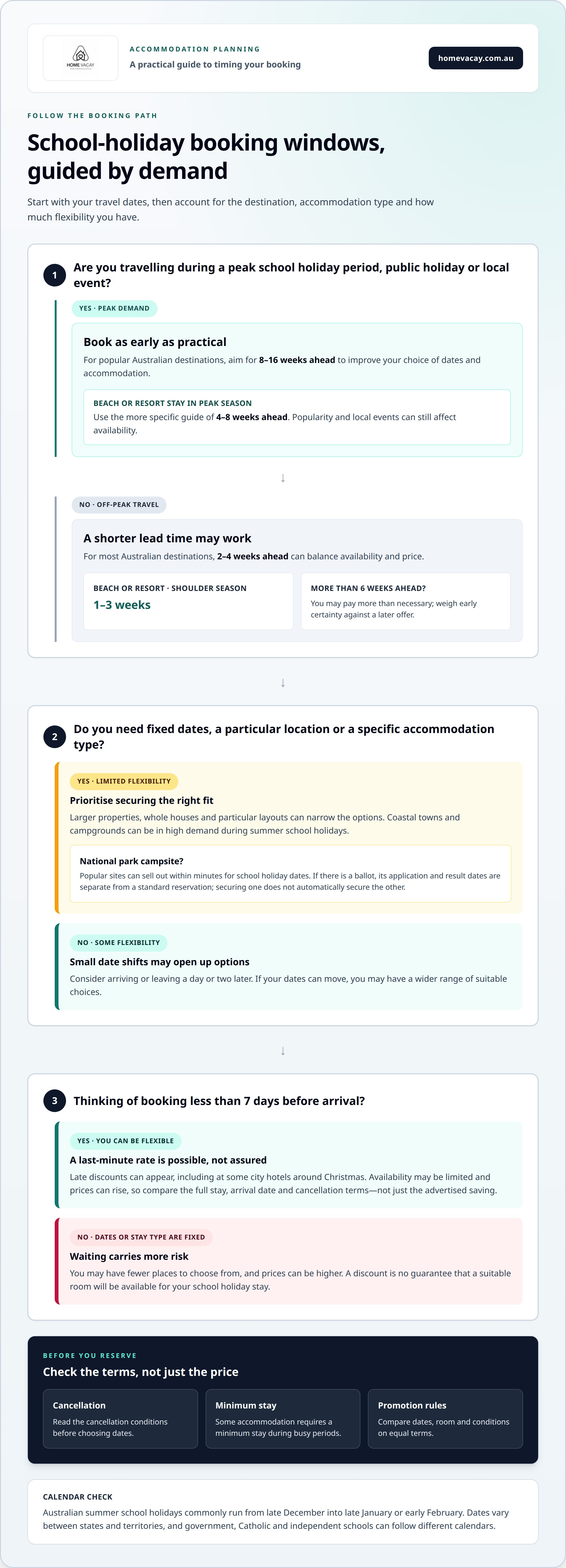
For popular Australian destinations during peak periods, book accommodation as early as possible, often 8–16 weeks ahead. This gives you more choice when school holiday demand is high, especially for specific dates or accommodation types.
For beach and resort destinations, use the season as a guide. During peak season, aim to book 4–8 weeks ahead. In shoulder season, 1–3 weeks may be suitable. These windows help set a starting point for hotels, resorts and holiday rentals, but popularity and local events can affect availability.
Does booking school holiday accommodation earlier reduce prices in Australia? Often, yes. Prices tend to rise as holidays approach, and some places offer early-booking discounts. But booking early is mainly a way to secure your preferred choice, not a guarantee of the lowest price for every stay.
Off-peak travel can allow a shorter lead time. For most Australian destinations, booking 2–4 weeks ahead is presented as a good balance between availability and price. Booking more than 6 weeks ahead for off-peak travel may mean paying more than necessary, so weigh early certainty against the chance of finding a later offer.
Coastal towns and campgrounds can be in high demand during summer school holidays. Popular beach destinations may fill quickly, while national park campsites can sell out within minutes for holiday dates. If your trip depends on a particular location, campsite or accommodation style, book well ahead instead of relying on nearby alternatives.
Peak-season prices can be higher, and some accommodation places require minimum stays during busy periods. Check the booking terms before choosing dates, including the length of stay and cancellation conditions. For popular peak dates, book hotels, resorts or holiday rentals as early as practical, often 8–16 weeks ahead. For a beach or resort stay, the 4–8-week peak-season window offers a more specific planning guide.
2. How far ahead should I book for the summer holidays?
For Australian summer peak periods, aim to reserve accommodation 8–16 weeks ahead. Start earlier if you need a larger property, a particular layout or dates near a festival, sporting event or public holiday. Popular beach towns, campgrounds, island ferries and national parks can fill well ahead, so build your accommodation booking around the hardest part of the trip to secure. Similar forward planning helps across all travel logistics, such as booking dedicated airport transport in advance through halifaxairporttaxilimo.com when managing broader family itineraries.
Your preferred accommodation type can narrow the options further. Families needing several bedrooms or travellers seeking a whole house may have fewer suitable choices than couples with flexible dates. If you’re travelling with a group, identify essential features and book when you find a suitable match. Shifting your arrival or departure by a day or two may also open up alternatives.
National park campsites need a separate plan. Popular sites can sell out within minutes for school holiday dates. If a park uses a ballot, note the application and result dates separately from other accommodation bookings. A ballot and a standard reservation are different steps, and securing one does not automatically secure the other.
Before paying, read the cancellation terms, minimum-stay conditions and promotion rules. An early-bird offer may suit fixed plans, while flexible dates can make a changeable booking more useful. Consider all the terms, not just the headline deal. For standard hotel rooms, don’t assume a direct booking will save money; direct bookings rarely do. Compare the room, dates and conditions on equal terms.
As you plan your summer stay, explore short-stay accommodation options that suit your travel dates and needs. Booking ahead can help you line up the right type of accommodation before peak demand limits the choice.
3. Last-minute deals and availability risks
A last-minute hotel booking means reserving less than 7 days before arrival. That timing can uncover lower rates, but availability may be limited and prices can rise. During school holidays, a deal is less useful if it leaves your family without suitable dates or accommodation.
Late discounts do appear in some situations. Some city hotels may reduce rates around Christmas, but offers vary by property and date. A discount doesn’t guarantee a suitable room will be available for your school holiday stay. Compare the dates and final booking terms, not just the advertised saving.
Demand at your destination matters, too. Some Australian islands limit visitor numbers, which can constrain accommodation availability. Popular destinations may also attract domestic and international travellers during certain seasons or events. With demand changing this way, a last-minute booking is harder to rely on when your dates are fixed or you need a specific type of stay.
If you’re considering a last-minute deal, start with flexible dates and a short list of acceptable accommodation types. Compare the total stay, arrival date and cancellation terms before booking. Flexible plans give you a wider range of options. Families tied to school holiday dates, a particular area or a specific accommodation type have less room to adjust.
Set a latest booking point based on what you’re willing to compromise. Decide whether you’d accept different dates, a nearby area or another room layout. If none of those changes works, waiting for a discount may not suit your trip. When an available option meets your essential needs and the terms fit your plans, decide whether to book or keep looking.
4. School holiday timing across Australian states and territories
Australian summer school holidays commonly run from late December into late January or early February, but dates vary between states and territories. Government, Catholic and independent schools can also follow different calendars. That means a family travelling across state lines may encounter different peak periods at the same destination.
A one-week difference between state school calendars can affect accommodation demand. If one state’s break starts earlier, for example, its families may arrive while another state’s school term is still underway. If your travel dates are flexible, compare the calendars for your home state and destination. Shifting your trip by a week may open up more accommodation choices or alternative travel dates.
Spring and autumn school breaks last two weeks. These shorter windows can concentrate demand on the same dates, particularly in popular holiday areas. Catholic and independent schools may start or finish a break a day or two before or after government schools. If you’re travelling with other families, use the calendar that matches each child’s school instead of assuming every school follows the same dates.
Plan in steps. First, identify the relevant school calendars and dates that suit your household. Next, check for overlaps with public holiday weekends, local events and peak-season travel. Then choose accommodation dates that fit the confirmed break. Remember to include pupil-free days, which individual schools set, in your family’s plans.
For dates more than 12 months away, treat calendars as provisional and recheck closer to travel. States may revise or confirm future dates as the year approaches. Booking plans based on an early calendar can otherwise fall out of step with the final school break. The key takeaway: compare the right state and school-system dates before settling on accommodation, especially for summer travel across state borders.
Home Vacay
Home Vacay offers short-term accommodation for leisure and business stays. If your school holiday plans include a short stay, consider whether an apartment suits your dates and travel needs. Choosing your preferred dates and the type of stay you need can help narrow down your options.
Planning early is especially useful when your travel dates are fixed or you want a particular style of apartment. Once you’ve settled on your school holiday dates, explore Home Vacay’s accommodation options and choose a stay that fits your plans.
Contact Home Vacay to discuss your stay.
Make your next booking decision with confidence
Deciding how far in advance to book school holiday accommodation starts with identifying what matters most for your trip. Set your dates, preferred location and essential accommodation needs, then decide where you can be flexible, such as your arrival day or choice of neighbourhood. This gives you a clear basis for choosing between booking a suitable place now and waiting for another option.
Keep your plans in one place, including the school calendar dates that affect your household and the booking terms you want to compare. This simple step makes it easier to act when an option fits, without letting a possible deal distract you from what your trip needs.
If you’re planning a Canberra stay, contact Home Vacay to plan your stay. A little thought now can make the lead-up to your holiday feel more settled.
Frequently Asked Questions
How far ahead should I book for the summer holidays?
For peak summer dates, aim to book 8–16 weeks ahead, and sooner if your plans depend on a particular property or location. The best lead time for how far in advance to book school holiday accommodation depends on demand, your dates and how flexible you can be. If your trip includes a festival or public holiday, factor that into your plans before choosing accommodation.
How far ahead should you book accommodation for Australian school holidays?
For peak school holiday periods, booking 8–16 weeks ahead is a useful planning window. If you’re travelling outside peak periods, 2–4 weeks ahead can balance choice and price in many Australian destinations. Start by matching your dates to the school calendar your family follows. Then account for travel days, event dates and any minimum-stay rules that could shape your booking.
How early do popular Australian holiday destinations sell out during school holidays?
There’s no single sell-out date for every destination. Popular national park campsites can sell out within minutes for school holiday dates, while peak-period ferry tickets and accommodation on Rottnest Island can book out weeks or even months ahead. For other places, timing depends on the dates and accommodation type. Secure any essential campsite, ferry crossing or stay before planning the rest of your itinerary around it.
What are typical school holiday accommodation prices compared with off-peak rates?
Accommodation commonly costs more during peak holiday periods than off-peak periods, but the difference varies by destination, dates and accommodation type. Demand can push rates higher, particularly when school breaks overlap with public holidays or events. Compare like with like: the same location, stay length and accommodation type. Check minimum-stay conditions, too, as they affect the total cost of a peak-period booking.
Which Australian destinations need the earliest school holiday accommodation bookings?
Prioritise popular beach towns, island stays, national park campsites and places hosting major events. Rottnest Island accommodation and ferry spaces can book out weeks or months ahead during peak periods. Hobart attracts visitors during Dark Mofo in June and peak summer, while Uluru is popular during the cooler months from May to September. Book sooner when your dates, location or accommodation type are fixed.


