

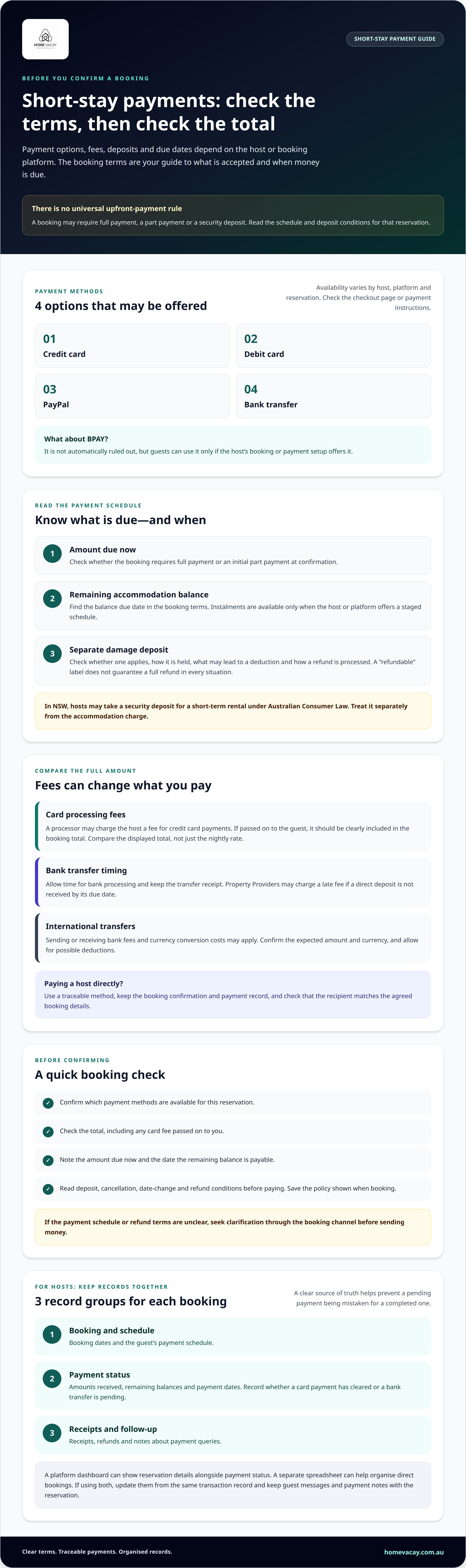
BPAY isn’t automatically ruled out for a short-stay booking, but guests can use it only if the host’s booking or payment setup offers it. Hosts can choose short term rental payment options supported by their setup, such as card payments or bank transfer.
Before booking, check the payment method, any fees and when each amount is due. Card fees can affect the total, and the booking terms should explain whether a refundable damage deposit applies and when the remaining accommodation balance is payable.
This guide explains which payment methods hosts may offer in Australia, how card fees and refundable deposits can work, and when the balance may be due. It also covers ways hosts can keep payment records organised, so you know what to look for before confirming a stay.
Key Takeaways
- Choose payment methods your booking setup supports, and make accepted options clear before guests book.
- Explain any card processing charges upfront so guests can understand the total payment.
- Set out when the accommodation balance is due and how refundable damage deposits are handled.
- Use payment and guest-management tools to keep booking amounts, due dates and payment records organised.
Credit card payments and processing fees
Australian short stays may be paid for by credit card, debit card, PayPal or bank transfer, depending on what the host or booking platform accepts. Available short-term rental payment options should appear during booking or in the host’s payment instructions.
Each platform sets its own accepted payment methods. Check the checkout page for the options available for that reservation. A method offered for one booking may not be available for another.
For a monthly short-term stay, payment may be arranged by card or bank transfer, depending on the booking terms. Longer residential arrangements follow different rules from short-stay bookings.
Payment plans or instalments are available only if the host or platform offers a staged schedule. Check the amounts and due dates before committing rather than assuming you can split the balance.
Paying a host directly is not automatically unsafe, but it means using a payment process outside the platform. Choose a traceable method, keep the booking confirmation and payment record, and check that the recipient matches the agreed booking details.
Card processors may charge hosts a fee for credit card payments. If a fee is passed on to the guest, it should be clearly included in the booking total. Compare the displayed total, not just the nightly rate, before paying.
Property registration costs are separate from guest payment processing.
The booking terms set payment deadlines. Property Providers may charge a late fee if a direct deposit is not received by its due date. Allow time for bank processing and keep the transfer receipt.
International transfers may incur fees from the sending or receiving bank, as well as currency conversion costs. Confirm the amount and currency the recipient expects, and allow for any deductions before sending payment.
Final balances and refundable damage deposits
Australian short-term rental platforms do not follow one universal rule for upfront payment. Depending on the host’s terms and the platform’s process, a booking may require full payment, a part payment or a security deposit.
Read the payment schedule before confirming. It should state what is due now, when the remaining accommodation balance is payable, and whether a separate damage deposit applies. A booking, for example, may collect an initial amount at confirmation and request the balance later. The booking terms determine the actual schedule.
In NSW, hosts may take a security deposit for a short-term rental under Australian Consumer Law. Treat it separately from the accommodation charge. Check how the provider holds the deposit, what may lead to a deduction and how a refund is processed.
A deposit described as refundable does not guarantee a full refund in every situation. The deposit terms should explain the basis for any deduction. Keep the booking details and payment record together so you can follow the original amount and any later adjustment.
Cancellation rules affect what happens to your payment. The booking’s cancellation terms explain whether a refund is available, whether a fee applies and how timing affects the outcome. Cancelling early may have different consequences from cancelling close to arrival. Read the policy before paying, not after your plans change.
Providers may also have separate rules for changing dates, shortening a stay or cancelling because of unexpected circumstances. These terms can affect both the accommodation balance and any deposit. Save the cancellation policy shown when booking, along with confirmation emails and receipts.
Before confirming, note the balance due date and deposit conditions in your booking records. If the payment schedule or refund terms are unclear, ask for clarification through the booking channel before sending money. Clear written terms help both parties understand the amount charged and how a refund is handled.
Payment and guest-management tools for short-stay hosts
Hosts can manage bookings using a platform dashboard, payment records and a calendar. Keep each reservation’s guest name, amount paid, outstanding balance and due date together. A booking record, for example, can show whether a card payment has cleared or a bank transfer is pending. This makes it easier to review payment status before arrival.
Choose tools that suit the way guests book. A platform booking system can show reservation details alongside payment status, while a separate spreadsheet can help organise direct bookings. Avoid recording the same payment in several places without a clear source of truth, or an unpaid balance could be mistaken for a completed payment.
A simple record can include:
- Booking dates and the guest’s payment schedule.
- Amounts received, remaining balances and payment dates.
- Receipts, refunds and notes about any payment query.
For direct deposits, compare the bank transaction with the booking record before marking it paid. Property Providers may charge a late fee if a direct deposit is not received by its due date. Hosts can reduce confusion by stating the deadline in the booking terms and recording when the transfer arrives.
Guest-management tools can link arrival details, messages and payment notes to one reservation. A host could, for example, record that a guest has paid the balance but still needs arrival instructions. Keeping these tasks together helps prevent payment updates from getting lost in separate email threads.
Before adopting a new system, map the payment steps from booking to departure. Identify who records incoming payments, who updates the balance and where receipts are stored. If you use a booking platform alongside a spreadsheet, update both from the same transaction record. Consistent entries make it easier to reconcile payments and respond to guest questions.
For hosts, the most useful tool makes each booking’s payment status easy to see. A clear ledger, accurate due dates and organised guest messages support a smoother stay without adding unnecessary steps. For regional operators running short-term rentals as a commercial enterprise, tightening these financial processes also helps build business value, where advisory firms like Profitpoint Business Solutions support SME owners with long-term performance and exit readiness.
Initial accommodation payments
An initial accommodation payment is the amount due to secure a booking. The booking terms should say whether guests pay the full cost upfront or make an initial payment before paying the balance. For example, a guest may pay at confirmation and settle the remainder by the stated due date.
For hosts, make the first payment step clear before a guest commits. State the amount due, accepted payment method and any later payment dates in the booking information. Keep the confirmation and receipt together so the guest can see what the first payment covers.
Centrepay lets eligible people pay rent and other bills through regular deductions from their Centrelink payments. It is not a payment method every short-stay host can accept. Hosts should distinguish it from the options available through their booking process.
Eligible people on low incomes may receive financial assistance from Launch Housing for the first month’s rent in advance. This support is aimed at eligible renters, not a standard way to pay for a short holiday booking. It should not be presented as guaranteed accommodation funding.
For a short stay, the booking terms determine how an initial payment relates to the total accommodation charge. Hosts can make the details easier to follow by recording:
- The amount received and the booking it applies to.
- Any remaining balance and its due date.
- The payment record or receipt shared with the guest.
Clear records help hosts reconcile the first payment with later amounts and give guests written confirmation of what they have paid and what remains due. If a guest uses a support payment, keep it separate from the booking’s stated schedule.
Planning a short stay? Explore short-stay accommodation options and review the payment details shown for your booking.
Home Vacay
Home Vacay offers short-stay accommodation for business and leisure trips. Choose a stay that suits your plans, then review the booking details to understand the payment arrangements before confirming.
Before confirming, read the payment information for your selected accommodation. Note the amount due and payment schedule so you can plan around the booking terms.
Whether you’re travelling for work or taking a break, Home Vacay offers places to stay while you organise your plans. Contact Home Vacay to discuss your accommodation needs.
Make your next stay easier to plan
Payment arrangements shape how smoothly a stay begins. Hosts can help guests plan by setting expectations clearly. Travellers can start by choosing accommodation that suits their trip, then reviewing the payment terms. Short term rental payment options should be clear alongside the stay, not a separate puzzle to solve.
Home Vacay offers short-stay accommodation for business and leisure travel. If you’re planning your next getaway, consider which location and apartment best fit your plans, then review the booking details before confirming. A little care at this stage can make it easier to organise the rest of your visit.
Talk with Home Vacay about your upcoming stay. Take the next step at a pace that suits you, and look forward to a more settled arrival.
Frequently Asked Questions
BPAY not allowed?
BPAY is not automatically prohibited, but it must be offered for the booking. If it does not appear at checkout or in the host’s payment instructions, choose an available method instead. If you prefer BPAY, check the listed options before confirming rather than assuming you can use a bank’s BPAY service for every accommodation booking. Keep the booking confirmation with your payment record.
When is payment due for a short-term rental booking in Australia?
Payment is due according to the schedule attached to the booking. The confirmation should show any amount due at booking and the date later payments are due. If a balance is payable before arrival, add the due date to your calendar when the reservation is confirmed. A reminder can help you avoid missing the deadline, especially when you book well ahead of travel.
What fees, service charges, and taxes apply to short-term rental payments in Australia?
Charges depend on the booking and its location. Victoria charges a 7.5% short stay levy on stays of less than 28 days in a row, applying from 1 January 2025. A booking can also show a platform service charge or card processing fee. Review the itemised total before paying, so you can distinguish accommodation charges from separate fees or taxes.
What should international visitors know about currency conversion and foreign transaction fees when booking Australian short-term rentals?
International visitors should check the currency shown at checkout and how their card issuer handles conversion. If an Australian booking is charged in Australian dollars, the card provider may convert the charge to the cardholder’s home currency. The bank may also apply a foreign transaction fee under the card’s terms. Review the final amount on the payment screen and the transaction record after paying.


