

The best corporate rental isn’t defined by luxury extras. When deciding what amenities to look for in a corporate rental, prioritise a furnished, comfortable space with reliable Wi-Fi, a practical place to work, a usable kitchen and laundry access. These everyday features help guests settle in and keep up with their routines.
It’s easy to focus on how a property looks, but convenience matters just as much. Corporate housing is furnished accommodation for people travelling for work, relocating or staying away from home temporarily. A separate bedroom, storage and access to a washer and dryer can make an extended stay more manageable.
This guide explains which features can make a rental more practical, who corporate housing is designed for and why laundry access matters. You’ll also learn how to weigh everyday comforts against extras, so you can focus on features that make daily life easier during a stay in Australia.
Key Takeaways
- Prioritise practical comforts such as reliable Wi-Fi, a functional workspace and a well-equipped kitchen to make a rental more appealing.
- Understand how corporate housing differs from a standard short stay, including the range of stay durations it can suit.
- Consider laundry access as part of everyday convenience, especially for guests staying away from home for longer.
- Match the accommodation to the guest’s reason for travelling, whether they’re on a work assignment, relocating or travelling with family.
1. How can you make a rental property more attractive to tenants?
Start with the everyday needs of business travel. A furnished apartment should let employees work, cook and rest without having to source basic household items. A bed, sofa, dining furniture, kitchenware and linen help guests settle in from arrival. Functional appliances and a clear, uncluttered layout make each room easier to use.
A dedicated workspace is a practical factor for guests working remotely. Include a desk, supportive chair, task lighting and accessible power points. A desk measuring at least 120 × 60 centimetres gives room for a laptop and notes. Corporate apartments should provide internet with at least 100 Mbps download speed and 25 Mbps upload speed.
Furnishing and technology costs depend on the apartment’s size, existing appliances and furniture quality. Landlords can plan by listing essentials first, then allowing for internet setup, kitchen equipment and ongoing maintenance. Choose functional, durable furniture: a comfortable desk chair may be more useful than decorative extras.
For security and safety, look for secure entry, working locks, clear access instructions and well-lit shared areas. These features help business travellers settle in. Parking, public transport and access to workplaces also affect convenience. Consider the guest’s likely commute and how they’ll reach shops or places to eat.
Useful accessibility features include step-free entry, lifts where needed, clear pathways and reachable switches. Their importance depends on the guest’s mobility and the building layout. Before booking, clarify which utilities, internet, cleaning and other services are included, as well as any extra charges or limits. This helps identify potential costs and booking risks.
Building rules can also affect shared facilities. According to Queensland Government, the Body Corporate and Community Management Act 1997 applies to many body corporates in Queensland community titles schemes. This is a Queensland-specific legal context, separate from the general amenity considerations for corporate rentals across Australia.
2. What Is Corporate Housing?
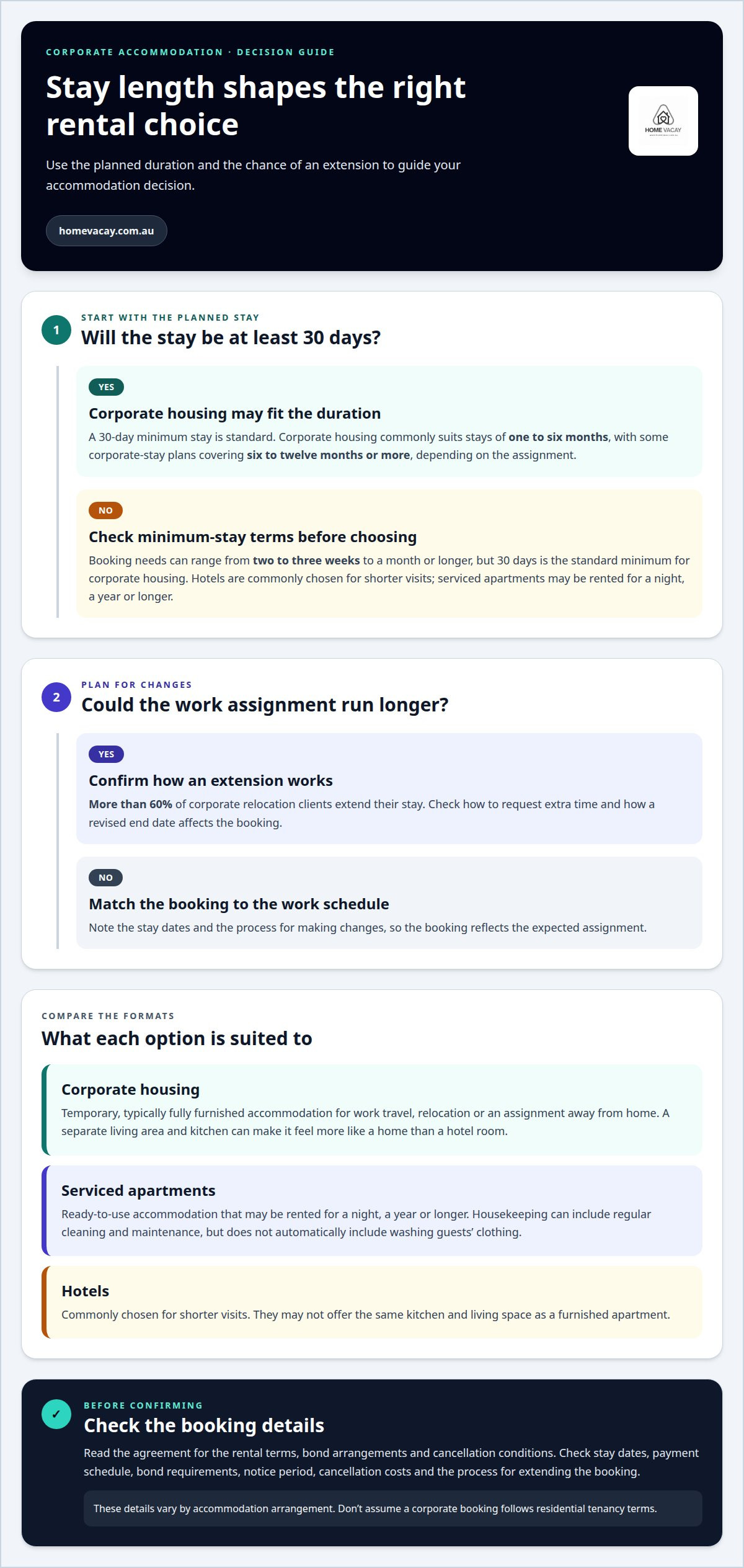
Corporate housing is temporary accommodation for people travelling for work, relocating or completing an assignment away from home. It is typically fully furnished, giving guests a place to sleep, cook and manage daily life without bringing household essentials. A separate living area and kitchen can make it feel more like a home than a hotel room.
Stay length is a defining feature. A 30-day minimum stay is standard for corporate housing, and stays commonly last one to six months. Booking needs can also range from two to three weeks to one month or longer. For comparison, some corporate-stay plans cover six to twelve months or more, depending on the assignment.
Flexible terms help accommodate changing work plans. An employee might arrive for a project expected to last one month, then need additional time when the assignment continues. More than 60% of corporate relocation clients extend their stay. Clear extension arrangements help guests understand how to request extra time and how a revised end date affects the booking.
Furnished corporate rentals and serviced apartments both offer ready-to-use accommodation, but the formats can differ. Corporate housing generally suits longer stays with domestic comforts, while serviced apartments may be rented for a night, a year or longer. Hotels are commonly chosen for shorter visits and may not offer the same kitchen and living space as a furnished apartment.
In Australia, read the booking agreement for the rental terms, bond arrangements and cancellation conditions. Check the stay dates, payment schedule, bond requirements, notice period, cancellation costs and process for extending the booking. These details vary by accommodation arrangement, so don’t assume a corporate booking follows residential tenancy terms.
Before confirming, match the duration to the work schedule and note the process for changes. A two-to-three-week booking, a month-long placement and a six-month assignment each call for different planning around cleaning, household routines and possible extensions.
3. In-suite or property laundry facilities
Laundry access makes a furnished apartment easier to manage during a longer stay. An in-apartment washer and dryer let guests wash work clothes, uniforms or family clothing without leaving their accommodation. This is especially useful when business travel involves a packed schedule or guests want to travel with fewer bags.
If a property has no in-apartment laundry, a washer and dryer elsewhere on the property are a practical alternative. Clear directions, access arrangements and information about the available machines help guests plan washing around work or outings. On-site laundry keeps this essential task close to the living space, unlike accommodation where guests rely on hotel laundry services.
Housekeeping and laundry are separate considerations. Serviced apartment housekeeping can include regular cleaning and maintenance, but that doesn’t automatically mean guests’ clothing is washed. Check what cleaning covers, how often it takes place and whether guests handle their own laundry. For dry-cleaning needs, useful details include nearby options and how to reach them.
Deciding what amenities to look for in a corporate rental means considering the kitchen and storage as well as laundry. A kitchen supports meals at home, while cupboards or drawers give guests space for clean clothing, detergent and other essentials. For example, someone on a work placement can wash clothes in the apartment, dry them before the next meeting and put them away instead of living out of a suitcase. Reliable internet supports work, but it can’t replace these everyday facilities.
A useful way to decide what amenities to look for in a corporate rental is to match laundry arrangements to the length of the stay. A short visit may need only basic access, while convenient washing becomes more valuable for an extended booking. Note whether machines are inside the apartment or elsewhere on the property, and whether cleaning, maintenance and laundry are separate services. This gives guests a clearer picture of their daily routine.
4. Corporate rental definition and typical tenants
A corporate rental is furnished temporary accommodation for work-related stays, relocation or assignments away from home. Unlike a conventional unfurnished rental, it provides a ready-to-live-in base without requiring guests to organise household essentials. For example, an employee moving for a project can stay near work while arranging a longer-term move.
Typical tenants include employees on business travel, people relocating and professionals working away from home. A company might arrange an apartment for a staff member attending meetings, while a relocating family may need somewhere to stay between homes. Travelling nurses and locum doctors are another example: healthcare systems and staffing agencies place them on contracts lasting six to twenty-six weeks.
The right accommodation depends on the reason for travel. A solo consultant may value a separate workspace and easy access to meetings. A relocating household may need a kitchen, storage and room for family routines. For property owners, understanding these needs can guide furnishing choices and listing details. Convenience comes from matching the property to the tenant’s daily requirements.
Corporate rentals are best understood by their purpose, not just their furnishings. They provide a temporary home for people whose work or relocation takes them away from their usual residence. Before choosing, identify who will stay, what brings them to the area and what their routine involves. Then compare the listing’s location, layout and facilities with those needs. This helps companies choose accommodation that fits the assignment, rather than treating every business traveller as a typical guest.
For a work trip or relocation across Australia, explore furnished accommodation options suited to a temporary stay.
Home Vacay
Home Vacay offers furnished stays for business and leisure travellers looking for a comfortable base in Canberra. For a city stay, Capitol Apartments in Canberra City may suit guests who want to be close to the centre. Peaceful Coombs Apartment for Families offers a family-focused option, while Luxury Apartment in Braddon Precinct suits guests drawn to that Canberra neighbourhood.
Choose an apartment based on the purpose of your trip, who is travelling and where you need to be. A work assignment, family visit or time away may each call for a different location and style of stay. Home Vacay’s apartments are for short-term accommodation, not long-term leases or residential tenancies.
If you’re planning a Canberra stay, contact Home Vacay to discuss which apartment best fits your trip.
Choose a stay that fits your next move
Knowing what amenities to look for in a corporate rental is a useful starting point. Next, picture how the stay will work day to day, from arriving with luggage to settling into a new routine. Accommodation that suits the purpose of the trip can make time away more straightforward.
For a work assignment, relocation or family visit, consider the location and the kind of space that will make the stay comfortable. Keep the expected routine in mind, then choose accommodation that fits instead of focusing on extras that won’t be used.
Home Vacay can help you find a Canberra stay that suits your plans. Share your travel plans with Home Vacay and take the next step towards a comfortable stay.
Frequently Asked Questions
How can you make a rental property more attractive to tenants?
Make the space easy to use from the first viewing. Natural light, an open layout and coordinated appliances can improve its presentation without relying on decorative extras. A dishwasher or usable outdoor area may also add practical appeal. In the listing, use clear descriptions and photos that show how rooms connect, so prospective tenants can picture their routines there.
What Is Corporate Housing?
Corporate housing is furnished temporary accommodation for people staying away from home for work or relocation. It gives guests a place to live while an assignment, move or other temporary need is underway. For example, an employee moving to another state may need a furnished base while their household move is organised. It differs from accommodation intended solely for a holiday.
What amenities matter most for corporate tenants?
Prioritise amenities that support the tenant’s reason for travelling. A consultant attending meetings may value a quiet place for calls, while a relocating household may need cooking facilities and room to unpack. Reliable internet, laundry access and a comfortable place to work support everyday routines. Match the property’s features to the guest’s needs rather than adding extras without a clear purpose.
Which features and presentation improvements matter most to renters?
Renters often notice how well a property functions and feels. Natural light and an open floor plan can make rooms more inviting, while matching appliances create a consistent look. A dishwasher can simplify kitchen clean-up. Keep surfaces clear and arrange furniture to show how the room can be used, such as leaving space to move around a dining table.
What amenities are essential in a corporate rental in Australia?
There is no single set of essentials for every Australian stay. Start with the guest’s purpose, length of stay and daily routine. A work traveller may need a quiet place to take calls, while a family in temporary accommodation may value cooking and laundry facilities. Clear listing details about access, inclusions and shared facilities help guests understand whether the property will suit them.
Which internet speed and work-from-home amenities should a corporate rental provide?
A corporate rental should provide internet with at least 100 Mbps download speed and 25 Mbps upload speed. Upload capacity matters for video meetings and sending work files. Pair a reliable connection with a desk, supportive chair, good lighting and accessible power points. Positioning the workspace away from household activity can also make calls and focused work more comfortable.


