

A parking space can make a short stay easier, especially when you’re travelling with children or luggage. Short term rentals with dedicated parking combine temporary accommodation with a space set aside for guests, but the location and access arrangements vary by property.
Choosing a place to stay involves more than finding somewhere to leave the car. Consider how you’ll access the space, how long you can book for, and whether the accommodation has enough room for your family or travel group.
This guide explains which parking details to check, how booking length affects your options, and what to consider when choosing accommodation for a family. Use these points to weigh practical needs against comfort and find a place that suits your trip.
Key Takeaways
- Look at how a parking space is accessed and whether its setup suits your vehicle and arrival plans.
- Match the booking length to your trip, as options and arrangements can differ for shorter and extended stays.
- Choose a home with enough space for everyone travelling, then weigh its location and parking convenience together.
- Understand what can affect the cost of parking, including location, access and the length of your stay.
Parking space features and access
Assess parking alongside the apartment’s location and access. A reserved bay, clear entry instructions and a suitable space for your vehicle all contribute to an easier stay.
Reserved parking and 24/7 access
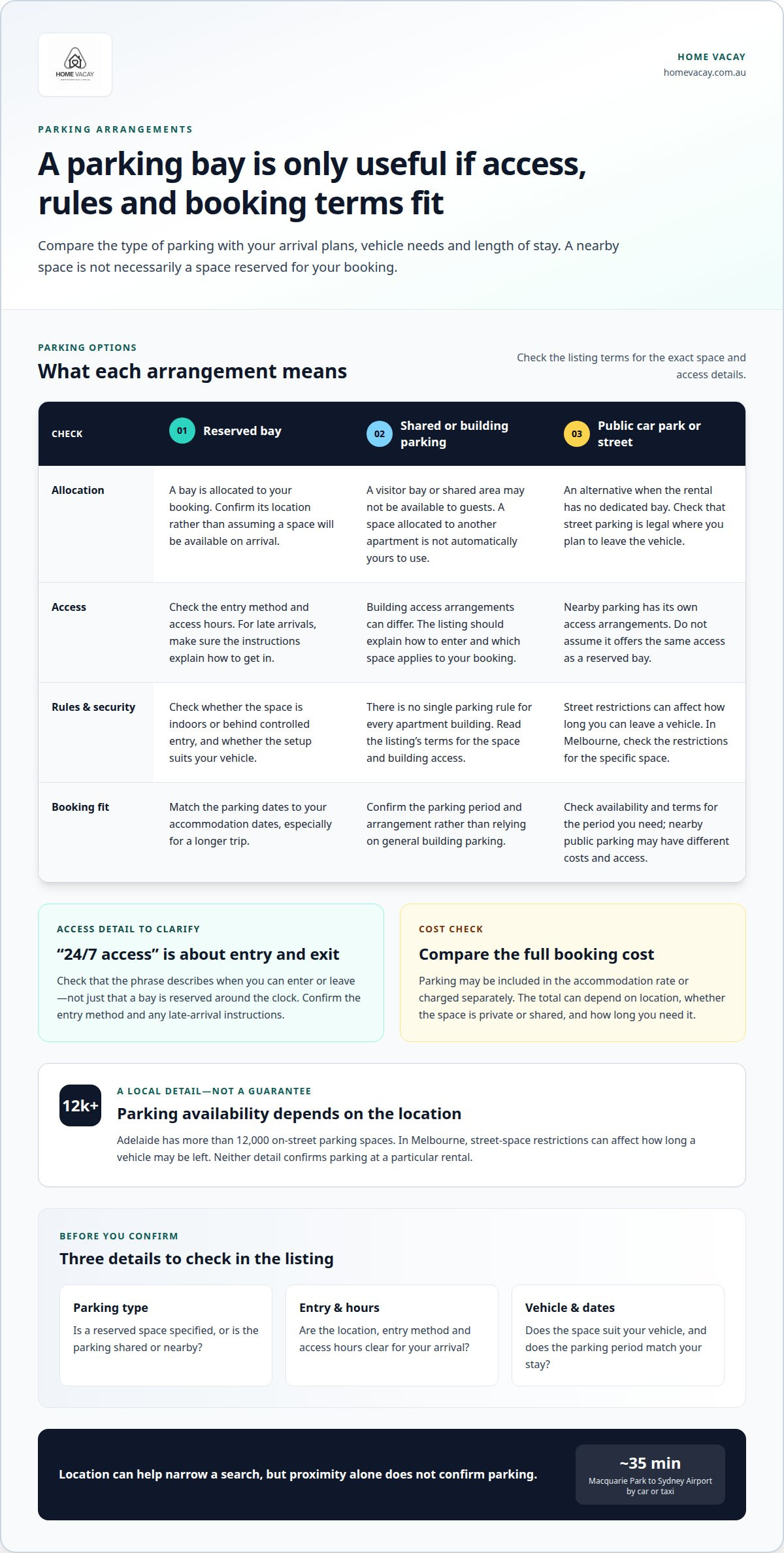
A reserved space means a bay is allocated for your booking, rather than assumed available on arrival. Look for clear details about its location, entry method and access hours. “24/7 access” should describe when you can enter or leave, not just imply a space is reserved around the clock.
For secure parking, check whether the space is indoors or behind controlled entry, and whether the access instructions cover late arrivals. A fully furnished apartment may suit your stay, but the parking arrangements must also fit your travel plans.
Parking rules and alternatives
Apartment-building parking arrangements can differ, so there isn’t one rule that applies to every Australian short-term rental. A visitor bay, shared area or space allocated to another apartment may not be available to guests. The listing’s terms should explain which space is for your booking and how building access works.
If a rental has no dedicated bay, alternatives include a public car park or legal street parking nearby. In Adelaide, there are more than 12,000 on-street parking spaces. In Melbourne, a street space may have restrictions that affect how long you can leave a vehicle. Include parking availability in your accommodation options, not as an afterthought.
Additional parking costs
Parking may be included in the accommodation rate or charged separately. The total can depend on the location, whether the space is private or shared, and how long you need it. A stay that looks affordable at first may cost more once parking is added.
Compare the full booking cost with the parking terms. A daily space may suit a brief visit, while a longer trip makes the booking period especially important. Don’t assume nearby public parking has the same access or cost as a reserved bay.
Filtering and confirming a suitable space
When comparing listings, filter by location, parking type and dates. Check whether the description specifies a reserved space, secure entry and access hours, and consider sharing your vehicle size and arrival plans when booking. These details help you tell a suitable space apart from general parking nearby.
Airport, beach and city-centre locations can all be search areas, but proximity doesn’t confirm parking. For example, Macquarie Park is about 35 minutes by car or taxi from Sydney Airport. Treat that as a location detail, then assess the apartment’s parking separately.
Short-stay and longer-stay booking options
Booking length shapes the accommodation options, from a short visit to temporary housing during a move. A weekend trip to Brisbane may call for a different arrangement than a longer stay needing transport links and facilities. For short term rentals with dedicated parking, align the accommodation dates with the parking booking period.
Some listings allow instant booking, while others use a booking request. Instant booking confirms the selected dates through the booking process. A request stays pending until accepted. For a parking space booked monthly, the owner may take up to 48 hours to accept a request. Allow for that response time before relying on the space for arrival.
Monthly parking bookings can have cancellation terms separate from the accommodation. One listed condition requires one month’s notice to cancel a monthly parking booking. Read both sets of terms, especially if your travel dates may change. Booking accommodation and a separate monthly parking space may involve different steps.
For longer temporary stays, match the accommodation period and parking period as closely as possible. Sydney renovation accommodation is offered for families for stays of four to 16 weeks. That kind of term accommodation can suit a household needing more than a brief visit. Consider how facilities, transport and walking distance fit the routine across the whole stay.
Before submitting a request, prepare the arrival and departure dates, guest numbers and parking period. Then review the confirmation for the accepted dates and cancellation notice. This simple sequence helps clarify whether the parking and accommodation bookings cover the same trip, whether the stay is in Melbourne, Brisbane or another location, and whether the chosen arrangement suits your travel plans.
Family-sized homes with parking
For a family holiday, start with sleeping capacity, then check the parking arrangements. A two-bedroom listing may suit a small family, but the bedroom count alone doesn’t tell you how many guests it accommodates. Read the occupancy and parking details together to make sure the home fits everyone, not just the photos.
Sydney examples show why occupancy details matter. A two-bedroom apartment on Mooltan Avenue sleeps four guests and has one bathroom. A two-bedroom apartment on Halifax Street also sleeps four, with two bathrooms. These examples describe capacity, not parking arrangements. Treat parking as a separate listing detail, alongside the number of bedrooms and bathrooms.
Next, consider your daily routine. A kitchen can make shared meals easier, while laundry facilities may help during an extended stay. Weigh nearby shops, walking routes and station access when choosing a central location. Public transport can make days out easier without the car, while a reserved space simplifies trips when you do drive.
Families travelling with a business guest, or working during their stay, may need different features. Compare sleeping capacity, work needs, parking access and location before choosing. One family may value nearby shopping; another may prioritise a station within walking distance. Location and facilities affect comfort throughout the stay.
List your essentials before comparing homes: guest capacity, bedroom layout, kitchen and laundry needs, and parking. Then assess each option against the purpose of your trip, whether it’s a city break or a longer family holiday. This keeps the decision focused on how everyone will use the space, rather than on one feature alone.
How much extra does dedicated parking cost at short-term rentals in Australia?
The extra cost depends on whether parking is included in the accommodation rate or booked separately. Location, booking length and parking type all affect the total. A space in Adelaide CBD, for example, may be priced differently from one outside the city centre. Compare the full accommodation and parking costs for your dates, not just the nightly rate.
Separate parking listings in Adelaide show why the booking period matters. Spaces on Grote Street and Franklin Street are listed for monthly booking. A short visit may suit daily parking, while a longer stay may make a monthly arrangement more relevant. Compare the total for the exact dates you need, including any gap between the accommodation and parking periods.
To estimate the extra cost, first check whether the accommodation includes parking, then add the price of any separate booking. Compare that total with a stay where parking is included in the rate. Also compare like with like: a council bay and a space offered by a traditional parking operator may have different terms and access arrangements.
Consider practical value as well as price. A reserved space near your accommodation may save you from searching for parking after arrival, while a public bay may have different access arrangements. For families carrying luggage or couples arriving by car, convenience and location can matter as much as the parking charge.
Before booking, note your stay dates, the parking period and whether the space is included or separate. Compare complete totals on the same basis, such as per day or per month. This makes the additional parking cost clear and avoids confusing an accommodation rate with a separate charge.
Home Vacay
Home Vacay offers short-term apartments for couples, families and business travellers. Options include Capitol Apartments, Peaceful Coombs Apartment for Families, and Luxury Apartment in Braddon Precinct. Compare the accommodation features with your group size and reason for travelling to find a suitable stay.
As you compare accommodation, consider how parking access, stay dates and household needs fit together. The right choice depends on your priorities, from space for the family to a convenient location.
Explore Home Vacay’s short-term apartments and choose a stay that fits your trip.
Choose a stay that fits your travel rhythm
The right place should make the practical parts of your trip straightforward, leaving more room to enjoy your reason for travelling. When comparing short term rentals with dedicated parking, picture the whole stay: arriving with bags, heading out for the day and returning on your own schedule. That everyday convenience can matter as much as the address or layout.
Start by narrowing your priorities. Decide what your group needs from the accommodation and which parking arrangements would make arrival easier. Choose a stay that supports both, rather than treating parking as an afterthought.
For your next getaway, Home Vacay offers accommodation options for couples, families and business travellers. If you're ready to plan your visit, contact Home Vacay about your stay. A considered choice can help you settle in and enjoy your time away.
Frequently Asked Questions
Where can I find short-term rentals in Australia with dedicated parking?
Search short-stay accommodation listings across Australia and narrow your options by location, dates, guest numbers and parking needs. Read each listing’s parking description rather than relying on a general “parking available” label. If you’re travelling with a hire car, compare the accommodation’s location with your planned destinations. Home Vacay offers short-term apartments in selected Australian locations for business and leisure stays.
What types of dedicated parking do Australian short-term rentals offer?
Listings may describe an allocated bay, a garage, undercover parking or an off-street space. The wording matters: an allocated bay is set aside for the booking, while “parking available” may describe a different arrangement. A garage, for example, offers a different setup from an open bay. Match the stated parking type to your vehicle and how often you’ll use it.
What should guests check about parking access, height limits, permits, and extra fees before booking?
Check the entry instructions, any stated vehicle-height limit, permit conditions and whether parking costs extra. Make sure the parking period matches your accommodation dates, especially if you’ll arrive or leave outside the standard check-in arrangements. If your vehicle has a roof rack or is larger than average, compare its height with the stated limit. Keep the parking terms with your booking details so you can find the access instructions on arrival.


