

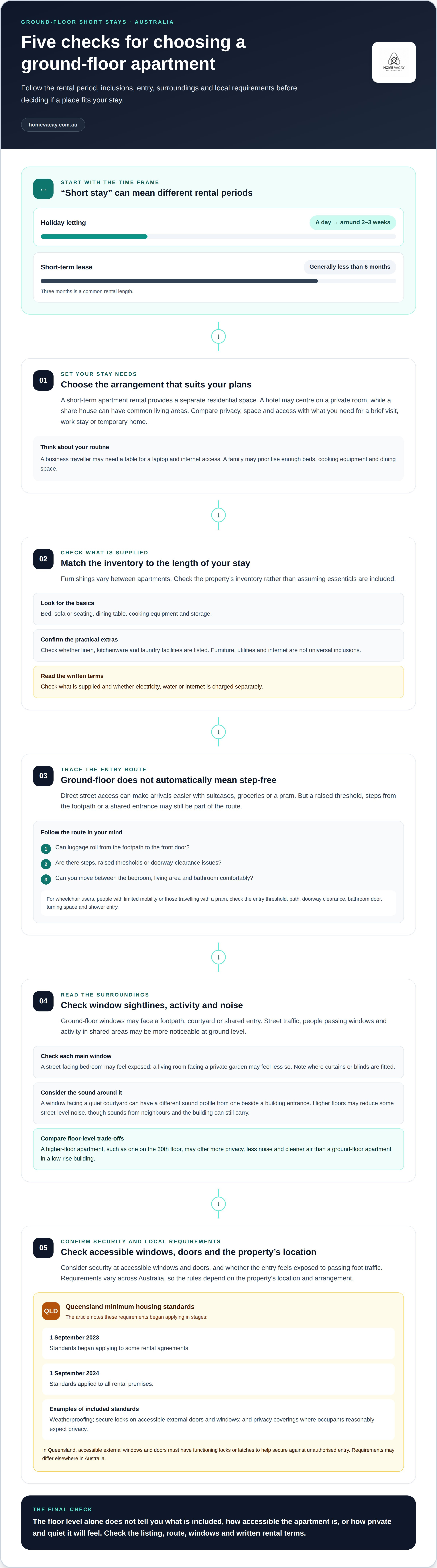
A short-term stay can offer flexibility, but the rental period shapes the arrangement. In Australia, a lease is generally considered short term if it lasts less than six months. Holiday letting can be much shorter, from a day to around two to three weeks.
For ground floor apartments for short term rent, the right fit depends on more than the rental period. Direct access can make arrivals easier, while privacy and noise may differ from what you’d experience on a higher floor. Furnishings and the length of your stay also affect how convenient and comfortable the apartment feels.
This guide explains what a short-term lease means and how flexible rental options work. It also covers what to consider about furnishings, street-level access, privacy and noise when choosing a ground-floor apartment in Australia. Use these factors to compare options for a brief visit, a work stay or a temporary home.
Key Takeaways
- Match the apartment’s furnishings to your stay so you can arrive with what you need and settle in comfortably.
- Consider how direct street access may suit your arrival, luggage and mobility needs.
- Look at window privacy and nearby activity to judge whether a ground-floor setting suits your comfort.
- Understand how flexible lease terms fit your plans, and what trade-offs can come with moving more often.
Furnished apartment availability
A furnished apartment comes with furniture and household essentials for your stay. In Australia, a lease lasting less than six months is generally considered short term, and three months is a common rental length. A furnished ground-floor apartment can suit someone who wants to arrive without moving large items. For a work stay, essentials might include a bed, table, seating and kitchen equipment; a family may value extra dining space.
Listings for ground floor apartments for short term rent can describe different rental arrangements and property features. Local council and state rules vary across Australia, so requirements depend on the property’s location and arrangement. In Queensland, prescribed minimum housing standards began applying to some rental agreements on 1 September 2023, then to all rental premises from 1 September 2024. These standards include weatherproofing, secure locks on accessible external doors and windows, and privacy coverings where occupants reasonably expect privacy.
Furniture is only part of what a rental provides. A practical inventory might include a bed, sofa, dining table, cooking equipment and basic storage. The layout matters too: a ground-floor apartment with a clear entry and useful storage can make luggage and daily essentials easier to manage. Furnishings vary between apartments, so check the property’s inventory against what you’ll need.
A short-term rental’s inclusions depend on its listing and agreement. Furniture, utilities and internet are not universal inclusions. The written terms should state what is supplied and whether you pay separately for electricity, water or internet.
When comparing ground floor apartments for short term rent, match the stated inclusions to your routine. A business traveller may need a table for a laptop and internet access; a family might prioritise cooking equipment, dining space and enough beds. Check whether linen, kitchenware and laundry facilities are listed rather than assuming they come with the furniture. For a longer stay, read the agreement to understand how utility charges are handled. The apartment’s inventory and rental terms, not its floor, determine what is provided.
Ground-floor street access
Street-level access means entering an apartment from outside without going to an upper floor. It can make arrivals and daily trips simpler, but a ground-floor location does not automatically mean step-free access.
Street-level entry
A street-level entry is reached directly from the ground or an outdoor path. For someone arriving with suitcases, groceries or a pram, avoiding stairs can make moving in easier. The route may still have a raised threshold, steps from the footpath or a shared building entrance. Ground-floor apartments also differ: one may open onto a courtyard, while another faces a common walkway.
A short-term apartment rental provides a separate residential space, while a hotel, serviced apartment or share house may have a different layout or shared facilities. A hotel stay, for example, may centre on a private room, while a share house can involve common living areas. Compare the privacy, space and access each arrangement offers with what you need for your stay.
There is no single average weekly or nightly price for ground-floor apartments across Australian cities. Price depends on location, apartment size, furnishings and stay length, and is provided for the individual property after a quote request.
Step-free entry and bathroom access
Step-free access is a continuous route into and through an apartment without stairs or raised barriers. If you use a wheelchair, have limited mobility or are travelling with a pram, assess the entry threshold, doorway clearance and path from the street. Bathroom access matters too: the door, turning space and shower entry can affect how practical the room is to use. A ground-floor location alone does not establish accessibility.
Think through a typical arrival: can luggage roll from the footpath to the front door, and can someone enter without lifting a mobility aid over a step? Then consider everyday movement between the bedroom, living area and bathroom. Accessibility needs differ, so compare the apartment’s stated entry and bathroom features with the requirements of the people staying.
Privacy and noise differences by floor
Privacy is how easily people outside can see into an apartment. At ground level, windows may face a footpath, courtyard or shared entry, so sightlines matter. A higher-floor apartment, such as one on the 30th floor, may offer more privacy, less noise and cleaner air than a ground-floor apartment in a low-rise building.
For a ground-floor stay, consider what each main window faces. A bedroom overlooking a busy path may need privacy coverings, while a living room facing a private garden may feel less exposed. In Queensland, rental premises must have privacy coverings in rooms where occupants reasonably expect privacy, unless a property feature obstructs the outside line of sight. Requirements may differ elsewhere.
Noise from outside or nearby apartments can carry into the living space. Street traffic, people passing a window and activity in shared areas may be more noticeable at ground level. A window facing a quiet courtyard can have a different sound profile from one beside a building entrance. Higher floors may reduce some street-level noise, but sounds from neighbours and the building can still carry.
Before choosing, consider security at accessible windows and doors, and whether the entry feels exposed to passing foot traffic. In Queensland, rental premises must have functioning locks or latches on accessible external windows and doors to help secure against unauthorised entry. Elsewhere in Australia, local requirements and the apartment’s layout shape which protections apply.
Use details about the apartment’s window coverings, entry and surroundings to assess your comfort. A street-facing bedroom, for example, may suit someone who sleeps through ordinary activity but not a light sleeper seeking a quiet retreat. Check which rooms face shared paths, where curtains or blinds are fitted, and whether external windows and doors have working locks. Weigh privacy, noise and security together rather than choosing by floor alone.
Short-term and flexible leasing options
A flexible stay matches the booking period to your plans. In Australia, the length and conditions depend on the rental arrangement.
Apartment building by-laws or strata rules may restrict short-term letting, and there is no single rule for every Australian building. Requirements can depend on the property’s location and the building’s own rules.
Flexible lease options
A flexible lease has a stay period suited to a particular booking. Short-term leases can suit a work placement, temporary move or holiday, while longer arrangements may suit someone needing more continuity. The written terms set the agreed dates and any conditions for changing them. Options vary, so choose a rental period that matches how long you need accommodation.
Booking deposits and requirements
A booking deposit is an amount paid to secure an accommodation booking, subject to its stated terms. Deposit amounts, other fees, cancellation conditions and identification requirements vary between rental arrangements. The booking terms explain what is payable, when payment is due, what happens if plans change and which identification details are required. Read these conditions before booking rather than assuming every apartment follows the same process.
Minimum and maximum stay lengths
A minimum stay is the shortest period accepted, while a maximum stay is the longest offered under the arrangement. In Australia, a lease is generally considered short term if it lasts less than six months, and three months is the most common short-term rental length. Holiday letting agreements can be as short as a day and are generally no longer than two to three weeks.
Choose a term that reflects your dates and reason for staying. A holiday letting may suit a brief visit, while a three-month stay can fit a temporary work assignment. Short-term renting can also help someone try an area before buying. For furnished short-term accommodation, plan your stay with Home Vacay.
Furnished apartments in high-rise buildings can be a convenient option for short-term or transitional stays. Frequent moves may bring removalist costs and bond payments, while a short-term lease may provide less security than a longer arrangement.
Home Vacay: Short-Term Apartment Stays
Home Vacay offers short-term apartments for business and leisure stays. Its self-contained options include apartments suited to families and travellers seeking a comfortable base away from home.
As you compare apartments, consider how the entry, privacy, noise and booking length fit your plans. These details can shape your stay as much as the apartment’s setting. The right choice depends on the kind of visit you have planned and the features that matter to you.
Home Vacay offers a range of apartments for short stays, with different settings to suit different trips. Explore the options and choose the one that best fits your plans and preferences.
Contact Home Vacay to discuss your stay.
Choose a stay that fits your plans
Start by making a clear list of what you need from your stay. Note your travel dates, who is coming and what would make arrival and daily routines easier. Separate essentials from preferences. This gives you a practical basis for comparing a ground-floor apartment for short-term rent with other accommodation options.
Plans can shift, so consider which parts of the booking matter most before choosing a property. A work trip may call for a different setting from a family visit or a temporary stay between homes. Keeping the purpose of your visit in view can help you choose a place that suits the time you’ll spend there.
Home Vacay offers apartments for business and leisure stays, including options for different kinds of trips. Consider your travel dates, who is coming and what you need from the accommodation, then explore the available apartments on the website.
Contact Home Vacay about your stay and start planning a comfortable base for your time away.
Frequently Asked Questions
What is a short-term lease?
In Australia, a lease is generally considered short term if it lasts less than six months. The agreement sets the stay dates and conditions, so read it before committing. For example, someone relocating for a temporary work assignment might choose a short-term lease while deciding where to live longer term. Holiday letting is a separate arrangement and can cover much shorter visits.
What is the average weekly or nightly price for a short-term ground-floor apartment in Australian cities?
There is no single average weekly or nightly price across Australian cities. The price depends on location, apartment size, furnishings and stay length, and is provided for each property after a quote request.


