

A polished listing can’t tell you how quiet a rental feels during a workday. Finding quiet short term rentals for work means weighing noise clues, nearby activity and what the photos or videos show about the space.
A calm-looking room is a good start, but it doesn’t tell the whole story. Neighbouring properties, shared areas and the layout can all affect how easily you focus, take calls and enjoy privacy.
This guide explains how to assess noise clues in a listing, consider nearby activity and read rental photos and videos with a work stay in mind. Use these checks to choose a place that suits focused work and downtime, not just an overnight stop.
Key Takeaways
- Separate one-off sounds from patterns that could interrupt calls or focused work.
- Nearby businesses, shared entrances and common areas can affect the feel of a stay.
- Use listing images to assess room layout, sightlines and how easily work and rest can be kept apart.
- Compare furnished stay options by the workspace details they show, not by a “quiet” label alone.
Evidence of noise and interference
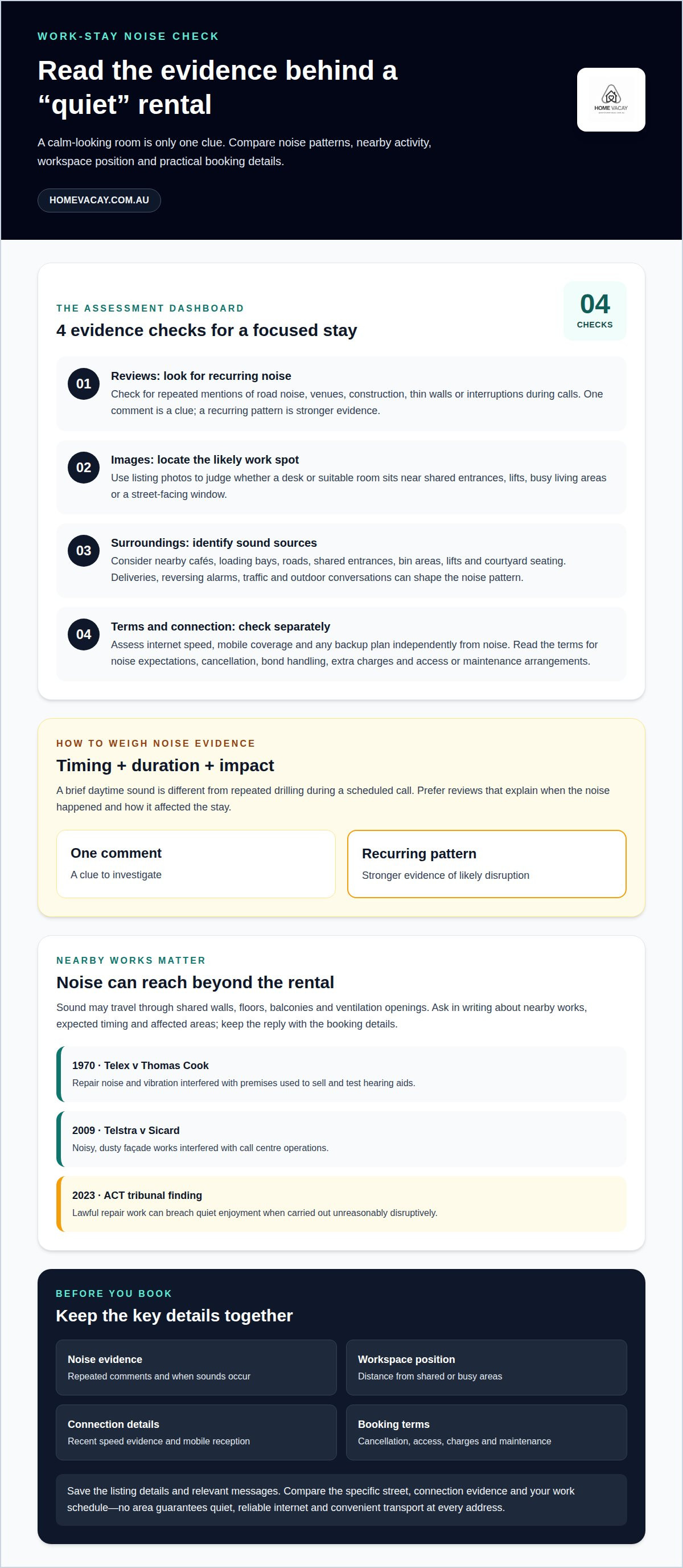
To assess whether a short-term rental is quiet enough for working, compare guest reviews, listing images and the building’s surroundings. Look for repeated mentions of road noise, nearby venues, construction, thin walls or disturbances during calls. One comment is a clue; a recurring pattern is stronger evidence. Check whether the workspace is away from shared entrances, lifts and busy living areas.
Noise can affect work even when its source is legitimate. In 2023, an ACT tribunal found that lawful repair work can breach quiet enjoyment when carried out unreasonably disruptively. For a consumer assessing evidence, the practical detail is the noise’s timing, duration and impact. A brief daytime sound differs from repeated drilling during a scheduled call. Reviews that describe when noise occurred can help you judge the likely effect.
Assess internet speed, mobile coverage and backup power separately from noise. Look for a recent speed-test result for the accommodation, then consider mobile reception inside the workspace. Check whether the listing describes backup power or a practical alternative workspace during an outage. These details matter for video meetings, file transfers and calls that rely on a stable connection.
Read the agreement and booking terms for noise expectations, cancellation conditions, bond handling and extra charges. Note any disclosures about construction or nearby events, and how the host may arrange access or maintenance. Save the listing details and relevant messages so you can refer to the same terms later. A mismatch between the advertised setting and your experience can affect both work and comfort.
No area guarantees quiet, reliable internet and convenient transport at every address. Compare the specific street, nearby activity, connection evidence and your route to work or public transport. A residential setting may suit focused work, while a central address may shorten a commute but bring more street activity. Weigh those details against your work schedule.
Before booking, note the evidence that matters most: recurring noise comments, workspace location, connection details and clear cancellation terms. This helps you distinguish a quiet-looking photo from a stay with practical support for calls, concentration and privacy.
Noise from neighbouring properties
Noise can travel from neighbouring properties through shared walls, floors, balconies and ventilation openings. A nearby café may bring deliveries and outdoor conversations; a loading bay can add reversing alarms and trolley noise. Look beyond the room itself. Identify shared entrances, bin areas, lifts and courtyard seating in the listing photos, then consider how close they are to your likely workspace.
Different neighbours create different sound patterns. A family home may bring activity at varied times, while a gym or restaurant can create regular peaks around opening and closing. Road-facing bedrooms may pick up traffic even when the living area faces a quieter courtyard. Note which room seems suitable for calls and whether its windows face a street, car park or another building.
Australian court decisions show how neighbouring building works can disrupt business use. In Telex (Australasia) Pty Ltd v Thomas Cook & Son (Australasia) Pty Ltd (1970) 2 NSWR 257, repair noise and vibration interfered with premises used to sell and test hearing aids. In Telstra Corporation Ltd v Sicard Pty Ltd (2009) ACML 85-337; [2009] NSWSC 827, noisy, dusty façade works interfered with call centre operations. These examples show why construction beside a rental property matters to focused work.
Ask about nearby works in writing, including their expected timing and the areas affected. A tenant’s permission concerns access to their rental property, not control over every neighbour’s activity. The listing or host may still have information about planned works. Ask whether noise is likely during your work hours if the details are unclear, and keep the response before booking, especially if a quiet room is essential.
Also consider what happens if recurring noise disrupts your work plans. Read the cancellation terms and the process for raising a concern before booking. If a stay is ending soon, nearby property viewings or building activity may change the setting. For a short-term stay, explore short-term accommodation options suited to your plans.
Reasonable peace, comfort and privacy
Quiet enjoyment describes a renter’s ability to use their home without unreasonable interference. For a work stay, practical privacy during calls, comfortable rest and access without avoidable disruption all matter. The exact protections depend on the rental arrangement. A short-term booking may not operate like a standard residential tenancy, so read the agreement’s terms on access, shared spaces and guest privacy.
In Victoria, section 67 of the Residential Tenancies Act 1997 concerns a renter’s quiet enjoyment of their home. In Tasmania, section 55 of the Residential Tenancy Act 1997 protects tenants’ quiet enjoyment, and interference carries a penalty of up to 50 penalty units. These provisions show that peace and privacy have legal significance in rental settings. They do not mean every booking has identical rights.
Before booking, check how the accommodation is arranged. A private apartment with its own entrance offers a different level of privacy from a room in a shared home. Look for details about shared kitchens, outdoor areas or internal access through occupied spaces. For example, a shared hallway beside your desk may bring regular interruptions, even if the bedroom itself looks quiet.
Read the entry terms too. Note who can enter, for what reasons and whether the agreement describes notice. Urgent maintenance differs from routine access, but the booking terms should explain the process. Keep messages in writing. If an unexpected entry affects a call or your privacy, record the date, what happened and any follow-up.
In Victoria, a renter may apply to VCAT under section 472 of the Residential Tenancies Act 1997 for a restraining order. That route relates to renters and the relevant legal framework, not automatically every short stay. If a serious breach occurs, keep the listing, agreement and written records together. Clear terms and a private layout help you judge whether a stay supports focused work and comfortable downtime.
Entry rules vary by location. In Western Australia, a written notice to enter must state the reason using Form 19 - Notice of proposed entry. In Victoria, a landlord or agent generally must give at least 24 hours’ written notice before entering for specified reasons.
Which Australian rental platforms offer short-term furnished stays with dedicated workspaces?
Australian travellers can look across short-stay accommodation marketplaces and corporate accommodation booking platforms. Both can surface furnished stays, but a “workspace” label may mean anything from a dining table to a separate desk. Compare the actual listing details rather than relying on a platform category alone.
On a general accommodation marketplace, filter for furnished properties, entire homes and suitable locations. Search descriptions for “desk”, “office” or “work area”. Then inspect photos for a proper chair, useful lighting and nearby power. A dining table shown in one image may also be used for meals, so consider how the room functions throughout the day.
Corporate accommodation platforms focus on work-related stays and may organise listings by location, length of stay or business needs. Check each property’s description for internet details, a dedicated work surface and room privacy. A platform’s business focus alone doesn’t establish that a particular apartment is quiet or equipped for video meetings.
Whichever platform you use, assess the evidence in the listing itself. Look for clear workspace photos, a floor plan if available, and recent guest comments about noise or connectivity. Compare cancellation terms, bond conditions and extra charges before booking. Keep the listing and booking terms together so you can refer to what was advertised.
- Marketplace listings: useful for browsing furnished homes across different Australian locations.
- Corporate accommodation platforms: useful for exploring stays presented for business travel.
- Property details: essential for judging whether the advertised work area suits your routine.
For example, a listing showing a desk beside a bedroom window gives more useful evidence than a “work-friendly” tag alone. Check whether the desk is separate from the bed and whether the layout allows calls without taking over a shared space. A platform can narrow the search; the individual property details help you judge suitability.
WA had 2,982 Airbnb listings compared with 10,000 private rental listings in August 2023.
For longer stays, consider work disruption: in Australia, a tenant may be entitled to damages or an injunction if a landlord’s works significantly disrupt the tenant’s business or the landlord fails to take reasonable steps to minimise disruption. A serious breach may also entitle the tenant to terminate the lease.
Home Vacay
Home Vacay offers furnished short-term apartments for business and leisure stays. Its range includes options for solo travellers and families, giving you different settings to consider after assessing your work and privacy needs.
Use these checks to decide what matters most, such as a suitable work area, a comfortable layout and the surrounding environment. Then compare those priorities with Home Vacay’s apartment details to find an option that fits your trip.
Contact Home Vacay to discuss a suitable stay.
Shape a stay around your workday
A productive stay needs more than a quiet room. It should suit the way you work, rest and move through the day. Before choosing, consider the moments that need your full attention, from client calls to focused planning. This gives each accommodation option a purpose beyond its photos.
Finding quiet short term rentals for work becomes more considered when your priorities are clear. Decide which trade-offs suit your routine: a longer trip to meetings for a calmer base, or a central address with more activity nearby. Choose for your actual schedule, not an imagined ideal workday. A comfortable stay should also make it easier to switch off once work is done.
When you’re ready to explore your next getaway, take the next step at your own pace. Discuss your plans with Home Vacay and start shaping a stay around the work and downtime ahead. A little thought now can help you settle in with greater ease.
Frequently Asked Questions
Where can I find quiet short-term rentals in Australia for remote work?
Look for furnished short-stay apartments on Australian accommodation platforms, then compare each listing’s work setup and stay terms. Home Vacay offers short-term apartments for business and leisure travellers. For a remote-work stay, shortlist properties that suit your trip length and daily routine, then assess the listing details before booking. Finding quiet short-term rentals for work starts with choosing a place that fits both your workday and time off.


