

Cleaning fees can sometimes be negotiated, but a host doesn’t have to reduce them. Ask whether short-term rental cleaning fees are negotiable before booking, while there’s still time to discuss the terms. The fee is usually charged once per reservation, so it can have a bigger impact on a short stay.
A higher fee can make a stay feel less appealing, even when the nightly rate looks reasonable. Compare the total cost, not just the nightly price.
You can raise cleaning terms with a host, assess a per-reservation charge and weigh it against the nightly rate and minimum stay. Comparing the full cost helps you decide whether a booking suits your plans.
Key Takeaways
- Raise cleaning expectations and charges before agreeing to a stay, and focus on the terms that matter to your booking.
- Assess a cleaning fee as a per-reservation cost, especially when you’re planning a short visit.
- Compare the full stay total with the nightly rate to see how the cleaning charge changes the value.
- Consider how the minimum stay affects the cost per night and whether a longer booking makes better sense.
Negotiating cleaning conditions in a rental agreement
Cleaning terms depend on whether you’re booking a short stay or entering a residential tenancy. The distinction matters: tenancy rules don’t automatically set the terms of every holiday booking.
Agreeing cleaning terms before signing
For a new fixed-term tenancy, discuss cleaning conditions before signing and record any agreed changes in writing. In Queensland, tenants can negotiate the terms of a proposed new fixed-term tenancy agreement. In Victoria, renters may negotiate additional agreement conditions, including cleaning. A Victorian agreement starting on or after 29 March 2021 may require professional cleaning or cleaning to a professional standard. However, a tenant may hire a cleaner or clean the premises themselves. So, are short-term rental cleaning fees negotiable? Guests can ask, but a host’s agreement is needed.
In Victoria, a rental provider can’t charge renters for preparing the rental agreement. That charge is not a cleaning fee.
Fee disclosure and post-booking changes
A confirmed booking records the price and terms presented when you reserved. Can hosts change a cleaning fee after a booking is confirmed? A host shouldn’t assume you’ve agreed to a new amount. Compare the booking confirmation with any later charge and raise a mismatch through the booking platform. If a fee wasn’t disclosed or has unexpectedly increased, ask for an explanation and keep the booking record and messages. The applicable process depends on the booking terms.
Who sets cleaning fees for Airbnb and other short-term rentals in Australia? Hosts generally set the fee, while the booking platform displays it as part of the reservation. GST treatment depends on the host’s tax circumstances and how the charge is treated. The fee’s label alone doesn’t determine its GST treatment.
Requesting a lower or waived fee
Guests can ask a host to reduce or waive a cleaning fee before booking, but the host can decline. A specific, polite request is better than assuming the fee is flexible. Explain that the charge affects the total for your planned stay, then ask whether the host would consider another arrangement. Can guests ask hosts to reduce or waive a cleaning fee? Yes, but they aren’t automatically entitled to a reduction.
There’s no universal list of what a cleaning fee covers. Before reserving, ask whether it includes linen, laundry or extra cleaning. Check the listing and confirmed terms for details that apply to your stay.
Disputing cleaning charges
Guests can dispute a charge they believe is unsupported or related to poor cleaning. Keep the listing, booking confirmation, messages and relevant photos together. Then describe the issue clearly through the platform’s dispute process. Can guests dispute a cleaning fee for poor cleaning or excessive charges? They can raise the concern and provide evidence, but the outcome depends on the booking terms and evidence.
For a residential tenancy, tenants must leave the premises in the same condition as at the start, except for fair wear and tear. That rule doesn’t determine a holiday-booking fee. In Australia, the agreement and booking terms are central to assessing the charge.
Cleaning fees as a per-reservation charge
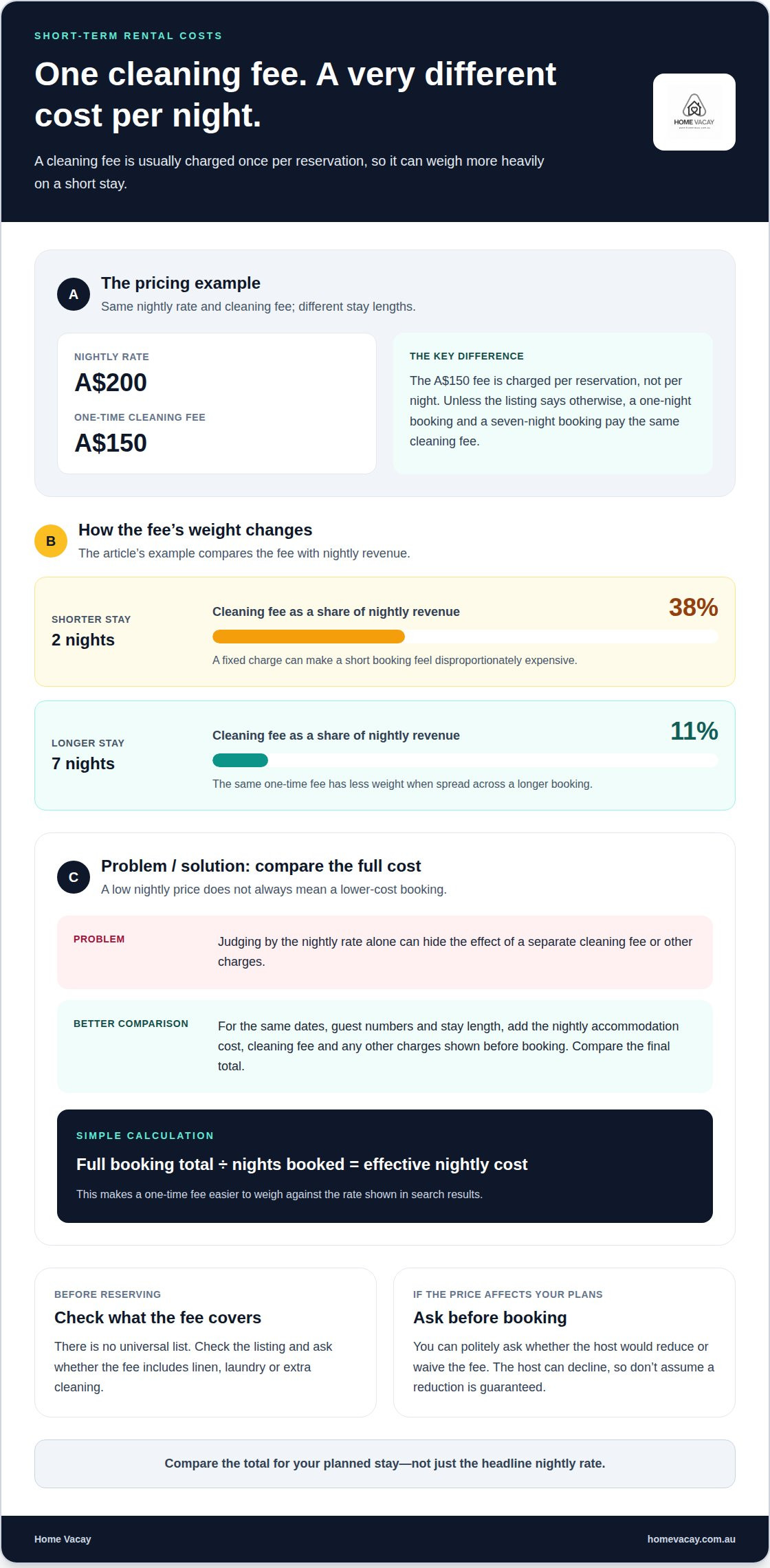
A short-term rental cleaning fee is charged once per reservation, not once per night. Unless the listing says otherwise, a guest booking one night pays the same cleaning fee as someone staying seven nights. This makes the charge easy to compare with the accommodation cost, but can make a short booking feel disproportionately expensive. The number of guests or rooms doesn’t automatically change the fee; the listing’s terms explain what the host charges.
Consider a rental priced at A$200 per night with a A$150 cleaning fee. Across two nights, the fee equals 38% of the nightly revenue. Across seven nights, it equals 11%. A fixed cleaning fee can weigh more heavily on shorter stays, so consider the total trip cost rather than the nightly rate alone.
This comparison shows why two listings with similar nightly rates can have different overall costs. Add the cleaning fee to the accommodation total, then include any other charges shown before booking. Compare the final amount for the same dates and guest numbers. A lower nightly rate may not mean a lower total if its separate fee is higher. A visible cleaning charge may still be reasonable as part of the full cost of a longer stay.
Hosts may also structure pricing differently. A hybrid approach uses a moderate cleaning fee and includes the remaining cleaning cost in the nightly rate. Guests can accept the listed terms or ask about an adjustment before reserving, but any agreed change should be reflected in the booking details. As you compare stays, review short-stay accommodation options against the total cost for your planned dates.
Balancing cleaning fees with nightly rates
To compare accommodation fairly, calculate the full booking total for the same dates and guest numbers. Multiply the nightly rate by the number of nights, then add the cleaning fee and any other charges listed before payment. Divide that total by the nights booked to find the effective nightly cost. This makes a fixed cleaning charge easier to weigh against the rate shown in search results.
For example, compare two listings for the same premises and travel dates. One may have a lower nightly rate but a higher cleaning fee; another may include more of its cleaning cost in the nightly price. Neither headline rate shows the complete cost. Compare the total due for the stay, including any separate charges such as electricity.
Airbnb search ranking uses total trip cost, rather than nightly rate alone, to influence sorting for many travellers. A low listed rate may look less appealing once a per-booking charge is added. Use identical dates, guest numbers and stay length when comparing listings. Changing any of those details can alter the displayed total and make the comparison less useful.
A hybrid pricing approach combines a moderate cleaning fee with some cleaning cost included in the nightly rate. For guests, the key question is how each structure affects the full cost of their stay. A one-time charge is spread across fewer nights on a short booking than on a longer one. Compare the total for your exact dates, then decide whether the fee affects which option fits your budget.
How do cleaning fees affect the total price and booking comparisons? They increase the reservation total, and their impact depends on the stay length. Add every listed charge before comparing options, rather than choosing by nightly rate alone. This gives you a clearer basis for deciding whether the accommodation suits your plans.
Cleaning fees and minimum-stay settings
A minimum stay affects how a one-off cleaning charge is spread across a booking. A short reservation has fewer nights to absorb the charge, while a longer stay distributes it across more nights. A property’s minimum-stay setting can therefore matter as much to your budget as its nightly rate.
For example, if your plans allow a longer visit, compare its total with the shortest booking available. Don’t assume an extra night always lowers the total cost. Add the extra night’s rate, then compare the full amount and effective cost per night. The best option depends on your dates, schedule and accommodation needs.
Minimum-stay settings can also limit your choices. A listing may accept a booking only if your requested dates meet its minimum. If your trip is shorter, the property won’t fit unless the host changes that setting. You can ask whether different dates or a longer stay would work, but weigh the extra accommodation cost against the cleaning charge.
Cleaning needs vary by property and between guest stays. Routine cleaning differs from periodic deep cleaning, which can cost two to three times as much as a standard turnover. That difference may explain why a host’s cleaning arrangements don’t always match a guest’s expectation of a quick tidy. Repairs or damage aren’t part of a routine cleaning fee.
For groups, the number of guests may affect which property suits them, but it doesn’t automatically change a per-reservation cleaning charge. Read the listing’s terms and compare the total for your party and dates. If a minimum stay makes the booking impractical, ask about the terms before reserving rather than assuming the host will waive a night or adjust the fee.
Explore short-stay accommodation options and consider which dates and length of stay suit your plans.
Home Vacay
Home Vacay offers short-stay apartments for business and leisure travellers. After weighing cleaning charges against the full booking cost, choose accommodation that suits your dates, group and plans. Review the booking terms alongside your travel needs to decide which stay is the right fit.
Compare the total cost and terms for your intended stay, rather than relying on the nightly rate alone. Contact Home Vacay to discuss your rental and find an option that suits your plans.
Choose a stay that fits your plans
Choose your next booking based on the whole stay, not one line item in isolation. Decide what matters most for your trip: flexible dates, room to unwind or accommodation close to your plans. Let those priorities guide your choice and make booking straightforward.
Whether short-term rental cleaning fees are negotiable depends on the booking terms and whether the host agrees to a change. If you’re considering a stay, read the details and raise questions before you reserve. Clear expectations can help you choose with confidence and settle into your time away.
Home Vacay offers accommodation for business and leisure stays. Contact Home Vacay about your rental to discuss the stay that suits you. A comfortable trip starts with a choice that feels right for your plans.
Frequently Asked Questions
Do high cleaning fees hurt bookings?
A cleaning fee can make a listing less appealing if the full trip cost feels poor value. Guests may weigh the fee against the property’s size, condition and included features, not just the nightly rate. A clear explanation of what the charge covers can help set expectations. Hosts can review guest feedback and booking patterns to see whether the fee or how it’s presented is creating friction.
How much should I charge for an Airbnb cleaning fee?
Set a fee that reflects the actual cost and scope of preparing the property between stays. Consider the number of rooms and bathrooms, cleaning time, laundry, linen changes and restocking. A compact apartment with simple turnover needs differs from a large home with several living areas. Align the fee with the work involved and explain clearly what it covers.
Should I include the cleaning fee in my nightly rate instead?
That’s one pricing option. A host can include more of the cleaning cost in the nightly rate, or show a separate fee, provided the total price is clear before booking. Consider how each approach affects guests with different stay lengths. A separate charge makes the cleaning component visible; a combined rate may make the nightly figure easier to compare, but guests should still assess the full booking total.
What are typical short-term rental cleaning fees in Australia by property size and location?
There isn’t one standard fee across Australian short-term rentals. The amount depends on the property’s size and layout, cleaning scope, laundry requirements and local cleaning costs. For instance, a multi-bedroom home with several bathrooms generally requires different turnover work from a studio. Compare the tasks and time involved instead of assuming a fee from another property or location will suit.
How can guests negotiate a lower cleaning fee before booking?
Guests can ask politely before booking, but whether short-term rental cleaning fees are negotiable depends on the host’s agreement. Mention your dates and stay length, then ask whether the fee can be adjusted or what it includes. Keep the conversation on the booking platform and request written confirmation of any agreed change before paying. This helps ensure the reservation reflects the terms discussed.


