

The room is only part of the stay. A short stay apartment vs hotel comparison comes down to how you want to spend your time: apartments can offer a kitchen, separate living space and laundry, while hotels often provide daily housekeeping, room service and concierge support. An apartment may suit travellers who value room to settle in; a hotel may be a better fit when on-site services matter more.
It’s easy to focus on the bed and location, but everyday details can shape your trip. This guide compares apartments and hotels by amenities, housekeeping and check-in support, so you can choose what fits your plans. Consider the trade-offs for a quick visit, a family break or a longer stay. The right option is the one that makes your time away comfortable and straightforward.
Key Takeaways
- Match your accommodation to the length and rhythm of your trip, not just the room rate.
- Compare the convenience of hotel services with the extra independence a rental may offer.
- Factor check-in arrangements and front-desk support into your plans, especially when arrival times matter.
- Use your need for cooking, living space and laundry to decide which amenities will make your stay easier.
So what exactly is a serviced apartment?
A serviced apartment is furnished accommodation with private living space for short visits or longer stays. A short stay apartment vs hotel comparison should consider trip length, facilities and support, not just the room.
Short-stay apartment accommodation
A short-stay apartment is a furnished private space, often with a bedroom, living area and equipped kitchen. The Australian Bureau of Statistics describes serviced-apartment units as having full cooking facilities, including hot plates and an oven or microwave. These features make meal preparation and everyday routines easier during longer stays. Short-term accommodation is typically for stays under 28 days.
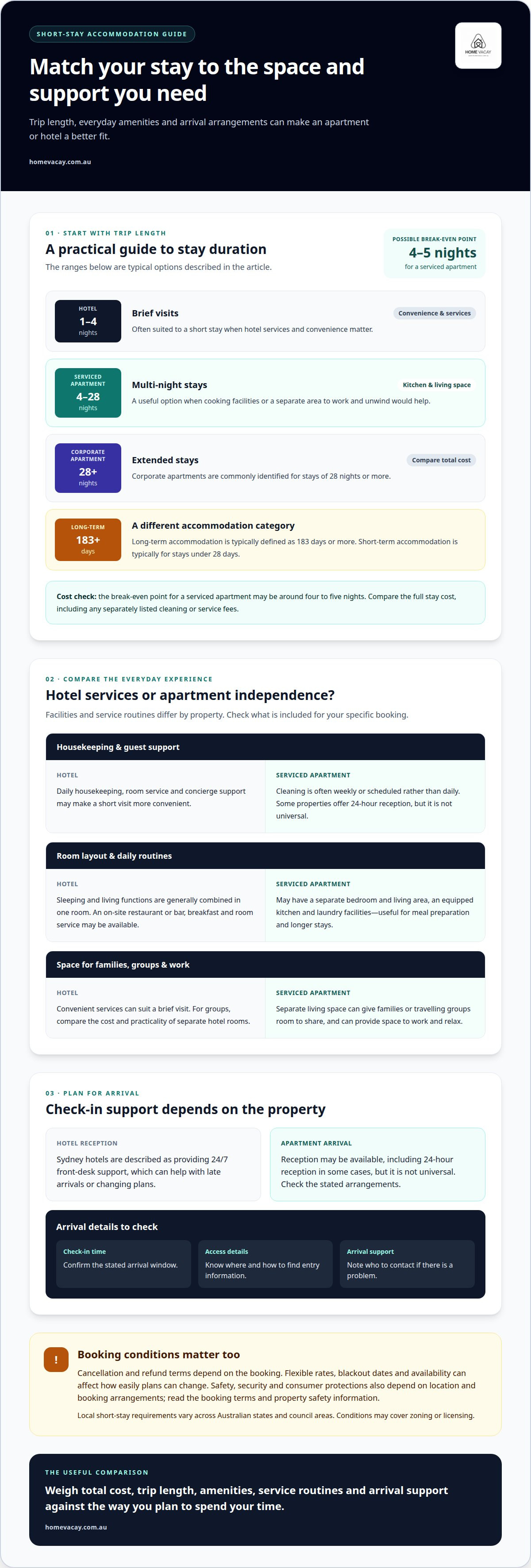
Use length of stay as a starting point: hotels are often suited to 1-4 nights, while serviced apartments and corporate apartments are options for 4-28 nights. Corporate apartments are commonly identified for stays of 28 nights or more. A useful short stay apartment vs hotel comparison also distinguishes these visits from long-term accommodation, which is typically defined as 183 days or more.
Business-trip accommodation
For a business trip, match the space to your work routine. A hotel may suit a brief visit when convenience and hotel services matter. An apartment can be more practical for an extended stay, with separate space to work and unwind, plus cooking facilities. For a multi-night assignment, weigh the need for a kitchen or workspace against hotel services and your daily schedule.
| Option | Typical stay | Useful when | Cost consideration |
|---|---|---|---|
| Hotel | 1-4 nights | Convenience and hotel services | Compare the full stay cost |
| Serviced apartment | 4-28 nights | Kitchen and separate living space | Break-even may be around four to five nights |
| Corporate apartment | 28 nights or more | Extended stays | Compare total accommodation costs |
Safety, security and consumer protections depend on the location and booking arrangement. Short-stay guests generally have fewer rights than long-term tenants, so read the booking terms and property safety information.
Cleaning and service fees vary between apartments. Review the booking total and any separately listed fees before paying.
Before booking, compare the total cost, cancellation terms, check-in details and included amenities. For families, consider whether the bedroom and kitchen arrangements suit everyone travelling.
Choose the option that best fits your trip length, routine and priorities.
Hotel services compared with rental services
Hotels and serviced apartments differ in service routines, layouts and included facilities. Compare the details for your destination and booking dates instead of assuming every property of the same type offers the same experience.
Hotel services
A hotel brings guest services together in one place. Daily housekeeping, room service, concierge support and an on-site restaurant or bar can make a short visit more convenient. Breakfast may be available, and reception can help with guest requests. This may suit travellers who prefer assistance and meals close by, without organising every part of their stay themselves.
Serviced apartments usually take a lighter approach to housekeeping. Cleaning is often weekly or scheduled rather than daily. Some apartments may provide a 24-hour reception, but reception support is not universal. Compare the specific service details before booking, especially if you value regular room servicing or want staff support during your visit.
Hotel and apartment layouts
A hotel room generally combines sleeping and living functions in one space. A serviced apartment may separate the bedroom from a living area and include a kitchen. That distinction can matter for families sharing accommodation or guests who want separate space to work and relax. A group travelling together may also prefer shared apartment living space to booking separate hotel rooms.
Consider how the layout will work throughout the day. A kitchen can make meals at the apartment easier, while a hotel restaurant, bar or room service offers dining on site. Laundry facilities can also add convenience during a longer stay. Compare the listed layout and amenities with your plans, not just the accommodation name.
Local short-stay rules vary across Australian states and council areas. Requirements may cover matters such as zoning or licensing, so conditions differ by location.
For a practical comparison, list the services you’ll use and weigh them against the privacy and separate living space you want. This helps you match the accommodation to your daily routine and travel preferences.
Check-in flexibility and front-desk support
Arrival arrangements shape the start of a trip. A hotel may suit travellers who value a staffed reception, while an apartment booking calls for careful attention to the stated check-in instructions and support arrangements.
Sydney hotels are described as providing 24/7 front-desk support. That can help when a flight arrives late or plans change during the day. Some apartments also provide reception, including 24-hour reception in some cases, but this isn’t universal. Compare the specific arrival details with your itinerary, especially if you expect to reach the property outside standard check-in hours.
For apartment rentals, booking information is central to a smooth arrival. Note the check-in time, where to find access details, and who to contact about arrival problems. These details matter for a business traveller arriving after a meeting or a family coordinating luggage and dining plans. Clear arrival instructions can make an apartment comfortable for an extended stay, even without a hotel-style front desk.
Flexible rates and blackout dates affect how easily you can adjust travel plans. Tighter booking conditions can limit changes, and availability can differ across dates. Match the terms to your schedule before committing. If a conference or appointment might shift, prioritise conditions that allow changes over a lower rate with less flexibility.
Cancellation and refund policies depend on the conditions attached to each booking. Before paying, read the cancellation deadline, refund conditions and process for changing dates. This applies to hotels and apartments alike, so compare the actual terms rather than assuming one type is more flexible.
Privacy can also shape your preference. A private apartment gives you your own space for laundry, meals and downtime, while a hotel reception offers a direct point of contact. Choose based on your trip length and routine: prioritise front-desk support for late arrivals, or self-contained space for a longer visit with quieter evenings.
Apartment and hotel amenities
A short stay apartment vs hotel comparison often turns on the facilities you’ll use each day. Apartments can offer kitchens, laundry and separate living areas, while hotels may bring dining and recreation amenities together.
Apartment amenities
A serviced apartment can provide a kitchen, refrigerator, bathroom and living space for everyday routines. The Australian Bureau of Statistics describes serviced-apartment units as having full cooking facilities, a refrigerator, and bath or shower and toilet facilities. Some short-stay rentals also include laundry facilities, which can help during longer visits.
For a family staying several nights, a kitchen can make meals and snacks easier to manage. Separate living space gives everyone room to relax outside the bedroom. These facilities support a self-contained stay rather than relying on hotel dining or services for every need.
Hotel amenities
Hotels typically offer daily housekeeping, on-site restaurants and bars, room service, fitness centres, swimming pools and concierge services. This can suit guests who prefer meals and assistance close by, without cooking or managing household tasks during their trip.
The difference is the balance between private facilities and shared services. An apartment may put cooking and laundry within the accommodation, while a hotel can bring dining and recreation facilities into the building. Amenities vary, so compare the listed features instead of relying on the property type alone.
Match the facilities to your plans. For a short visit with meals out, a hotel restaurant or room service may be useful. For a longer stay, a kitchen and laundry can make daily routines more comfortable. A pool or fitness centre matters most if you expect to use it.
Before booking, separate essential amenities from nice-to-haves. Check the listing for kitchen equipment, laundry access, housekeeping and shared facilities. This makes the short stay apartment vs hotel decision more practical: choose the setting that fits how you’ll spend your time.
Explore apartment accommodation options for a stay with room to settle in.
Home Vacay: Capitol Apartments in Canberra City
Home Vacay offers short-stay apartment options for business and leisure trips across multiple destinations, including popular spots like Canberra. If you’ve decided an apartment better suits your plans than a hotel, Capitol Apartments in Canberra City is one option to consider when visiting the capital.
For a family stay, Peaceful Coombs Apartment for Families may be a good fit, while a Luxury Apartment in Braddon Precinct offers another style. Depending on where your travels take you, you can choose based on your preferred location and accommodation needs.
Explore the available options and choose the apartment that best matches your trip. For help planning your next getaway, contact Home Vacay.
Choose the stay that fits your plans
Your accommodation can shape the pace of a trip, from arrival to the last evening. Think about how you want your days to feel. Do you want a place to return to between outings, or would you rather have services gathered in one building? Your answer can make the choice between a short-stay apartment and a hotel clearer.
Before booking, picture an ordinary day away. Consider where you’ll start the morning, how you’ll wind down and what would make the stay feel easy. A business trip, family visit and weekend away can each call for a different kind of space. Let your routine guide the decision instead of choosing by habit.
If an apartment feels like the right fit for your Canberra trip, contact Home Vacay about your stay. Take the next step at your own pace and choose a place that feels right for the time ahead.
Frequently Asked Questions
And a hotel?
A hotel may suit a brief visit when you want staff support and services in one building. For example, a conference guest arriving late may value a reception desk and on-site dining. A hotel can also make sense when you don’t plan to cook or need separate living space. Focus on the services you’ll use, not just the room category.
What Is Short-Term Accommodation?
Short-term accommodation typically refers to stays of less than 28 days. It can include a hotel room, a furnished apartment or another type of temporary stay. A visiting relative needing a place for several nights is one example. The term describes the stay’s temporary nature, but the accommodation type determines the facilities and support available.
Cost: Which option offers better value?
Value depends on how the accommodation fits your routine and how long you’re staying. A hotel’s nightly rate may include services you’d otherwise arrange separately, while an apartment kitchen can help reduce dining out. The break-even point for a serviced apartment compared with a similar mid-range hotel is typically around four to five nights. Compare the full booking cost and useful inclusions.
So… Which Is Better?
Neither option is automatically better for every trip. A hotel can be practical when you want staff and services close at hand. An apartment may work better if you value private living space and facilities for everyday routines. A solo overnight stop and a family holiday have different needs, so let your travel plans guide the choice.
Which should you choose?
Choose a hotel if your priority is a short, straightforward stay with services nearby. Choose an apartment if you’ll make good use of a kitchen, laundry or separate living area. For a work trip, consider whether you’ll spend most of your time out or need a comfortable base between meetings. A simple test is to list the facilities you’ll use each day.
What is the difference between a short-stay apartment and a hotel in Australia?
A short-stay apartment is generally a private, self-contained space, while a hotel centres on guest rooms and shared services. According to the Australian Bureau of Statistics, serviced-apartment units have full cooking facilities, a refrigerator, and bath or shower and toilet facilities. That definition helps distinguish the apartment setup; housekeeping and other services depend on the accommodation offered.


