

A smoother family holiday starts with a plan, not a last-minute dash to the suitcase. Begin your family holiday apartment checklist one month before departure, then pack everyday clothes, spare outfits, familiar sleep items, toileting supplies, snacks and travel documents. Keep the essentials for the journey easy to reach.
Packing for children means thinking beyond clothes and toys. Sleep routines, unexpected spills and toilet stops can shape what you’ll want close at hand. A little preparation makes it easier to settle in when you arrive.
This checklist covers what to pack for children, how to plan around sleep and toileting, and what to prepare before leaving home. You’ll also find a straightforward timeline for getting organised, from reviewing the family medical kit to sorting travel documents and arranging care for pets or plants.
Key Takeaways
- Start preparing one month before departure, and build a packing list you can update as plans take shape.
- Keep familiar sleep items and toileting essentials within easy reach to help children settle and make travel stops easier.
- Pack each child’s clothes separately, including spare outfits and a warm layer for changing weather.
- Choose bedrooms and beds around your family’s sleeping arrangements, then consider which apartment amenities will make everyday routines simpler.
- Prepare travel documents, the family medical kit and home arrangements before departure day.
Planning travel around children’s sleep and toileting needs
Build sleep, toilet and comfort stops into the travel plan before departure. Even a two-hour car trip can feel long to children, so keep nappies, wipes, food and a change of clothes within reach, not buried in the boot. Prepare a small bag for the journey and a separate sleep kit for arrival.
- Pack familiar bedding or a favourite sleep item. A familiar blanket or comforter can make a holiday apartment’s sleep space feel more like home.
- Keep babies and toddlers close to their usual sleep pattern. Maintain familiar naps and bedtime where possible, so a day of adventure doesn’t replace the routines they expect.
- Make the sleep space resemble your child’s room. Set out familiar bedding and use blackout blinds if needed to reduce light at bedtime.
- Put nappies, wipes and spare clothes in an accessible travel bag. A quick change is easier when essentials aren’t packed under luggage in the car boot.
- Plan toilet stops around your route. Offer children a chance to use the toilet before setting off, and allow for breaks when they need them.
- Keep drinks available during the journey. Children may need to stop every ten minutes after drinking, so allow flexibility rather than rushing between destinations.
- Pack sun protection for outdoor plans. TUI recommends high-SPF sunblock, insect repellent, light clothes, child-friendly sunglasses, hats and comfortable footwear.
- Add insect care for a national park visit. Pack insect repellent and antiseptic cream when exploring places where insects are likely.
- Match beach gear to the day’s activities. Include sun cream, a sun-safe hat and a rash shirt, plus comfortable footwear for walking between the car and sand.
- Tell the school about planned time away. Share the travel dates and arrange any schoolwork or catch-up tasks before departure, so they don’t compete with holiday plans.
- Plan children’s activities before the trip. Choose a simple outing for each day, such as a beach visit or local walk, and reveal one new activity at a time to keep the adventure engaging.
Before leaving, check the day’s forecast and set out each child’s hat, sunglasses and footwear. Keep these together with the day bag so you can head out without disrupting rest or toilet routines.
Clothing and spare outfits
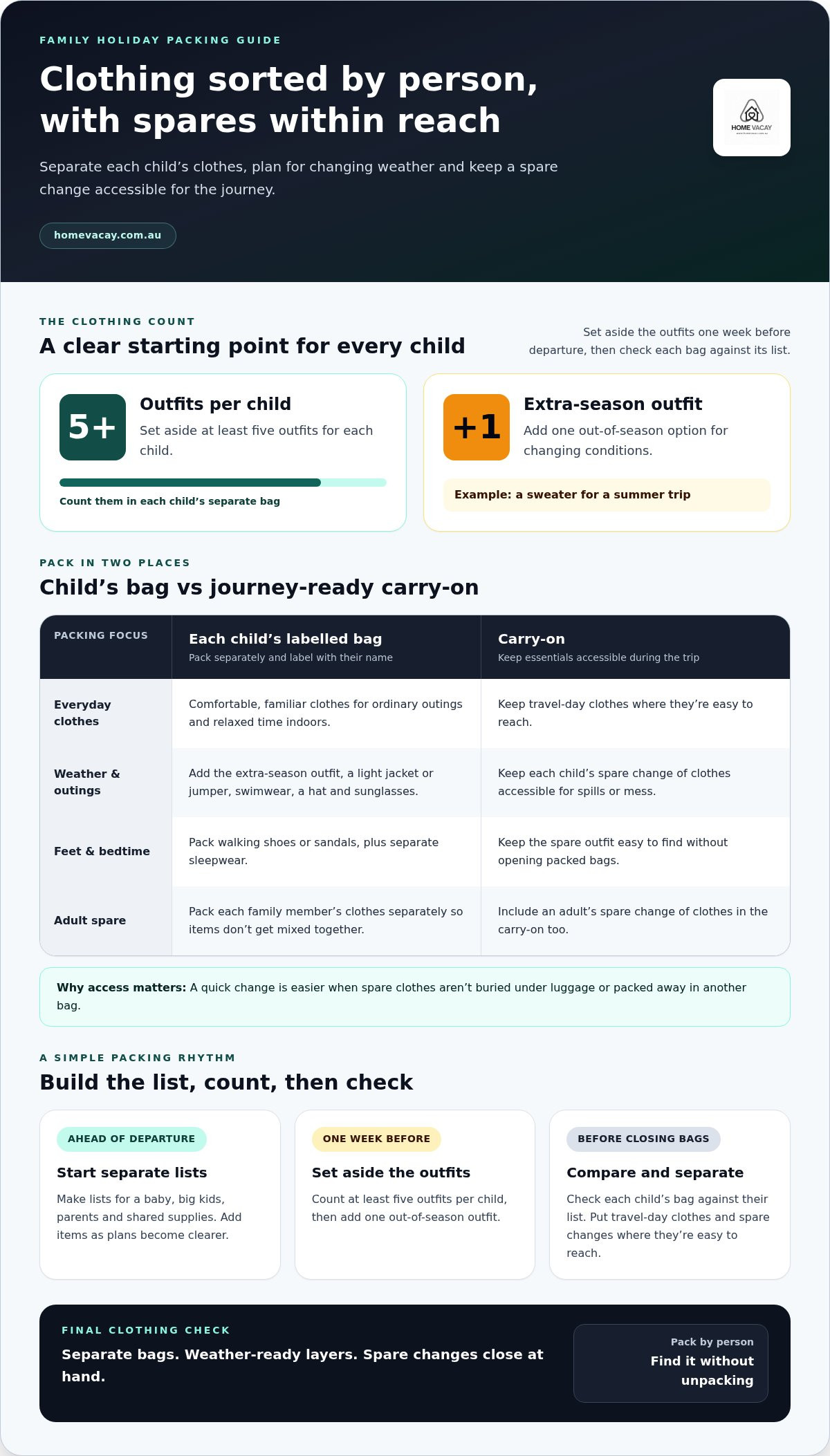
Sort clothes before packing instead of adding everything to one large suitcase. A list for each family member makes gaps easier to spot and helps prevent children’s essentials getting mixed with adult clothing. Start the lists ahead of departure, then add items as plans become clearer.
- Make separate lists for a baby, big kids, parents and shared supplies. These categories help you remember different needs, such as baby clothes, children’s sleepwear and an adult’s spare top.
- Pack each child’s belongings in a separate bag. Label the bag with their name so you can find the right clothes without unpacking everyone’s things.
- Set aside at least five outfits for each child one week before departure. This gives you a clear starting point for counting clothes and spotting anything still needed.
- Add one out-of-season outfit for each child. A sweater packed for a summer trip gives you a warmer option if the day turns cool.
- Choose comfortable everyday clothes for each child. Familiar pieces are useful for ordinary outings, relaxed time indoors and changes between activities.
- Pack swimwear alongside a hat and sunglasses. Keeping these together makes it easier to dress children for a planned swim or sunny outing.
- Include a light jacket or jumper for every child. A warm layer is useful even when the destination is known for warm weather.
- Pack walking shoes or sandals and separate sleepwear. Suitable footwear supports comfortable days out, while sleepwear keeps bedtime clothes easy to find.
- Keep a spare change of clothes for each child in carry-on luggage. An accessible outfit helps manage spills or mess without opening packed bags during the journey.
- Put an adult’s spare change of clothes in the carry-on too. If a child’s spill reaches a parent, both can change without waiting to reach the apartment.
Before closing each bag, compare its contents with that child’s list. Check the outfit count, then put travel-day clothes and an accessible spare outfit where you can reach them quickly. This final check can stop an important item being forgotten beneath other clothes.
Use the category lists to guide the final review, checking the baby, big kids, parent, and general supplies separately. This keeps each family member’s clothing needs distinct from shared items and gives you a clear place to note anything still missing. For children, compare each separate bag with the relevant list and confirm it contains at least 5 outfits, plus 1 out-of-season outfit. A sweater in summer is one example of that extra layer. Keep the everyday clothes, swimwear, hat, sunglasses, light jacket or jumper, walking shoes or sandals, and sleepwear accounted for as you check.
Before departure, keep spare changes for children and adults accessible in carry-on luggage. That way, you won’t have to search through separate bags during the journey. The lists, outfit count and final bag check work together to keep clothing organised by family member and make essentials easier to find.
Planning a family holiday one month before departure
Start preparations well before departure, rather than the night before packing. An early plan gives you time to gather documents, organise home arrangements and update lists as details come to mind. Use one shared checklist, then give older children a few age-appropriate jobs, such as choosing books or checking their activity bag.
- Write a packing list and keep updating it. Add items as you remember them, then sort the list into clothes, health supplies, travel essentials and shared gear.
- Review destination entry requirements and gather travel documents. Put passports, visas, travel insurance details and emergency contacts together so they’re easy to find before departure.
- Set aside 30 minutes to 1 hour to review the family medical kit. Check what you already have, then buy any needed items while there’s time to prepare.
- Check the destination weather and planned activities. Use the forecast and itinerary to decide whether the family needs rain layers, warm clothes, swimwear or walking shoes.
- Arrange care for pets and houseplants. Make a plan for feeding pets and watering plants, so neither is left without care while you’re away.
- Ask a trusted person to collect mail or packages. Agree on who will check the letterbox or parcel deliveries, then share any useful instructions before leaving.
- Plan snacks for the first 48 hours of family travel. Set aside familiar options a week before departure, so food is ready for the journey and early holiday routines.
- Give older kids a small preparation task. They could choose a book, pack a game or help check their own list, which makes their needs visible before bags are closed.
Keep the checklist somewhere the whole family can use, such as a shared phone note or a sheet on the fridge. Mark each item as it’s packed instead of relying on memory during the final rush. If plans change, update documents, activity notes and clothing choices together so one adjustment doesn’t leave another task behind.
In the final days, use the list to separate items needed during travel from those that can stay packed. Keep documents and emergency contacts accessible, and put journey snacks where an adult can reach them easily. A clear task order helps reduce departure-day stress and leaves more attention for the children and the trip ahead.
How many bedrooms and beds do families need when booking an apartment?
Start with the people travelling, then map where each person will sleep. A family with a baby may need a different layout from one with older children who prefer separate beds. Count bedrooms and sleeping places separately: a bedroom may contain several beds, while an apartment may also have a sofa bed in a shared living area.
- List each traveller and their usual sleeping arrangement. This helps you compare the apartment’s bedrooms and beds with your family’s needs.
- Decide whether children can share a room. Siblings who already share at home may find the arrangement familiar, while different bedtimes can make separate rooms more practical.
- Consider whether a baby needs a separate sleep space. Keeping the baby’s sleeping arrangements in mind helps you assess how the bedrooms will work for everyone.
- Check the listed bed types and their locations. A bed in a bedroom offers a different setup from a sofa bed in the living area.
- Think about who will use any sofa bed. If it’s part of the sleeping plan, consider how its location affects evening routines and access to the shared space.
- Match bed arrangements to children’s ages and routines. A child who wakes early may disturb a sibling sharing the same room.
- Allow for adults’ sleep preferences too. Consider whether parents need a separate bedroom or can comfortably share a room with younger children.
- Plan where bags and bedtime items will go. Keeping a clear path to each bed makes it easier to manage bedtime without moving luggage around.
- Compare the apartment layout with your daily routine. A family that puts children to bed early may value sleeping areas away from evening conversation.
- Review the total sleeping capacity alongside the floor plan. Capacity alone won’t show whether the bed locations suit your family’s privacy and routines.
Before choosing an apartment, sketch a simple room plan with each family member’s name beside their intended bed. Then picture a typical evening, from getting ready for bed to an adult reading or relaxing afterwards. This practical check can reveal whether the bedroom count, bed types and shared spaces will work for your family.
Once the sleeping plan is settled, keep travel preparations in view as well. Holiday travellers should pack their booking confirmation, identification, phone and charger, and a reusable water bottle. The checklist suggests that children may need to stretch their legs on journeys longer than 3 hours. Flight Centre travel expert Catrin Taylor recommends using a baby carrier for children up until about three and a half years old when travelling. These details can help families prepare for the journey as well as the stay, without changing the room plan.
The page recommends bringing child-friendly cutlery and dinnerware because many hotels and vacation stays in many countries do not provide them. Families are also advised to pack a jacket, preferably a waterproof one, even when travelling somewhere warm. Before leaving the apartment, travellers should do the laundry, make the beds and put away clutter. Keeping these practical tasks in mind alongside the choice of bedrooms and beds gives families a fuller picture of what to prepare for the trip and what needs attention before departure.
Which apartment amenities are most useful for families with children?
Start with the parts of apartment life your family will use each day. A kitchen can help with simple breakfasts, familiar snacks and meals that fit children’s routines. Child-friendly cutlery and dinnerware can also make mealtimes easier. Think through a usual day, from breakfast to bedtime, and match the amenities to those practical needs.
- Look for a kitchen that suits your family’s meal plans. A space for preparing food can make it easier to serve familiar meals and snacks.
- Check whether child-friendly cutlery and dinnerware are useful for your stay. Smaller hands may find child-sized plates and utensils easier to manage at mealtimes.
- If you plan to bake, check for oven trays before packing ingredients. A recipe may depend on having the right tray available in the apartment kitchen.
- Consider how the dining area fits your family. A place where everyone can sit together can make shared meals simpler than eating around separate surfaces.
- Think about laundry needs for your trip. Children’s clothes can need changing after meals or outings, so laundry access may help you manage what you pack.
- Consider where children can play indoors. A comfortable shared area gives them room for a book, board game or quiet activity between outings.
- Match the bathroom setup to your family’s routine. Consider how children will get ready when several people need the bathroom around the same time.
- Look for storage space for everyday family items. A place for shoes, bags and activity gear can keep the living area easier to use.
- Consider how the apartment supports quiet time. Separate sleeping and living areas can help adults continue their evening after children settle.
- Check whether outdoor plans affect the amenities you need. A beach holiday may call for space to organise swim gear, while a day of city exploring may make a useful entry area more important.
Prioritise the features that support your routine instead of choosing a long list of extras. For example, families planning simple breakfasts may value kitchen equipment more than space for elaborate cooking. If you’ll spend most days outdoors, focus on practical storage and an easy place to regroup.
Use family apartment details to compare the features that matter to your plans.
Home Vacay: Capitol Apartments in Canberra City
Home Vacay offers Capitol Apartments for families planning a convenient holiday. Once you’ve worked out your sleeping arrangements and priorities, compare the apartment options with your itinerary and preferred location.
Families can also consider the Peaceful Family Apartment or the Luxury Inner-City Apartment. Each offers a different setting to consider as you plan outings, meals and downtime with children. Use your family holiday apartment checklist to weigh up what best fits your family’s routines and travel plans.
For your next family stay, explore Home Vacay’s apartment options at homevacay.com.au or contact Home Vacay.
Make your next step a family one
Before you finish planning, turn your family holiday apartment checklist into a shared plan. Give everyone a small role, such as choosing an activity or keeping their travel essentials together. Then match your accommodation choice to how your family wants to spend time in Canberra, from quiet evenings to days exploring the city.
Home Vacay offers Capitol Apartments in Canberra City, Peaceful Coombs Apartment for Families and Luxury Apartment in Braddon Precinct. Consider which location best fits your plans, then take the next step at a pace that feels right for your family.
Contact Home Vacay about your stay and start shaping a Canberra break that feels comfortable for everyone. With a thoughtful plan in place, you can look forward to arriving ready to enjoy time together.
Frequently Asked Questions
What should a family holiday apartment checklist include?
A useful family holiday apartment checklist covers travel essentials, personal care, health items and activities, grouped so nothing gets buried. Add booking details, identification, phones and chargers, then note each child’s individual needs. Include toiletries in small bottles of about 100 mL, plus a first-aid kit with band-aids, children’s pain relief, antihistamines and a thermometer. Check toothbrushes too, and replace any that have reached three months of use.
What kitchen, laundry and cleaning supplies should families pack?
Pack child-friendly cutlery and dinnerware, and check whether oven trays are available before baking in the holiday-home kitchen.


