

Booking direct can sometimes offer better value, but the cheapest option depends on the booking. Online travel agents typically receive accommodation booking commissions of 15 to 30 per cent, which can influence the rates a property offers. That’s why direct booking is cheaper for accommodation in some cases: booking with the property can avoid an intermediary commission, but the best value depends on the total price, room details and booking conditions.
It’s easy to assume the same stay costs less wherever you book. But rates can come with different inclusions and conditions, so the headline price may not tell the whole story. This guide explains what direct booking means and how commissions can influence accommodation prices in Australia.
You’ll also learn how direct bookings compare with third-party sites on total cost, flexibility and handling changes. Use the practical checks below to weigh the options for your next work trip or holiday.
Key Takeaways
- Understand what counts as booking directly and how it differs from reserving through an online travel agent.
- See how commission costs can shape the rates and offers accommodation providers make available.
- Compare booking routes by more than the headline rate, including who handles changes and what each option includes.
- Use a simple decision guide to choose the booking method that best suits your stay and priorities.
What Does Booking a Hotel Directly Mean?
A direct booking is a reservation made with the accommodation provider, usually through its own website or by phone. Booking through Expedia or another online travel agent (OTA) places a platform between you and the property. For a fair comparison, search for the same property, dates, room type and guest numbers through both routes.
Compare the final total, not just the first rate shown. Match inclusions such as breakfast, then review taxes, fees, payment timing and cancellation terms. For Australian hotel chains, use the same chain, property and room category in each search. A chain-wide offer may not apply to every hotel or date. Check the property’s direct site against Booking.com as well as Expedia.
To compare cancellation policies, check the deadline for free cancellation, the penalty that applies afterwards and whether date changes are allowed. Match the room and payment terms on the hotel site and OTA before deciding.
Australian hotels can offer lower rates by phone under a 2016 agreement brokered by the Australian Competition and Consumer Commission (ACCC). This applies to phone discounts that hotels cannot provide online.
Direct booking risks include entering payment details on an imitation website or missing a cancellation condition. Use the hotel’s official website or published phone number, and save the confirmation and payment receipt. With a direct booking, you may need to contact the property rather than an OTA to arrange changes.
To verify a direct booking, check that the confirmation shows the correct property, dates, room and total. Keep the booking reference with the confirmation email.
| Booking option | What to compare | Useful check |
|---|---|---|
| Hotel website | Total and inclusions | Room and dates match |
| Hotel phone | Quoted total and terms | Ask for written confirmation |
| Booking.com | Final price and cancellation | Match the room category |
| Expedia | Payment and inclusions | Review the final checkout total |
| Hotel chain booking page | Property-specific terms | Compare the same location |
Choose the option that best fits your needs across total cost, inclusions and cancellation terms, not simply the lowest headline rate.
Online travel agent commissions
Online travel agents (OTAs) connect travellers with hotels and apartments, then typically receive a commission of 15 to 30 per cent on accommodation bookings. The property pays this cost for access to the platform’s audience and booking system. It is a distribution expense, not automatically a separate fee added to every guest’s bill.
For example, when a guest books through an online travel platform, the platform records the reservation and earns a commission under its agreement with the accommodation provider. The provider receives the booking income after the commission is accounted for. How that affects the displayed rate depends on the provider’s pricing decisions, demand and other costs.
This helps explain why direct booking can be cheaper, but an official website won’t always show the lowest rate. A property may keep prices similar across channels or offer a special direct rate or extra inclusion. Compare the same apartment, dates, guest numbers and cancellation terms. A lower OTA price may not include the same breakfast, payment timing or flexibility.
Third-party booking commissions can influence how providers promote their rooms. A property might use an OTA to reach travellers who haven’t found its website, while direct bookings reduce reliance on that channel. Guests who book directly may deal with the provider about their reservation. Loyalty benefits can also matter: points, status benefits and upgrades are generally available to returning members of hotel loyalty programmes.
Compare the final price alongside the benefits attached to each booking route. Check whether an exclusive offer changes the room, inclusions, payment schedule or cancellation conditions. Then weigh any loyalty value against the OTA’s price and terms. For a direct-booking option, explore apartment accommodation options.
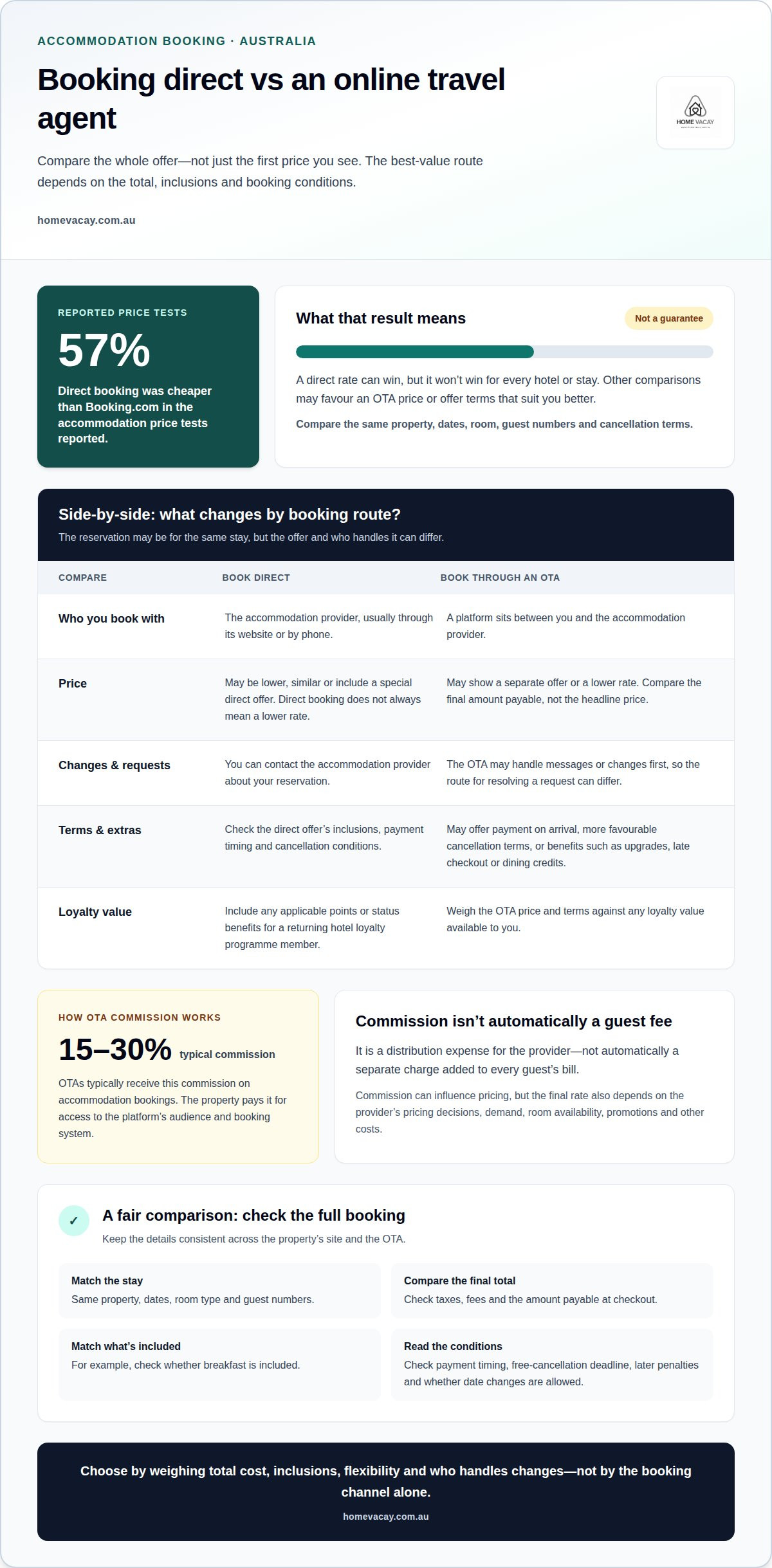
Direct booking versus third-party booking sites
A direct booking puts the accommodation provider in charge of the reservation, while an online travel agent adds a platform to the relationship. The difference matters most when rates, benefits or booking terms vary. Hotels generally charge about the same through either route, so direct booking doesn’t always mean a lower rate.
Direct booking was cheaper than Booking.com in 57% of the accommodation price tests reported in the research. That result shows a direct rate can win, not that it will win for every hotel or stay. The remaining comparisons also matter: a third-party rate may be lower, or include terms that suit the guest better.
Commission can influence the price a provider sets, but it doesn’t determine the final rate on its own. Demand, room availability and promotions also affect prices. An official website might show a special discount, while a booking platform displays a separate offer. Compare the final amount payable and the booking conditions before choosing.
There are practical differences after you book. With a direct reservation, you can send requests to the accommodation provider. If you book through an OTA, the platform may handle messages or changes first. The route for resolving a request can therefore differ, even when the room and stay are identical.
Third-party sites can also offer useful terms, such as paying on arrival or more favourable cancellation conditions. Some offer benefits such as upgrades, late checkout or dining credits. For guests who value flexibility or convenience, these extras may be worth more than a small rate difference.
Choose by weighing the whole offer, not the booking channel alone. Check the room, inclusions, payment timing, cancellation rules and discounts. If you’re a returning guest, include any applicable loyalty points or status benefits. Book direct when its overall terms suit your trip, or choose an OTA when its price or added benefits offer better value.
Direct bookings versus online travel agents
The main difference is who manages the reservation. When you book directly, the accommodation provider receives your booking and special requests. With an online travel agent (OTA), the platform sits between you and the property. That distinction matters when plans change or a request needs attention.
For an OTA reservation, you may need to contact the platform first about changes or other issues. Resolving a problem through a third-party booking site can involve two to three customer service representatives. A direct booking gives you a more direct route to the accommodation provider, although the booking conditions still determine which changes are possible.
Availability can also differ briefly between channels. If someone books directly just before another guest books through an online platform, the platform may not show the change immediately. Read the confirmation carefully and keep the booking reference, dates and room details together.
Neither channel is automatically better. An OTA may suit travellers who value its booking terms or want to manage several reservations through one account. Direct booking may suit guests who prefer to communicate with the property about their reservation. The better option depends on what matters for your trip, not just where the lowest rate appears.
Use this decision guide before you book:
- Choose direct booking if dealing with the accommodation provider directly is your priority.
- Choose an OTA if its specific booking terms better suit your plans.
- For either option, confirm the property, dates, room and cancellation terms in the final reservation details.
- Send special requests through the channel that manages your booking, and keep the response with your confirmation.
For a straightforward decision, compare the final offer and the contact route you’ll use if plans change. Then explore direct accommodation options for your next stay.
Home Vacay
Home Vacay offers self-contained short-stay apartments for business and leisure travellers who want to book directly. Compare its apartment options with third-party listings to find the arrangement that suits your trip.
Compare the total price, apartment details, inclusions and cancellation terms for your dates. This helps you assess the whole booking instead of choosing by headline rate alone.
Whether you’re planning a family break or a work trip, consider which accommodation best fits your plans. Contact Home Vacay to discuss your stay.
Choose the stay that fits your plans
Knowing why direct booking is cheaper for accommodation can help you make a more considered choice, but the right booking route is the one that supports your trip. Think about what would make the stay work well: a suitable location, room for your travel group, or a comfortable base for a work visit. Let those priorities guide your next step.
Before booking, think through the practical details of your stay. Consider where you’ll spend your time, who’s travelling with you and what would make arrival straightforward. Knowing what you need makes it easier to choose suitable accommodation instead of deciding on price alone.
For a family break or a work trip, explore the accommodation options available through Home Vacay. Contact Home Vacay to plan your stay, and take the next step towards a place that suits your time away.
Frequently Asked Questions
When Should You Book Direct?
Book directly when the property’s own booking option suits your needs and its terms work for your plans. This can be useful if you have a particular arrival time or want to share a request with the provider. Before paying, save the reservation details and confirmation email. If an OTA offers a benefit you value, weigh it against the direct option first.
What should match when comparing rates?
Match the stay details before comparing prices: property, dates, room type, guest numbers and length of stay. Then compare inclusions such as meals, parking or other listed extras. Check the cancellation deadline, payment timing and any conditions attached to a discount. A rate for a different room or payment arrangement isn’t a like-for-like comparison.
Booking accommodation direct, is it really cheaper?
Not always. A direct rate may be lower, but an online travel agent can also show a cheaper offer or useful booking benefit. Understanding why direct booking is cheaper for accommodation starts with the provider’s commission costs, but those costs don’t determine every price. Compare the complete offer for your dates, including inclusions and conditions, before deciding which route gives better value.
What are the risks of using third-party booking sites?
A third-party booking adds a layer between you and the accommodation provider. You may need to use the platform’s process for changes, cancellations or special requests. Another practical risk is overlooking a checkout condition, such as a payment deadline or cancellation penalty. Keep the final confirmation and platform reference together so the reservation details are easy to find.
What is the difference between booking direct and booking through an OTA?
With a direct reservation, you book with the accommodation provider. An OTA, or online travel agent, processes the booking through its platform and passes the reservation details to the property. The channel can affect where you manage the booking and send requests. For example, changing a date may require using the platform that handled the original reservation.
How much commission do accommodation booking sites charge hotels in Australia?
Online travel agents typically receive accommodation booking commissions of 15 to 30 per cent. The commission is generally paid by the accommodation provider under its arrangement with the platform. It can influence how a property prices or promotes rooms, but it doesn’t mean guests always pay more through an OTA. Compare the final offer and conditions for your chosen stay.


