

A kitchen is useful when you know what it includes. Short-term rentals can provide a furnished kitchen for preparing meals, but equipment, supplies, utilities, internet and stay conditions vary by property. If you’re weighing the benefits of short term rentals with full kitchen benefits, the practical advantage is having space to prepare food and follow a more home-like routine.
It’s reasonable to expect the basics, but the setup can shape how comfortable your stay feels. Kitchenware, pantry supplies and coffee facilities matter, as do internet access and the living space around the kitchen.
This guide explains which kitchen equipment and supplies to look for, how utilities and internet may be handled, and what a rental can offer beyond a hotel room. It also covers stay conditions, so you can compare the details with your plans before booking.
Key Takeaways
- Use the kitchen inventory to judge whether you can prepare the meals you have in mind, from basic breakfasts to more involved cooking.
- Look at the booking details to understand how utilities and internet are handled, and whether those costs are included in the rate.
- Compare the usable living space, privacy and laundry facilities with what your trip requires, especially when travelling with family or staying longer.
- Check whether the property has a full kitchen or a kitchenette, as the facilities can affect the meals you’re able to prepare.
- Consider the number of guests and length of stay when assessing crockery, cutlery and cookware, and read the booking conditions before choosing.
1. Equipped kitchens and included kitchenware
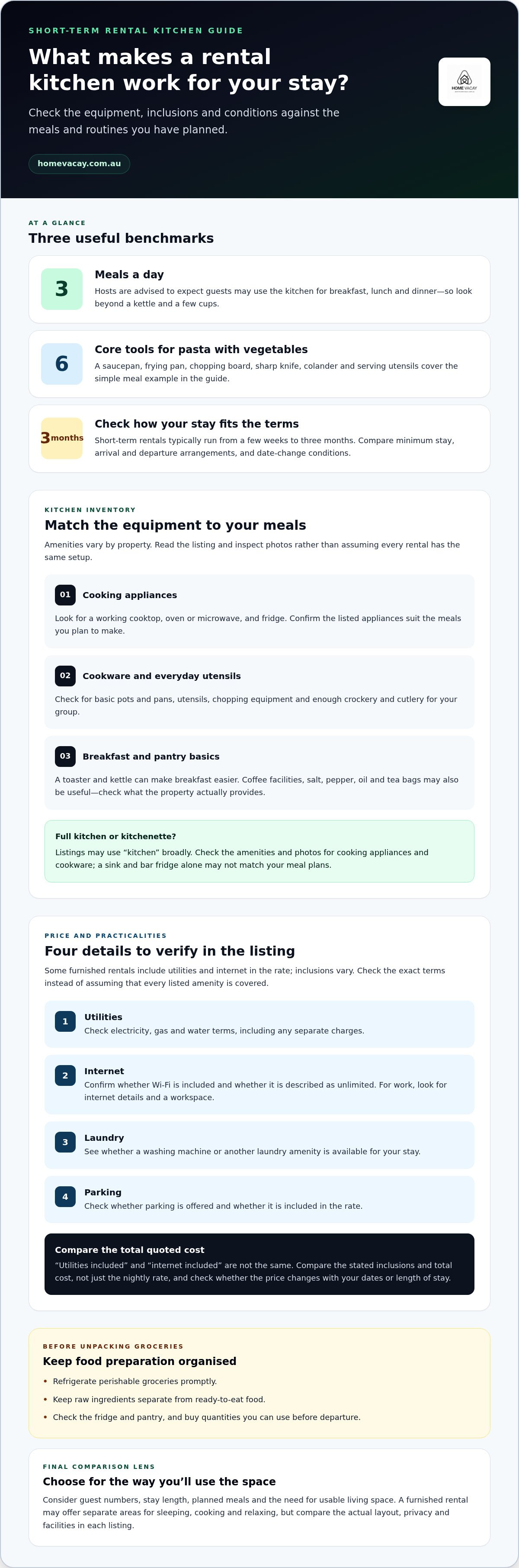
A fully furnished kitchen can make staying in a short-term rental feel more practical, especially when guests plan to cook regularly. Hosts are advised to expect guests may use the kitchen for 3 meals a day, so useful equipment matters beyond a kettle and a few cups. A working cooktop, oven or microwave, fridge, basic cookware and everyday utensils can support simple breakfasts, packed lunches and evening meals.
To make a simple meal such as pasta with vegetables, you’ll need a saucepan, frying pan, chopping board, sharp knife, colander and serving utensils. A toaster and kettle make breakfast easier, while oven trays help with baked dishes. A coffee maker adds everyday convenience. Salt, pepper, oil and tea bags are useful basics if you arrive before doing a grocery shop.
Kitchen availability and set-up vary by property across Australian states and territories. Guests should judge the individual listing rather than assume a particular state guarantees the same kitchen equipment or supplies. There is no single package travellers can rely on for every rental, so amenities and booking conditions are the useful details to compare.
Before booking, match the listed equipment to your plans. Check for an oven, cooktop, microwave, fridge, cookware and enough utensils for your group. Photos can reveal the layout, while the amenities list can help distinguish a full kitchen from a kitchenette. If you plan to make coffee each morning or prepare meals for children, look for those details specifically.
Booking platforms often let guests filter for a kitchen or review amenities in each listing. Use the kitchen filter, then read the full description and inspect the photos. Search results may use “kitchen” broadly, so confirm that the pictured space includes cooking appliances and cookware, not just a sink and bar fridge.
Cooking may cost less than eating out every day, but savings depend on grocery choices, group size and how often you cook. Compare the cost of ingredients for planned meals with the restaurant meals you would otherwise buy. A shared breakfast or home-cooked dinner can make a kitchen especially useful for families and guests staying several nights.
For food safety during a short stay, refrigerate perishable groceries promptly and keep raw ingredients separate from ready-to-eat food. Buy quantities you can use before departure, and check the fridge and pantry before unpacking. These simple steps help prevent food waste and keep meal preparation organised.
2. Utilities and internet included in rental prices
A rental rate may cover more than the furnished accommodation itself. Furnished rentals in Melbourne often include utilities and internet in the price, but inclusions can vary between properties. Read the listing’s pricing details to see whether electricity, gas, water and internet are bundled into one rate or handled separately. This distinction matters for budgeting, particularly during an extended stay.
Look for clear wording about what the price covers. “Utilities included” and “internet included” mean different things, so don’t assume one includes both. A listing may also mention laundry facilities, Wi-Fi or parking. Check whether each amenity is available and included in the rate rather than treating every listed feature as part of an all-inclusive price.
Internet can shape a stay as much as a comfortable bed. Fast, unlimited Wi-Fi is useful for video calls, streaming or using several devices. For a work trip, look for details about a workspace and internet access. For a family, consider how connected devices will be used during evenings indoors.
- Utilities: Look for electricity, gas and water terms, including any separate charges.
- Internet: Check whether Wi-Fi is included and whether the listing describes it as unlimited.
- Laundry: See whether a washing machine or other laundry amenity is available for your stay.
- Parking: Review whether parking is offered and whether the listing treats it as an included amenity.
Location and stay length also affect which accommodation suits your plans. Short-term rentals typically last from a few weeks to three months. A furnished rental in Melbourne may have different terms from a flexible short stay elsewhere. Compare the minimum stay, arrival and departure arrangements, and what happens if your dates change. These details help you weigh flexibility against the convenience of a single rate.
All-inclusive pricing can simplify trip planning when the listed rate clearly covers the costs you expect. It can also make it easier to compare properties: one may include internet and utilities, while another lists them separately. Compare the total quoted cost and included amenities, not just the nightly rate. For an extended visit, check whether the price changes with the length of stay or selected dates.
Before booking, make a short list of must-haves, such as Wi-Fi for work, laundry for a longer visit or parking near your destination. Then compare those needs with each listing’s stated inclusions and terms. If you’re weighing furnished accommodation for an Australian stay, browse these short-term accommodation options as part of your comparison.
3. Home-like living space compared with hotel rooms
A furnished short-term rental can give families more room than a hotel room, with separate areas for sleeping, cooking and relaxing. That layout makes everyday routines easier: one person can prepare breakfast while another gets ready, without everyone sharing a single room. A lounge with a television can also give a family somewhere to unwind after a day out.
Extra space is useful only when it suits the way you travel. Compare the bedroom arrangement with your group, then check whether the living area has enough seating. Separate bedrooms can give adults and children different routines, while a dining table can serve for meals, board games or laptop work. These details matter when a stay lasts longer than a night.
Short-term rentals can offer privacy alongside practical home comforts. A furnished property may include a kitchen, laundry equipment, television and internet access. Each amenity meets a different need: laundry can help refresh clothes during a longer visit, while a kitchen lets you plan meals around sightseeing or work.
Compare the overall experience rather than judging by room size alone. A hotel room may suit a brief stay when you mainly need a bed and bathroom. An apartment can work better when you want separate living space, meal preparation and somewhere to spend time indoors. Short-term rentals may offer more amenities than traditional hotels at similar rates, but specific inclusions depend on the property.
- For families: Check sleeping arrangements, dining space and room for children to relax.
- For work trips: Look for a table, a comfortable place to sit and internet access.
- For extended stays: Consider laundry facilities, kitchen access and storage for daily essentials.
Privacy matters too. Separate living and sleeping areas can let one guest rest while another watches television or prepares for the next day. For example, after a day out, a family can organise dinner and put away belongings without making the bed the only usable space. Check floor plans and photos alongside the written amenities to understand the actual layout.
Think about your daily routine before choosing. List the activities you expect to do indoors, such as making breakfast, taking a work call or washing clothes. Then match each activity to a feature in the listing. This comparison shows whether an apartment offers genuinely useful living space or simply a different setting from a hotel room.
4. Kitchen or kitchenette facilities in residence apartments
A kitchen and a kitchenette suit different kinds of meals. A full kitchen may suit guests planning to cook dinners, prepare lunches and store groceries. A kitchenette is often set up for simpler tasks, such as making toast, heating leftovers or preparing tea. Appliance details matter more than the label alone.
For a practical comparison, picture a day’s meals. Breakfast may need only a kettle, toaster, fridge and mugs. Cooking pasta usually calls for a cooktop, saucepan, colander and utensils. If you plan to bake, roast or prepare several dishes, check for an oven and suitable cookware. These examples help you match the facilities to the way you’ll use the apartment.
An apartment can make dining more convenient by bringing food preparation and living space together. You can eat at a dining table, keep snacks nearby or prepare a meal between work commitments and outings. This can help families with different routines and travellers who prefer a quiet meal at home after a busy day.
Preparing your own meals may cost less than eating out every day, depending on your grocery choices and how often you use the facilities. Even a simple breakfast and packed lunch can make the kitchen useful if you also plan to dine at local cafés or restaurants.
- For basic meals: Look for a fridge, kettle, toaster, microwave and suitable crockery.
- For regular cooking: Check for a cooktop, saucepan, frying pan, chopping board and cooking utensils.
- For shared dining: See whether the table and seating work for everyone in your group.
Before booking, read the amenities list and compare it with the meals you expect to make. Review photos for visible appliances, bench space and dining arrangements. Photos show the layout, while the written listing identifies the facilities included. If you plan to make a particular meal, such as a roast or stir-fry, check for the oven or cooktop it requires.
Storage is another practical detail. A small fridge may be enough for breakfast items and drinks, while a larger one gives you more room for groceries during an extended stay. Bench space also affects meal preparation. If you’re making sandwiches for a day out, for example, you’ll need room to lay out ingredients and pack food.
Choose a setup that fits your plans, not simply the most impressive description. A kitchenette can be convenient for light meals, while a fully furnished kitchen can suit guests who want more flexibility with dining. Matching the facilities to your routine helps you make better use of the apartment throughout your stay.
5. Providing enough crockery, cutlery and cookware
The right quantity of kitchenware helps guests prepare, serve and enjoy meals without constant washing. A useful benchmark comes from a Sydney short-term rental that sleeps 6: it should have at least 18 plates, knives, forks and glasses. That provides three of each item per guest, leaving room for meals, snacks and used dishes between washes.
Use the guest capacity as a starting point when assessing a listing. Consider how many people might eat together, whether children need smaller cups or bowls, and whether everyone can sit down at once. A family apartment for several guests, for example, needs enough plates for breakfast and dinner, not just one meal.
Cookware matters as much as crockery. Pans, utensils and knives help you make everyday meals, from scrambled eggs to vegetable stir-fry. A saucepan, frying pan, turner, serving spoon and sharp kitchen knife cover several basic tasks. A chopping board and colander also make preparing ingredients and draining pasta easier.
Picture a simple dinner to decide whether the setup suits your plans. Pasta needs a saucepan, colander, serving utensils and plates. Cooking eggs may call for a frying pan, spatula and bowls. These examples help you compare the listed equipment with the meals you expect to make during your stay.
Check the amenities and kitchen photos for practical clues. Look for a dining table, visible cookware and enough seating for your group. Photos can show whether there is usable bench space, while the written description may identify appliances and utensils. Even in a stylish apartment, everyday essentials matter more than matching décor.
- Crockery: Look for dinner plates, side plates, bowls, mugs and glasses suited to your group.
- Cutlery: Check for enough knives, forks, spoons and serving utensils for shared meals.
- Cookware: Look for pans, saucepans, cooking utensils and knives for the dishes you plan to make.
A meal-by-meal inventory can help owners equip a short-term rental. List the items needed for breakfast, lunch and dinner, then compare them with the property’s guest capacity. This makes it easier to spot gaps, such as too few glasses or no suitable pan, before the apartment enters the rental market.
For guests in Australia, a well-stocked kitchen can add comfort and make dining in more straightforward. Compare the kitchenware with your group size and meal plans, then choose apartments with facilities that fit your stay.
Home Vacay: Capitol Apartments in Canberra City
Home Vacay offers short-term apartments for business and leisure stays across the country. If the location suits your plans, Capitol Apartments is one popular option to consider. Families may prefer our peaceful family-friendly layout, while our luxury precinct apartment offers another premium choice.
Use the details for each property to compare its location and fit with your trip. Think about where you’ll spend your time, who’s travelling with you and which kitchen facilities matter for your meals. This makes it easier to choose accommodation that suits your routine, whether you’re travelling for work or a family holiday to enjoy the full benefits of a well-equipped kitchen.
To explore the options, visit Home Vacay’s accommodation options.
Choose a stay that fits your routine
The right accommodation should make the shape of your trip feel easier, from a quiet evening in to a busy day out. Think about how you want your stay to work. Will you cook most evenings, keep flexible hours around work, or spend time exploring Canberra? Those priorities can help you choose a place that feels comfortable beyond the first night.
Understanding the benefits of short-term rentals with a full kitchen can help you decide which comforts matter most. Focus on the details that support your routine rather than choosing by appearance alone. A thoughtful match can make your time away feel settled and straightforward.
Home Vacay offers accommodation options for business and leisure stays in Canberra. Explore the properties and consider which setting best suits your plans. Contact Home Vacay to find a rental that feels right for your next stay.
Frequently Asked Questions
Are there any conditions that need to be met?
Yes. Each property sets booking conditions, including arrival and departure times, guest limits and house rules. Before paying, read the booking terms and check that your dates and group details match the reservation. For example, a property may have rules about noise, smoking or visitors. Keep the booking confirmation handy so you can refer to its instructions during your stay.
What are the benefits of booking a short-term rental with a full kitchen?
A full kitchen gives you more control over meal times and food choices during your trip. You can prepare an early breakfast before a day out, make a familiar meal for children or store leftovers for later. These short term rentals with full kitchen benefits can be especially useful when plans change during the day. Cooking at home may also reduce spending on meals out, depending on what you buy and prepare.
What kitchen appliances and cookware are typically included in Australian short-term rentals?
Equipment varies by property, so use the amenities details to match appliances to your meal plans. A basic setup may include a fridge, kettle, toaster or microwave; a more complete kitchen may also have a cooktop, oven, pans and utensils. If you rely on a particular appliance, such as a microwave for heating meals, check that it appears in the property details before booking.
How do full-kitchen rentals compare with hotels and serviced apartments in Australia?
A full-kitchen rental can suit travellers who want to prepare meals and use separate living areas. A hotel room may work well for a brief visit centred on sleeping and exploring. Serviced apartments can combine apartment-style accommodation with services such as housekeeping. Compare the actual inclusions and layout for your trip rather than relying on the accommodation label alone.
Are there extra cleaning fees or rules for using a kitchen in Australian short-term rentals?
Cleaning charges and kitchen rules depend on the property’s booking terms. Review the cost breakdown and house rules before confirming, including instructions for rubbish, dishes or switching off appliances. During your stay, wipe spills, wash used cookware and dispose of food scraps as directed. These simple habits keep the kitchen ready for your next meal and help you follow the property’s instructions.


