

A good holiday meal doesn’t need a fully stocked kitchen. The best simple meals to cook in a holiday apartment use flexible ingredients, straightforward methods and minimal washing up, leaving more of your break free for the things you came to enjoy.
It’s understandable to pause before shopping when you’re not sure what equipment will be available. A short stay can also make a big grocery shop feel wasteful, especially if it leaves you with half-used ingredients to take home. Choose recipes that adapt to different kitchens, and cooking can feel easy rather than like another holiday chore.
This guide shares unfussy ideas for satisfying breakfasts, lunches and dinners, along with ingredient swaps to help you make the most of a small shop. You’ll also find practical tips for planning around the kitchen you have, keeping preparation manageable and cutting down on washing up.
Home Vacay’s self-contained apartments offer a flexible setting for preparing simple meals while you travel. With a little planning, you can enjoy the ease of eating in without spending too much of your holiday cooking or cleaning.
Key Takeaways
- Choose simple meals to cook in a holiday apartment that can adapt to the kitchen and ingredients available.
- Mix no-cook breakfasts and lunches with quick cooked options to keep meal prep manageable.
- Use one-pan, one-pot and assembly-style dinners to make satisfying meals with less washing up.
- Plan around a few versatile ingredients, then reuse them in different ways to reduce leftovers.
- Match your meal plan to the length and pace of your trip, rather than spending your break following an elaborate menu.
What makes a simple meal work in a holiday apartment?
An unfamiliar kitchen can make even a familiar recipe feel less straightforward. You may have limited time, different equipment from home and little room to store ingredients you won’t use again. The most useful simple meals to cook in a holiday apartment are adaptable, quick to prepare and easy to tidy up afterwards. They don’t depend on a long list of pantry staples or a particular piece of equipment.
Before choosing a meal, make a quick check of four things:
- Available gear: What cooking equipment is there, and what can you comfortably use?
- Meal time: Is this a relaxed dinner, or do you need food ready between activities?
- Group size: Can you make the meal in a suitable quantity without awkward leftovers?
- Dietary needs: Can everyone eat the ingredients, or would a simple swap help?
A little planning helps you turn those decisions into a small, practical shop. The broad benefits of meal preparation include organising meals and ingredients in advance. On a short stay, that might mean deciding how to use one ingredient across a few dishes, rather than buying items for a single recipe and leaving the rest behind.
Choose meals around the kitchen you have
Look over the available equipment before settling on recipes. If a stovetop, microwave or other cooking method isn’t available, choose a meal that uses a method you do have, or go with a no-cook option. If a recipe relies on a particular pan, use a suitable alternative if available, cook the ingredients in stages, or choose a meal that doesn’t need that pan. Keep your method flexible rather than assuming every kitchen has the same setup.
Build a small, flexible ingredient shop
Choose ingredients that can earn their place in more than one meal. Eggs can work for breakfast or a quick dinner; capsicum and spring onion can add freshness to different dishes; and tinned tomatoes can form the base of a simple sauce or one-pot meal. Buy amounts that make sense for the length of your stay and the number of people eating. A compact shop is easier to use up and simpler to manage.
Flexible ingredients make holiday cooking easier because one small shop can support several different meals. For example, use capsicum in a lunch wrap, then add what remains to a cooked dinner. That doesn’t mean eating the same dish twice. Change the base, such as serving ingredients with toast one day and pasta another, or pair them with a different protein. You can also swap in another suitable vegetable if a recipe’s usual choice isn’t practical.
The aim isn’t to plan every bite. Choose meals that fit the kitchen, the people at the table and the time you want to spend cooking. A simple, flexible approach leaves less to organise and less food to carry home.
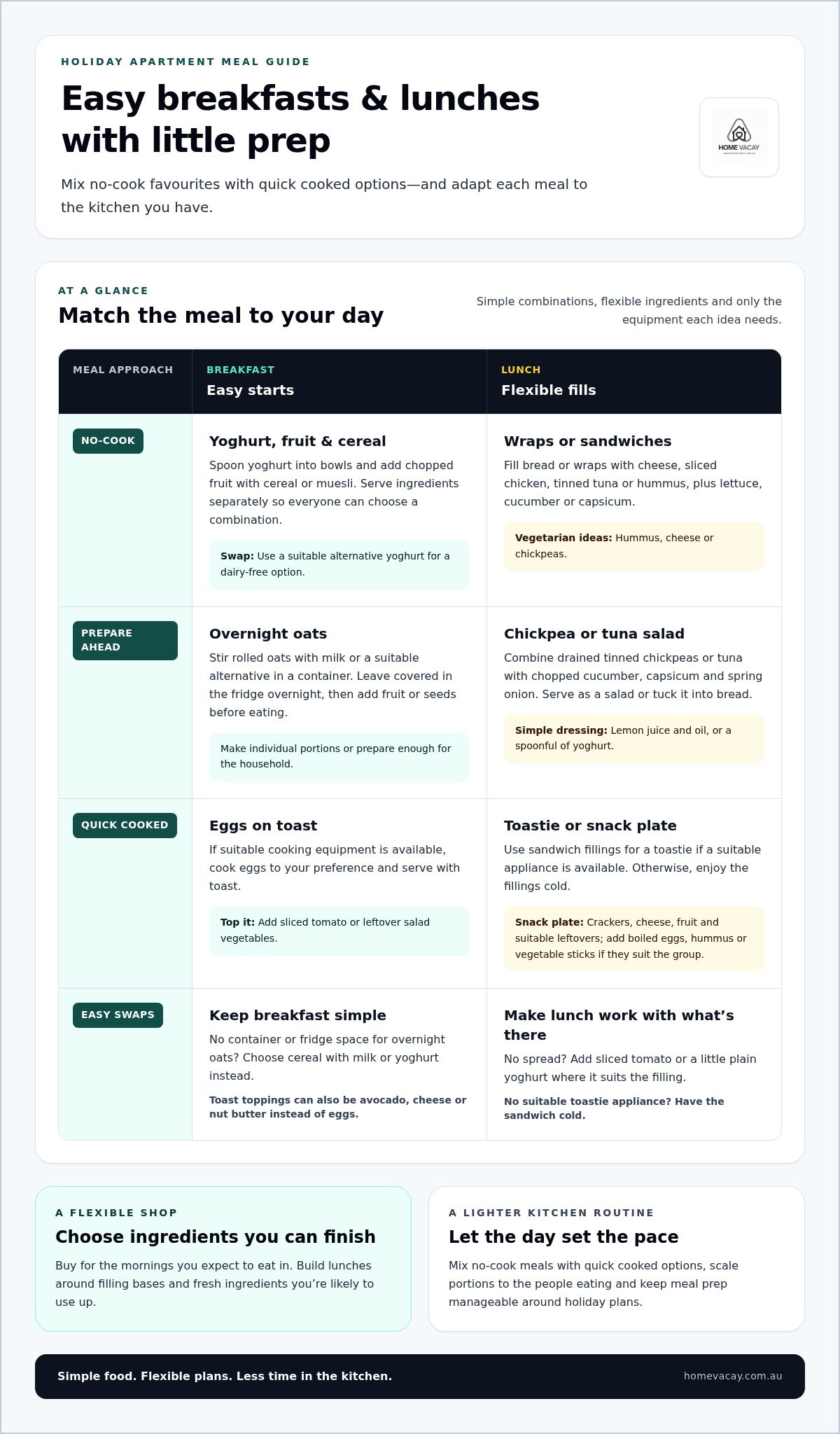
Easy holiday-apartment breakfasts and lunches with little prep
Breakfast and lunch can be simple without feeling like an afterthought. Choose meals that use ingredients you’re likely to finish, scale easily for the people at the table and suit the equipment available. These ideas range from no-cook combinations to quick cooked options, so you can fit food around the day rather than the other way round.
Quick breakfasts for an easy start
Keep breakfast flexible. Buy ingredients for the number of mornings you expect to eat in, then mix and match rather than planning a different recipe for every day.
- Yoghurt, fruit and cereal: Spoon yoghurt into bowls and add chopped fruit and cereal or muesli. For a family, serve the ingredients separately so everyone can choose their own combination. For a dairy-free option, use a suitable alternative yoghurt.
- Eggs on toast: If suitable cooking equipment is available, cook eggs to your preference and serve with toast. Add sliced tomato or leftover salad vegetables, or skip the eggs and top toast with avocado, cheese or nut butter.
- Overnight oats: Stir rolled oats with milk or a suitable alternative in a container, then leave covered in the fridge overnight if one is available. Add fruit or seeds before eating. Make individual portions or prepare enough for the household.
If you don’t have a container or fridge space for overnight oats, choose cereal with milk or yoghurt instead. A simple substitution keeps breakfast easy without requiring extra equipment.
Low-effort lunches between holiday plans
For lunch, build around a filling base and fresh ingredients you’re likely to use up. These simple meals to cook in a holiday apartment also work well as no-cook choices when you’d rather keep the kitchen clear.
- Wraps or sandwiches: Fill bread or wraps with cheese, sliced chicken, tinned tuna or hummus, plus lettuce, cucumber or capsicum. For a vegetarian filling, use hummus, cheese or chickpeas. If you don’t have a spread, add sliced tomato or a little plain yoghurt where it suits the filling.
- Chickpea or tuna salad: Combine drained tinned chickpeas or tuna with chopped cucumber, capsicum and spring onion. Dress with lemon juice and oil if you have them, or use a spoonful of yoghurt. Serve as a salad or tuck it into bread.
- Snack plate: Arrange crackers, cheese, fruit and suitable leftovers on a plate. Add boiled eggs, hummus or vegetable sticks if they suit the group. It’s easy to scale for one person or share around the table.
For a toastie, use the same sandwich fillings if a suitable appliance is available. Otherwise, enjoy them cold. Versatile fillings let each person adjust their lunch, including for vegetarian preferences, without making separate meals. A self-contained stay can make this kind of mealtime flexibility easier. Find out more about self-contained apartment stays.
Simple holiday-apartment dinners that keep cooking and washing up light
Dinner can be satisfying without a complicated recipe or a pile of dishes. For simple meals to cook in a holiday apartment, choose a base that works with different additions, then adjust the method to suit the equipment available. A saucepan, a suitable pan or no cooking at all can still lead to an easy meal.
One-pan and one-pot dinners
- Tomato and vegetable pasta: Cook pasta using the available method, then combine it with tinned tomatoes and chopped vegetables such as zucchini or capsicum. Add beans, cooked chicken or another protein if you like. If there’s no suitable pan for a sauce, serve the tomatoes and vegetables as a simple topping instead.
- Rice bowls: Start with cooked rice and add vegetables, then top with eggs or legumes if they suit the group. Use leftover cooked rice if you have it, or prepare rice according to its packet directions. A little soy sauce, lemon or yoghurt can change the flavour without requiring a collection of seasonings.
- Tray-style dinner: If suitable oven equipment is available, place chopped vegetables and a protein on a tray and cook until ready. Potatoes and carrots make a hearty base; chickpeas can stand in for meat. Without an oven or suitable tray, cook the ingredients another way or choose a stovetop meal.
A one-pan method keeps the cooking together, so there’s less to wash up afterwards. Choose a recipe that fits the kitchen rather than buying ingredients for a method you can’t use.
Flexible dinners for different appetites
- Build-your-own wraps: Put beans, salad vegetables and wraps on the table, with a simple sauce such as yoghurt mixed with lemon or a little salsa. People can fill their own, making it easy to leave out ingredients or add extras. Keep the beans as a vegetarian option, with another protein alongside if needed.
- Couscous bowls: Prepare couscous according to its packet directions, then add chopped vegetables and chickpeas or another protein. A squeeze of lemon or a spoonful of yoghurt gives it a fresh finish. If couscous isn’t available, serve the same toppings with bread or another suitable base.
A single base ingredient can feel different with a small change in flavour. For example, use rice with soy sauce and vegetables one evening, then pair it with lemon, chickpeas and greens another time. Keep sauces and toppings optional so everyone can season their own serving. One shared meal can then suit different appetites and vegetarian preferences without separate dinners.
How to make holiday cooking easier with smart shopping and simple swaps
A small plan can make your grocery shop easier to use and help keep meals flexible if plans change. You don’t need a strict menu. Choose a few ingredients that can work across meals, then adjust the dishes to suit the kitchen and the people travelling with you.
- Count the meals you’ll eat in. Note how many breakfasts, lunches and dinners you expect to prepare, allowing for meals out or days when everyone is on the go. Use the number of people eating to guide quantities and avoid buying for meals you may not make.
- Choose ingredients with more than one use. Eggs, bread, salad vegetables and tinned legumes can cover several meals. Bread might work for breakfast toast and lunch sandwiches; chickpeas can go in a salad or a couscous bowl. Pick different combinations so the meals don’t feel repeated.
- Shop for those meals. Buy shelf-stable items such as tinned tomatoes and legumes alongside fresh ingredients you can use early in the stay. Keep the list short, and choose smaller amounts of fresh produce where practical.
Plan a small shop without overbuying
Think about how you’ll use ingredients in sequence. If you buy salad leaves for lunch, plan to use them again with dinner before they wilt. Tinned legumes can stay on hand until needed, while fresh bread, soft fruit and salad vegetables are better suited to meals near the start of the stay. Match quantities to your group and the nights you’ll be cooking, rather than shopping as if you’ll prepare every meal at home.
Adapt recipes to the ingredients and gear available
Keep the basic meal structure and swap what’s on top or inside. Replace one vegetable with another that suits the dish, trade chickpeas for beans, or serve rice instead of couscous if that’s easier to find. If a recipe depends on equipment you don’t have, choose a simpler cooking method or make the components separately using the gear available. For example, serve cooked vegetables and a protein alongside bread or rice rather than combining them in a particular pan.
For different preferences, put components on the table separately. Offer beans alongside another protein, or keep sauce and salad additions on the side. That lets each person build a plate that suits their appetite without making separate meals. It’s a straightforward way to accommodate vegetarian choices and varied tastes.
Food safety matters, especially when ingredients are shared across meals. Follow current storage and handling advice from Food Standards Australia New Zealand, and plan to use perishable ingredients with care. Pay attention to which foods need prompt use so you can shop sensibly and handle them safely.
With a short list and a few adaptable ingredients, cooking can stay flexible throughout your trip. For a stay with mealtime flexibility, explore self-contained apartment stays with Home Vacay.
Enjoy easy meals as part of a relaxed self-contained apartment stay
The best holiday meal plan is one that leaves room for the holiday. A few simple meals to cook in a holiday apartment can make mealtimes easier, but there’s no need to plan every breakfast, lunch and dinner before you arrive. Leave space for meals out, changing plans and the occasional snack-style lunch assembled from what’s on hand.
Keep the holiday rhythm ahead of the meal plan
Choose a small number of meals you’re happy to prepare, then keep the rest flexible. You might plan a pasta dinner and a rice bowl while leaving other evenings open. If the day runs late, a simple sandwich, leftovers or a relaxed snack plate can take the place of cooking. The plan should support your trip, not set its timetable.
This approach also makes it easier to respond to the way each day unfolds. A morning spent exploring may call for a quick lunch, while a quieter day could leave room to cook together. Treat meal ideas as options, not commitments. Keep ingredients versatile, and change the plan if you decide to eat out or find something appealing while you’re away.
Uncomplicated meals can leave more time for the reason you travelled, whether that’s seeing family, enjoying a break or fitting in a work trip. There’s no need to make every meal memorable. A few familiar, satisfying choices can be enough to make the stay feel comfortable.
Choose a stay that suits how you like to travel
A self-contained apartment stay offers a flexible setting for travellers who like having the option to prepare some meals. It can suit business and leisure trips alike, whether you’re travelling solo, as a couple or with family. Plan around the kitchen and equipment available in your apartment rather than assuming every stay has the same setup. Adaptable meal ideas make it easier to settle in and make the most of what’s there.
Home Vacay offers self-contained short-stay apartments for business and leisure travellers across Australia. Preparing a few easy meals can fit naturally into that kind of stay, while leaving plenty of room to eat out or follow the day’s plans. Keep your food routine light: choose a handful of meals, shop for what you’ll use and leave the rest open.
A flexible short stay can make it easier to shape mealtimes around your plans, whether you’re travelling for work or leisure.
Make your next short stay feel easy
Let the trip shape your routine, not the other way round. A meal at home can be a welcome pause between outings or a comfortable way to end a busy workday. Keep the plan light and leave room for the unexpected. You can decide what suits each day once you arrive.
Think of simple meals to cook in a holiday apartment as an option, not an obligation. A relaxed approach gives you the freedom to enjoy a meal out, share an easy lunch or prepare something familiar when it suits. The aim is to feel at home in your own rhythm, without turning food planning into another task.
Home Vacay offers self-contained short-term apartments for business and leisure travellers. For a stay with room to make mealtimes your own, explore Home Vacay apartments for your next short stay.
Frequently Asked Questions
Can I cook in a holiday apartment without an oven?
Yes. Many simple meals to cook in a holiday apartment can use a stovetop, microwave or no-cook approach, depending on what’s available. You could make eggs on toast with suitable stovetop gear or prepare a chickpea wrap without cooking. Check the kitchen equipment before choosing recipes, and keep a back-up meal that needs no heat. That way, a missing appliance won’t derail dinner.
What basic ingredients should I buy for a short apartment stay?
Choose a compact mix that suits the meals you expect to make. Bread, eggs, fruit, salad vegetables and a tin of legumes can cover several simple combinations. Your list will depend on the number of people, planned meals and available storage space. Buy modest amounts of fresh food and avoid large packs of ingredients you’ll use only once. Check cupboards and the fridge before shopping, but don’t assume pantry staples are supplied.
How can I make holiday-apartment meals suitable for vegetarians?
Use beans, chickpeas, eggs, dairy or tofu as adaptable protein options, depending on individual preferences. Add chickpeas to pasta, use beans in wraps, or serve tofu with a grain bowl. For a shared meal, keep the base and toppings separate so people can assemble a suitable plate. If someone has strict dietary needs, read ingredient labels carefully, including those on sauces, dressings and packaged foods.
Is it safe to keep leftovers while travelling?
Leftovers can be kept safely only if they’re handled and stored appropriately. Refrigerate them promptly where refrigeration is available, and use a clean, covered container that fits the storage space. Follow current Food Standards Australia New Zealand food safety advice for handling and storage. Make only what you can store and eat safely during the stay, and avoid keeping food if you’re unsure it has been stored correctly.
Can I prepare simple meals for children in a holiday apartment?
Yes. Familiar foods such as pasta, fruit, eggs or wraps can make meals easier for children, with choices suited to their age and needs. Keep ingredients separate so a child can skip unfamiliar textures or fillings. Choose methods based on the equipment available, and supervise children around hot food and cooking areas. If allergies are a concern, check labels and avoid ingredients that may not be suitable.
How do I avoid wasting food during a short holiday stay?
Plan only a few meals, buy modest quantities and choose ingredients with more than one use. For example, a loaf of bread might cover breakfast and lunches, while a tin of beans can be added to a salad or dinner. Before shopping, look at what’s already available in the kitchen. Don’t count on finding pantry basics there; make your list around ingredients you know you’ll use.
What are easy holiday meals for a group with different dietary preferences?
Set out a shared base, such as rice, wraps or crackers, with toppings served separately. Offer choices like salad vegetables, beans, cheese or another suitable protein, so each person can put together a meal without needing a separate dish. Keep allergy-safe ingredients apart and use clean utensils to reduce the chance of accidental contact. For serious allergies, check every packaged ingredient and follow the person’s usual precautions.


