

The highest-ranked apartment isn’t always the best fit for your trip. A comfortable stay comes down to practical details, from how you’ll spend your days to how much space your group needs. If you’re searching the web for the ideal accommodation, start with your plans rather than listing rank alone.
It’s easy to get caught up in polished photos or a long list of features. But a higher nightly rate doesn’t automatically mean a better stay, and a brief description may not answer every practical question. Set a few priorities first, then compare listings against the same criteria.
This guide offers a practical framework for comparing short-stay apartments. You’ll learn how to assess the layout, stated features and booking details against your travel plans. Home Vacay offers short-term apartment stays for business and leisure travellers, with direct booking through its website and flexible check-in and check-out options. Use the framework to narrow your shortlist and choose a comfortable base for your time away.
Key Takeaways
- Start with your trip purpose, travel companions and daily routine. These priorities help narrow the options before you compare features.
- Focus on how each listing fits your plans rather than its ranking or photos alone.
- Read the description, photos and guest feedback together to build a clearer picture of the stay.
- Compare shortlisted apartments using the same details, including sleeping arrangements, stated features and booking terms.
- Check your dates, guest numbers and essentials before booking, then consider Home Vacay’s short-term apartment stays for business or leisure travel.
How to choose where to stay for a short break
Apartment listings can look much alike at first glance, but the same layout or feature can suit one trip and feel inconvenient for another. A solo traveller attending meetings may need a different setup from a family planning relaxed days out. Start with your plans, not the listing order or the most appealing photos.
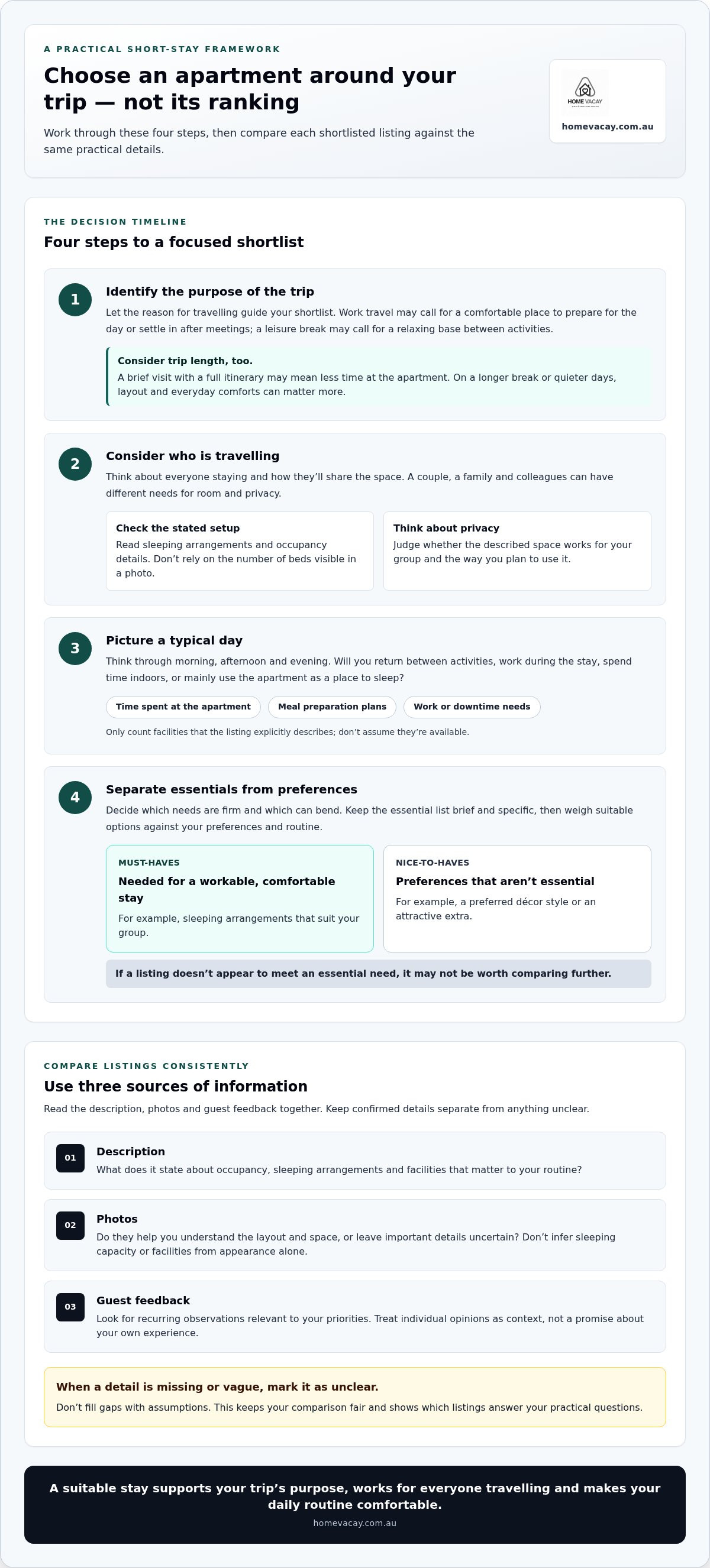
A suitable stay supports your trip’s purpose, works for everyone travelling and makes your daily routine comfortable. To find that fit, decide what matters in this order:
- Identify the purpose of the trip.
- Consider who is travelling and how they’ll share the space.
- Picture a typical day, including how much time you’ll spend at the apartment.
- Separate essential features from preferences.
Start with the purpose of the trip
For work travel, practical considerations might include having a comfortable place to prepare for the day or settle in after meetings. For a leisure break, you may value a relaxing base between planned activities. Neither set of priorities applies to everyone. Let the reason for travelling guide your shortlist.
Trip length matters, too. On a brief visit with a full itinerary, you may spend little time at the apartment. A longer break, or a schedule with quieter days, can make the layout and everyday comforts more important. Consider what you’ll do, how often you’ll return during the day and what would make your time at the property feel easy.
Match the stay to your travel group
Think about everyone staying, not just the person making the booking. A couple, a family and colleagues travelling together can have different needs for space and privacy. Read the stated sleeping arrangements and occupancy details, then check that they suit your group and the way you’ll use the apartment.
Decide which needs are firm and which can bend. Sleeping arrangements that work for each guest may be essential, while a preferred décor style may be less important. This distinction helps you focus on whether the apartment is practical for your group, rather than being distracted by attractive extras.
Your daily routine is another useful filter. Think through a typical morning, afternoon and evening. Will you return between activities, spend time working or mostly use the apartment as a place to sleep? Your answer helps you judge which stated features matter and which are simply pleasant additions.
Make two short lists before comparing properties:
- Must-haves: requirements that affect comfort or make the stay workable, such as sleeping arrangements that suit your group.
- Nice-to-haves: preferences that would improve the experience but aren’t essential to your plans.
Keep the must-have list brief and specific. If a listing doesn’t appear to meet an essential need, it may not be worth comparing further. Then weigh the remaining options against your preferences and routine. This turns a broad search into a focused shortlist without assuming every traveller needs the same things.
What to look for in a short-stay apartment listing
A useful listing helps you picture how the accommodation will work during your stay. Look beyond the headline and scan for details that connect with your plans, such as the sleeping setup, occupancy information and facilities that matter to your routine. If a detail is missing or vague, don’t fill the gap with an assumption. Treat it as unknown while comparing your options.
Compare the details that affect your stay, not just the headline or image. This keeps the focus on how well the apartment fits your plans.
Check the details that shape your daily routine
Start with the written description. Check that the stated sleeping arrangements suit everyone in your group, and read the occupancy information rather than relying on the number of beds shown in a photo. A property can look spacious but still describe a setup that doesn’t work for your guests.
Next, look for facilities that support the way you’ll use the apartment. If you plan to prepare meals, work during your stay or spend time indoors between activities, check whether the listing explicitly describes what you need. Don’t assume a facility is available because it’s common in other accommodation.
Keep a short note of unanswered essentials. If a detail affects your group’s comfort or plans but the description doesn’t address it, mark it as unclear. That gives you a fair comparison and helps separate confirmed information from guesswork.
Read photos and reviews with care
Photos can help you understand a property’s layout and feel, but they work best alongside the written details. Compare what you can see with what the description says. A photo may show a room or feature without explaining how it’s used, so don’t infer sleeping capacity or facilities from appearance alone.
Guest feedback adds another perspective. Look for recurring themes that matter to your trip, such as comments about the layout or how well the accommodation suited a particular type of stay. One person’s preference may not match yours, so treat individual opinions as context, not a promise about your own experience.
- Description: What does the listing state about occupancy, sleeping arrangements and facilities?
- Photos: Do they help you understand the space, or leave important details uncertain?
- Feedback: Are there repeated observations that relate to your priorities?
Use the same checks for every option on your shortlist. This makes it easier to see which listings answer your practical questions and which rely more on presentation. If you’re considering a short-term apartment stay, Home Vacay’s apartment stays are available for business and leisure travel.
How to compare short-stay accommodation without getting distracted
Once you have a shortlist, compare each option against the same criteria. A simple comparison grid makes differences easier to see and stops a polished image or prominent feature from taking over the decision. Use the same rows for every apartment, and record only what the listing states.
Trip fit: Does the accommodation suit the reason for your stay and your planned routine?
Sleeping arrangements: Does the stated setup work for everyone in your group?
Stated features: Which listed facilities support your plans?
Booking terms: What do the terms say about your booking and check-in arrangements?
Keep each entry brief. You could note “fits work schedule”, “sleeping setup suits group” or “feature not stated”. That last note matters: it separates information in the listing from assumptions and gives you a consistent basis for deciding whether an option meets your needs.
Use a weighted shortlist, not a long wish list
Choose your three most important requirements and rank them. Give essential needs the greatest weight, then consider optional comforts. If the sleeping setup is essential but a particular style is only a preference, don’t let that preference outweigh a mismatch with your group’s needs. A short, ranked list keeps the comparison focused.
Apply those priorities to each option. You don’t need a complicated scoring system. Mark whether each apartment meets, partly meets or doesn’t meet each requirement. This makes trade-offs visible and helps explain why an option with fewer extras may suit your trip better than one with a longer feature list.
The lowest displayed rate isn’t automatically the best fit. An apartment that doesn’t meet an essential need may be less suitable for your plans, even if its headline rate looks appealing. Compare the overall fit using the details you’ve gathered, rather than letting one figure decide for you.
Consider the full booking picture
Before choosing, read the booking terms and check-in information for each shortlisted option. Compare what’s actually stated, including conditions that could affect your plans. Don’t assume a service or arrangement is included simply because it appears in another listing or is common in other stays.
Finish with a final essentials check. Confirm that your preferred option still fits your trip purpose, group and daily routine, and that its stated arrangements work with your plans. Keep any essential detail that remains unclear separate from confirmed information as you decide.
A consistent set of criteria helps you choose an apartment for how it will work during your stay, not just how it appears in search results.
A practical checklist before booking a short-stay apartment
A short checklist can catch mismatches that are easy to miss while browsing. Work through it from defining the trip to reviewing the final listing. Keep your essentials in view, and base your decision on the information that applies to your dates and travel group.
Build your shortlist in five steps
Use these steps to move from broad requirements to a focused choice:
- Write down your trip details. Record the purpose of your stay, travel dates and number of guests. Add plans that shape your accommodation needs, such as working during the trip or spending time at the apartment between activities.
- Set your non-negotiables. Note the requirements that determine whether the stay will work. These might include sleeping arrangements that suit everyone or a stated facility that supports your routine. Keep preferences separate from essentials.
- Remove unsuitable options. Set aside listings that don’t meet a non-negotiable. This keeps an appealing photo or extra feature from distracting you from a basic mismatch.
- Compare the remaining listings consistently. Use the same criteria for each option: trip fit, sleeping arrangements, stated facilities and booking terms. Record what’s clear and what remains unanswered.
- Choose the best fit for your plans. Review how each remaining option meets your priorities. A simple note beside each requirement can make differences easier to see without turning the decision into a complicated scoring exercise.
Make a final pre-booking review
Before completing a booking, return to the selected listing and check the details against your plans. Confirm that the dates and guest numbers are correct, and reread the stated sleeping arrangements and property information. Base your decision on written details, not assumptions drawn from photos.
Review the check-in and check-out information, along with the relevant booking terms. Consider whether the stated arrangements fit your travel schedule. Home Vacay offers flexible check-in and check-out options for short-term stays.
Then pause for one last essentials check. Does the accommodation suit the reason for your trip? Does the setup work for everyone travelling? Do the listed details support the routine you expect? Keep the decision grounded in your priorities, not in how many features a listing presents.
Once your checklist is complete, you can book a Home Vacay apartment stay directly through the website.
Find a short-stay apartment that feels right for your trip
A good final choice brings your plans and the listing details together. Look back at the purpose of your trip, the people travelling with you and the essentials you identified. The right apartment is the one that supports those needs in a practical way, rather than the one with the longest feature list.
When an apartment stay may suit your plans
A short-term apartment can provide a considered base for a work visit or leisure break. A business traveller may want a setup that fits their schedule, while a family may focus on sleeping arrangements and how the space will work for the group. In either case, match the stated details to your routine and plans. Don’t assume a feature or service is included unless the listing says so.
Think about the shape of your days, too. If you expect to spend time at the apartment, details that support your routine may matter more. If you’ll be out for much of the day, other priorities may take the lead. There’s no single checklist that suits every traveller. Your own essentials are the best guide.
Take the next step at your own pace
Home Vacay provides short-term apartment stays for business and leisure travellers. You can book directly through the Home Vacay website, with flexible check-in and check-out options. As you review the stays, use the same simple test: does the accommodation suit your trip purpose, your group and the practical details that matter most to you?
Compare the listing information with your dates and plans. Choose an option that fits the priorities you’ve set, rather than letting features you may not use drive the decision. A clear comparison can help you feel settled about your choice before you book.
When you’re ready, explore Home Vacay’s short-term apartment stays and book directly through the website.
Choose a stay that gives your trip room to unfold
A short break begins before you arrive. Picture the first morning, the pace of your days and the moment you return to your apartment. This can help you decide whether a place suits the experience you want, not just the logistics of getting away.
If you’re still searching “Braddon Canberra where to stay”, keep your plans at the centre of the decision. The right choice doesn’t need to tick every possible box. It should feel comfortable for your travel group and make sense for the way you intend to spend your time.
Home Vacay offers short-term apartment stays for business and leisure travellers. Explore the options at your own pace and choose what fits your trip. Explore Home Vacay stays.
Frequently Asked Questions
How do I choose where to stay for a short trip?
Choose accommodation around the parts of your trip that will shape your days most. Map out your planned activities and how you’ll get between them. Then consider how much time you expect to spend at the apartment and what would make that time comfortable. This helps you decide which location and listing details deserve attention, without letting attractive extras take priority.
What should I check before booking a short-stay apartment?
Check that the booking details match your plans. If one guest will arrive later than the rest, for example, review the check-in information so you understand the stated arrangements. Revisit the occupancy and sleeping details, read the booking terms and make sure the dates are correct. Note anything important that the listing leaves unanswered so your decision is based on clear information rather than assumptions.
Is an apartment stay suitable for a business trip?
Yes, an apartment stay can suit a business trip if its stated details work with your schedule. Consider your arrival and departure times, how long you’ll be away and whether you prefer a more independent stay. Home Vacay provides short-term apartment stays for business travellers, with direct booking through its website and flexible check-in and check-out options. Review the listing and booking terms against your work plans.
Can a short-stay apartment work for a family holiday?
Yes, it can work well when the listed sleeping arrangements and occupancy suit your family. Consider the needs of everyone travelling and whether the described setup feels practical for your group. For instance, a family with different bedtimes may value a layout that supports a settled evening routine. Home Vacay offers short-term stays for leisure travellers, including families. Use the property information to judge whether an option suits your holiday.
How can I compare apartment listings fairly?
Compare listings using the same dates, guest numbers and criteria. This avoids judging one option using a fuller description than another. Note what each listing states about the sleeping arrangements, facilities and booking conditions, then separate clear information from details that aren’t provided. If two options both seem suitable, consider which better supports your likely routine. A consistent comparison makes the decision easier and less dependent on first impressions.
What should I look for in accommodation reviews?
Look for comments that relate to your own plans rather than relying on a rating alone. A guest travelling for work may mention different priorities from a family on holiday. Notice whether similar observations appear across multiple reviews, and consider the context of each person’s stay. Treat feedback as one perspective, not a promise that your experience will be identical. Pair it with the property description and booking information.
When should I check the booking terms and check-in details?
Read them before you decide to book, then review them again during your final check. This gives you time to see how the stated arrangements fit your travel schedule and understand the conditions attached to the booking. Pay particular attention if your arrival or departure plans are unusual. Home Vacay offers flexible check-in and check-out options. Keep the relevant details handy when organising your trip so they’re easy to refer to later.


