

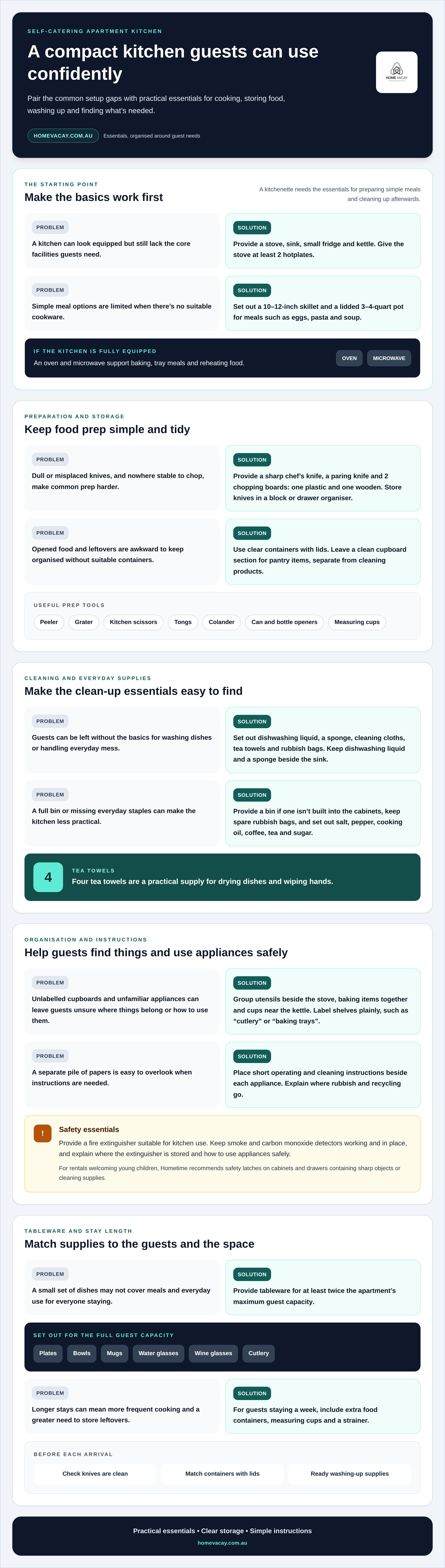
A compact kitchenette still needs the basics to make self-catering practical. The kitchen essentials in a self-catering apartment begin with a stove with at least two hotplates, a sink, a small fridge and a kettle. Add the cookware, utensils and tableware guests need to prepare and enjoy simple meals.
It’s easy to focus on appliances and overlook the smaller details that make a kitchen comfortable to use. Guests also need clear instructions, sensible storage and everyday items for cooking, eating and cleaning up.
This guide covers what to provide, from pots, pans and knives to cups, cutlery and small appliances. It also explains how to organise the kitchen and share useful instructions, so guests can settle in and use the space confidently.
Key Takeaways
- Match cookware, utensils and everyday supplies to the apartment’s guest capacity, and make sure each amenity has what guests need to use it.
- Set out dishwashing liquid, a sponge, tea towels, rubbish bags and storage containers to support easy clean-up and food storage.
- Prioritise practical appliances such as a fridge, kettle and cooking facilities, then choose other appliances to suit the space and guest needs.
- Provide tableware for at least twice the apartment’s maximum guest capacity, so there’s enough for meals and everyday use.
What to equip a kitchen in an apartment for rent?
Typical kitchen essentials in a self-catering apartment include cooking equipment, tableware, cleaning supplies and basic food staples. For preparing and storing food, provide sharp knives, chopping boards, containers and cupboard space for groceries. Choose quantities and equipment to suit the apartment’s guest capacity and the meals guests are likely to make.
- Stock dishwashing liquid, a sponge, cleaning cloths, tea towels and rubbish bags for washing up and everyday mess.
- Provide a bin if one isn’t integrated into the cabinets, so guests can contain food scraps and packaging.
- Set out salt, pepper, cooking oil, coffee, tea and sugar for simple meals and hot drinks.
- Supply storage containers so guests can cover leftovers and organise opened food in the fridge or cupboard.
- Include a peeler, grater, kitchen scissors, tongs and a colander for common preparation tasks.
Knives need particular attention. Provide a sharp chef’s knife and a paring knife, plus two chopping boards, one plastic and one wooden. A stable board makes it easier to slice bread, fruit and vegetables. Store knives in a block or drawer organiser, away from loose utensils.
Make food storage straightforward. Clear containers let guests see what’s inside, and lids keep leftovers covered. Leave a clean cupboard section for pantry items, separate from cleaning products. Keep rubbish bags on hand so guests can replace a full bin liner.
Keep dishwashing liquid and a sponge beside the sink, with cloths and tea towels close by. Four tea towels are a practical supply for drying dishes and wiping hands. Replenish staples between stays and provide coffee supplies suited to the apartment’s guest capacity.
A useful kitchen essentials checklist for a self-catering apartment includes a simple reset before each arrival. Check that knives are clean, containers have matching lids and washing-up supplies are ready. This makes cooking, storing food and cleaning easier for guests.
Instructions and organisation of kitchen equipment
Use a simple checklist to make equipment easy to find and put away. Group cooking utensils beside the stove, baking items together and cups near the kettle. Label drawers or shelves with plain descriptions such as “cutlery” or “baking trays”. Add a brief kitchen guide explaining unfamiliar appliances and where rubbish and recycling go.
Keep portable tools together in a drawer or container. A spatula, tongs, ladle, can opener, bottle opener and measuring cups cover common tasks without crowding the bench. Store chopping tools near the preparation area, but keep sharp blades separate from loose utensils. Place oven mitts beside the oven, where guests can reach them before handling hot cookware.
- For coffee: Set out a coffee maker, mugs and the matching supplies, such as ground coffee or pods. Include simple instructions for filling and switching on the machine.
- For stovetop cooking: Provide a 10-12-inch skillet and a lidded 3-4-quart pot. These suit meals such as eggs, pasta and soup.
- For oven use: Add a baking tray, oven mitts and a heat-safe dish. Store them together so guests can prepare a roast or bake vegetables.
- For longer stays: Include extra food containers, measuring cups and a strainer. Guests staying a week may cook more often and need to store leftovers.
Keep everyday tools within reach and occasional-use equipment in a labelled cabinet. Place instructions beside the relevant appliances instead of in a separate pile of papers. A short note can explain settings, cleaning steps and where to return each item after use.
For a compact living space, choose stackable containers and nestable cookware to save cupboard room. A tidy arrangement helps guests find what they need without moving every item. Explore self-catering apartment options for stays with a kitchen.
Small kitchen appliances
A basic kitchenette supports simple meals with a stove, sink, small fridge and kettle. At least two hotplates give guests room to prepare straightforward dishes. A fully equipped rental kitchen adds an oven and microwave, making baking and more varied cooking practical. For property owners building or renovating residential units, working with a design-and-build team like Wallpro System & Construction Inc can ensure practical kitchen layouts and utilities are integrated from the start.
For kitchen safety, provide a fire extinguisher suitable for kitchen use, and keep smoke and carbon monoxide detectors working and in place. Explain where the extinguisher is stored and how to use each appliance safely. For rentals welcoming young children, Hometime recommends safety latches on cabinets and drawers containing sharp objects or cleaning supplies.
Choose appliances to suit the meals guests are likely to prepare. A fridge keeps groceries and leftovers cold, while a microwave reheats food between outings. An oven is useful for baking and tray meals. If an oven isn’t provided, a microwave oven with baking, grilling and steaming functions can be an alternative.
- Kettle: Keep one available for tea, coffee and quick breakfasts. Place it near mugs and a clear bench space.
- Toaster: It makes breakfast simple, though an oven grill can handle toast when bench space is limited.
- Dishwasher: This optional appliance can reduce hand-washing during longer stays. Leave operating and cleaning instructions nearby.
- Blender or mixer: These optional appliances suit guests preparing smoothies, sauces or baking mixtures. Store attachments together.
Match appliances to the kitchen’s capacity and layout. In a compact space, prioritise everyday basics before adding a waffle iron, rolling pin or extra baking equipment. Keep appliance instructions beside each item and note any special cleaning steps.
A short guide can explain how to operate the microwave, oven and dishwasher. Provide it as a simple download or printed sheet, with clear directions for switching appliances off after use.
Dinnerware, cutlery, glasses and cups
Set the table for the apartment’s full guest capacity, not just the first meal. Provide plates, bowls, mugs, water glasses, wine glasses and cutlery, along with serving platters for shared dishes. Complete place settings let guests eat comfortably without using cooking utensils as tableware.
Allow for washing up between meals. A useful guide is dinnerware for at least twice the maximum number of guests, so clean dishes remain available while another set is being washed. For a property accommodating eight or more people, provide enough crockery and cutlery for at least eight.
For a property sleeping four guests, one checklist example is six of each core tableware item: plates, bowls, mugs, drinking glasses and sets of cutlery. Match the quantity to the actual guest capacity and keep a few spare pieces for breakages.
- Plates and bowls: Include dinner plates for main meals and smaller plates for breakfast or snacks.
- Cutlery: Provide forks, knives, tablespoons and teaspoons for every setting.
- Glasses: Supply water glasses and wine glasses, with a jug for serving water.
- Serving pieces: Add two platters for shared meals, plus serving spoons where practical.
Keep everyday items together in a cupboard near the dining area. Place mugs near the kettle and store glasses where guests can reach them safely. Keep a corkscrew with other openers, and measuring cups in a drawer near the cooking equipment. These small choices make shopping, meal preparation and setting the table simpler.
Choose durable, easy-to-clean dishes that suit the rental’s style and guest mix. For family stays, sturdy tableware may be more practical than delicate pieces. Before each arrival, count the settings and check for chipped plates, missing teaspoons or mismatched glasses.
Use this checklist when preparing a self-catering stay, then browse apartment stays for your next visit.
Home Vacay: Short-Term Apartment Stays
Home Vacay offers short-term apartment stays for business and leisure travellers. An apartment can suit a trip where you’d like the flexibility to prepare meals and keep familiar routines.
Consider who’s travelling and how you’ll use the space. A family getaway and a work trip can call for different priorities, so choose an apartment that suits your plans.
If you’d like to discuss your accommodation plans, contact Home Vacay. Take the next step towards a stay that feels right for you.
Choose a stay that fits your plans
Before choosing your next stay, consider how you want the kitchen to fit your trip. A quick breakfast before work, relaxed family dinners or a few familiar meals can each shape what matters most. Knowing which kitchen essentials in a self-catering apartment support your routine helps you choose a space with purpose, rather than focusing on details you may not use.
Think about the rhythm of your days, who’s travelling with you and whether you plan to eat in regularly. These choices can help you decide what kind of apartment suits your plans. Keep your priorities simple: comfort, practical use and enough room to enjoy your stay at your own pace.
If you’re planning a short-term stay and would like to talk through your plans, get in touch with Home Vacay. Take the next step towards a stay that feels right for you.
Frequently Asked Questions
What should an Airbnb kitchen have?
An Airbnb kitchen should be ready to use, with clear information about what guests can expect. Keep the listing accurate and leave simple directions for unfamiliar controls or waste sorting. Arrange cupboards consistently between stays so guests can return items easily. This also helps travellers decide what to pack, especially if they plan meals around particular ingredients or equipment.
What kitchen equipment and utensils should a self-catering apartment include?
Choose tools that suit the cookware and surfaces provided. For example, utensils should be suitable for the pan coatings, and chopping tools need a safe, stable place to be stored. Keep removable parts, such as appliance attachments, with their matching equipment. A quick inventory after each stay can catch missing pieces before the next guests arrive.
What basic cookware is essential for a holiday apartment kitchen?
Choose versatile cookware suited to the cooktop and oven in the apartment. Check that pan bases sit securely on the cooking surface and that oven-use pieces are suitable for the purpose. Matching lids reduce clutter and make storage easier. A compact set that supports several cooking methods is more useful than specialised pieces guests may rarely need.
What cutlery, crockery and glassware should be provided per guest?
Provide each guest with a usable place setting suited to meals they may eat in the apartment. Keep sets consistent so guests can serve meals without searching for matching pieces. Choose items that are easy to wash and store, and replace chipped or damaged dishes. The right quantity depends on the apartment’s stated occupancy and how often guests can wash up.
What small appliances are most useful in a self-catering kitchen?
The most useful appliances depend on the space and how guests are likely to cook. Prioritise equipment that supports everyday routines without taking over the bench or storage. Before each arrival, make sure controls are easy to understand and cords are in good condition. Keep detachable parts with the appliance so guests can use it as intended.
What pantry staples should guests bring or expect to find?
Guests should bring ingredients suited to personal preferences, dietary needs or planned recipes. A host may provide a basic selection, but supplies can vary between stays. Read the accommodation details before packing, then plan to shop for fresh food after arrival. This avoids carrying items that may already be available and helps guests bring anything specific to their meals.


