

A furnished apartment can still be missing everyday essentials. In Australia, the term usually refers to core furniture such as a bed, sofa and table, but there’s no universal checklist. To know what to expect in a furnished apartment, look beyond the label and check whether appliances, kitchenware, bedding, towels, laundry facilities and utilities are included.
A furnished apartment should be ready for comfortable living, but the details vary. Paying more in rent may be worthwhile if it saves you from buying and moving furniture for a shorter stay.
This guide explains the differences between partly furnished, furnished and fully equipped listings. You’ll learn what to look for, how to compare rent with the cost of buying furniture, and which details make it easier to assess your options.
Key Takeaways
- Furnished listings don’t follow one standard inventory, so look beyond the label to understand what furniture, appliances and household essentials are provided.
- Weigh the extra rent against the cost and effort of buying, moving and setting up furniture for your stay.
- Compare partly furnished, furnished and fully equipped listings by the items included, then consider how the lease length suits your plans.
- Home Vacay offers short-term apartment stays for business and leisure travellers, with options for different travel needs.
What Does a Furnished Apartment Include?
The furniture included in a furnished rental can vary from one listing to another. A fully equipped apartment may also provide kitchenware, bedding and towels, but listings follow no universal checklist. Appliances and utilities vary, so “furnished” alone doesn’t tell you exactly what’s included.
The main advantage is moving in without buying large items, which can suit a short work placement, renovation or period between homes. The trade-offs are less choice over furniture and a need to take care of supplied belongings. A furnished rental usually costs more per month than the same apartment unfurnished.
Use two checklists when comparing listings. For a furnished home, note the beds, seating, dining furniture, cookware, linen, laundry access and appliances, as well as whether utilities or Wi-Fi are included. For an unfurnished Australian rental, expect an oven and cooktop, but don’t assume a fridge, washing machine, bed or mattress is supplied. Blinds or curtains are often included. A partly furnished place may provide selected items, such as a fridge.
Furnished rentals are common in city apartments, student areas, executive rentals and short-term accommodation. Most standard Australian rentals are unfurnished unless the listing says otherwise. That gives tenants more freedom to use their own belongings and can suit people who already have furniture.
If a supplied item breaks, report the fault promptly and refer to the inventory and rental agreement. A tenant may be responsible for damage beyond normal wear and tear. Record the condition of furniture and appliances at move-in, then compare it with the inventory at move-out. Contents insurance can cover personal belongings; a landlord’s policy usually covers the building and the landlord’s furniture.
Tenants can rearrange furniture unless the lease prohibits it, but should return items to their original positions. The agreement and inventory clarify what the landlord supplied and the recorded condition, giving both parties a reference if something is damaged or missing.
Comparing furnished rental costs with buying furniture
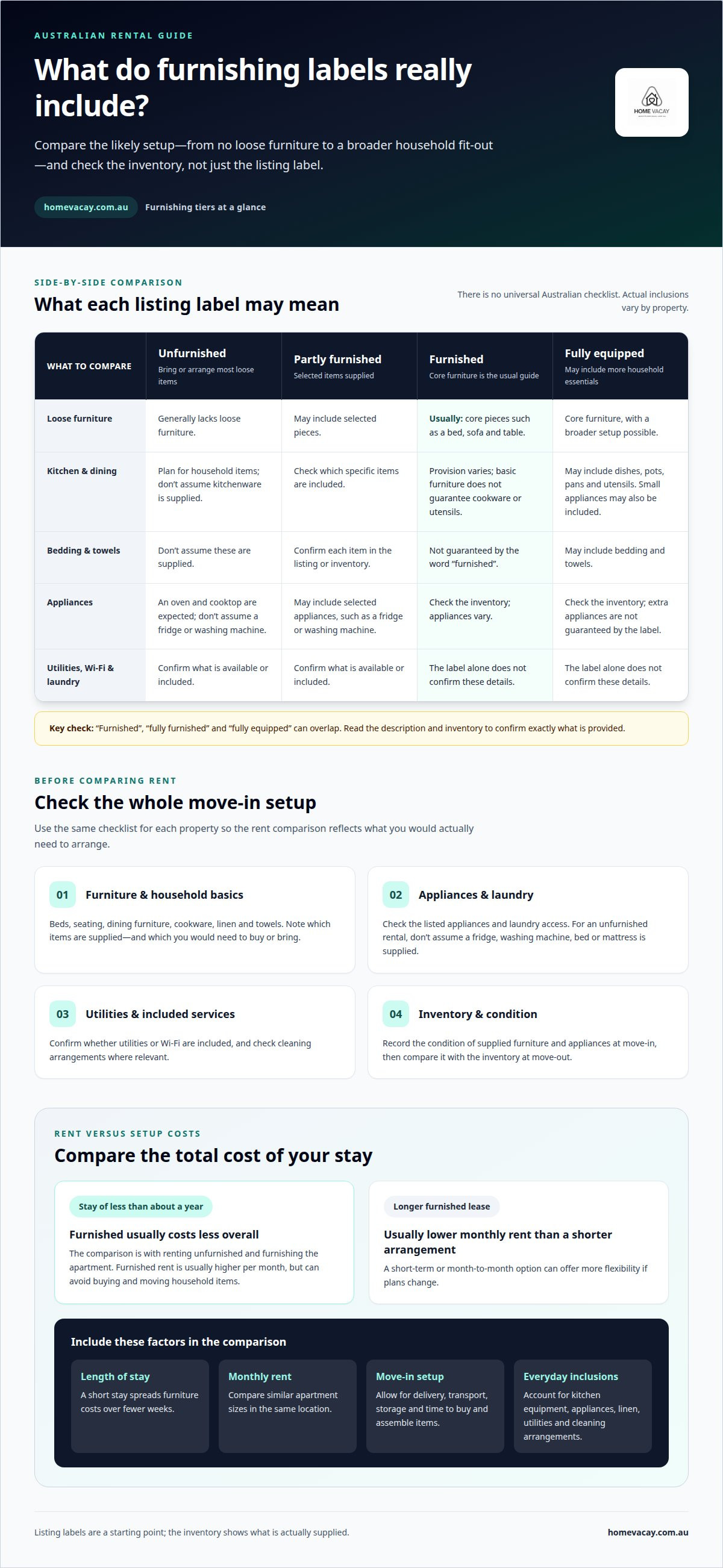
A furnished apartment usually costs more per month than the same home unfurnished. The difference reflects the convenience of using supplied furniture and household items. Compare the total cost of your stay, not rent alone. For a stay of less than about a year, renting furnished usually costs less overall than renting unfurnished and furnishing the apartment.
Buying furniture involves more than the cost of a bed, sofa and table. You may also need kitchen basics, cookware, a desk or other home-office items. Factor in delivery, moving, storage and the time it takes to arrange each purchase. At the end of your stay, selling, donating or moving those belongings creates another task. A furnished apartment can simplify a corporate assignment or temporary move.
For a fair comparison, weigh these costs and practical factors:
- Length of stay: A short visit spreads furniture costs over fewer weeks. A longer stay gives you more time to benefit from owning items.
- Monthly rent: Compare the furnished and unfurnished options for the same location and similar apartment size.
- Move-in setup: Include delivery, transport, storage and the time required to buy and assemble furniture.
- Everyday inclusions: Account for kitchen equipment, appliances, linen, utilities and cleaning arrangements where relevant.
Lease length can change the calculation. A longer furnished lease usually costs less per month than a short-term or month-to-month arrangement, while a shorter option can offer flexibility if plans change. Families relocating permanently may prefer an unfurnished rental if they plan to ship or buy their own furniture. Someone between homes, or trying a new place, may value avoiding a second move.
For a furnished stay, short-term apartment accommodation can suit travellers who want a ready-to-use base without setting up a household from scratch.
Differences between partly furnished, furnished and fully equipped listings
Australian rental listings use furnishing labels to indicate what’s supplied. Since there’s no universal checklist, compare the actual inventory, from beds and dining chairs to kitchen equipment.
Rental furnishing tiers
Options range from unfurnished to partly furnished, furnished or fully equipped. An unfurnished home generally lacks loose furniture. A partly furnished rental may supply selected items, such as a fridge or washing machine. A furnished apartment typically provides core pieces, while a fully equipped one may include additional household essentials. The category helps indicate how much you’ll need to bring or organise before settling in.
What furnishing labels mean
“Furnished” usually describes a home with core furniture, such as beds, a sofa and a table. “Fully furnished” often suggests a broader setup that may include bedding, towels, dishes, pots and pans. “Semi-furnished” commonly means only some furniture or appliances are supplied. These labels can overlap, so check the description and inventory rather than relying on the label alone.
Kitchen and dining provisions also vary. One apartment may have cookware and utensils, while another provides only basic furniture. Depending on the apartment’s size, dining furniture might be a table and chairs or a bar with stools. Small appliances such as a toaster or coffee maker may be included in a fully equipped setup, but the word “furnished” doesn’t guarantee them.
Use the listing details to work out the practical difference:
- Unfurnished: plan for essential loose furniture and household items.
- Partly furnished: identify which specific items, such as a fridge, are supplied.
- Furnished or fully equipped: compare the listed furniture, kitchen items, bedding and towels.
To find a home ready for everyday use, focus on items you’d otherwise need to source first. A clear inventory helps you compare listings with different labels and identify gaps before choosing.
Are furnished apartments in Australia usually available for short-term or long-term leases?
Both options exist. Furnished leases can run from a month to a year or longer, while standard Australian rental leases commonly run for 6 or 12 months. The available term depends on the property and arrangement, so furnished doesn’t automatically mean short stay.
A shorter or month-to-month furnished lease can suit a work placement, study period, renovation or move between homes. It offers flexibility, but usually costs more per month than a longer furnished lease. Longer terms can lower the monthly cost, though they suit renters who expect to stay in one place.
Consider how long you need the apartment and what comes next. Someone arriving in Australia before their furniture shipment could use temporary furnished accommodation, then move to an unfurnished rental. A person unsure whether they’ll stay for six months or two years may prefer a furnished option while plans take shape. Some tenants who initially expect to stay a few months end up staying much longer.
Compare the lease period with the practical costs of moving again. A short stay may help you avoid buying, transporting and storing furniture. A longer stay gives you more time to decide whether supplied furnishings remain convenient. If you’re relocating permanently with furniture, an unfurnished place may make more sense once your belongings arrive.
Before choosing, match the lease term to your plans, then compare the monthly rent and flexibility. A short-term arrangement costs more each month, while a longer furnished lease usually costs less per month. The right balance depends on whether flexibility or a lower monthly cost matters more for your stay.
For a furnished stay, explore short-term apartment accommodation.
Home Vacay: Capitol Apartments in Canberra City
Home Vacay specialises in short-term stays for business and leisure travellers, providing furnished apartments for temporary accommodation across major Australian destinations. Capitol Apartments in Canberra City is one popular option when you want a flexible apartment rather than a traditional long-term rental.
Travellers can choose a property based on who is travelling and the setting they prefer. Peaceful Coombs Apartment for Families is another versatile option, while Luxury Apartment in Braddon Precinct offers a vibrant inner-city location. Consider your travel plans and preferred neighbourhood when deciding between them.
For any short stay, a furnished property can save you from setting up a household for a temporary visit. Always compare the listing details with your needs, including the specific location and the included furnishings or facilities. Home Vacay offers flexible short-term accommodation, rather than standard residential tenancies or daily hotel housekeeping.
If you are planning a trip and need a reliable place to stay, contact Home Vacay to discuss your temporary accommodation options.
Choose a stay that fits your plans
Before settling on a place, picture an ordinary day there. Where will you work, share a meal or unwind? Which belongings do you want to bring, and which would you rather leave behind? Answering these questions can clarify what matters most in your accommodation search.
Knowing what to expect in a furnished apartment helps you focus on the details that shape your stay, not just the listing label. Consider how the space will fit your routines, who’s travelling with you and how long you plan to stay. The right fit makes everyday decisions straightforward.
If Canberra is your next stop, take a moment to explore the available accommodation options and choose a setting that suits your plans. Talk with Home Vacay about your stay, and take the next step towards a comfortable base.
Frequently Asked Questions
Are furnished rentals more expensive?
A furnished rental usually costs more per month than a comparable unfurnished apartment. The difference may still be worthwhile if you’d otherwise buy, transport and later store or sell furniture. For example, someone on a temporary work placement can compare the rent premium with the cost and effort of setting up a home. Consider how long you’ll stay and what you already own.
Furnished or unfurnished: which is right for your move?
Choose furnished accommodation if you need a ready-to-use home or expect a temporary stay. It can suit a work assignment, renovation or move while your belongings are in transit. An unfurnished rental may better suit a permanent move if you own furniture or plan to ship it. Consider your likely next move too: transporting bulky items can affect the value of buying furniture.
What furniture and appliances are typically included in a furnished apartment in Australia?
Core furniture often includes a bed, sofa and table, while appliances and household extras vary. One listing might provide a fridge, washing machine and cookware; another may include furniture without those items. Check the property description for specific inclusions, such as a desk for working or a dining setting for meals. The word “furnished” alone doesn’t guarantee everything you need.
What household items should tenants bring to a furnished rental?
Bring personal belongings and everyday items that suit your routines, such as clothing, chargers, toiletries, medications and a preferred pillow or work equipment. If you cook regularly, consider bringing familiar pantry staples. Whether you need linen, towels or kitchen utensils depends on what the listing includes. A short packing list can help you avoid duplicate purchases and make arrival easier.
How much more does a furnished apartment cost than an unfurnished one in Australia?
There isn’t one fixed premium across Australia. The difference depends on the property, location, lease length and what the rent includes. Compare similar apartments over the same rental period, then add the likely cost of furnishing the unfurnished option, including delivery or moving. This gives you a more useful comparison than monthly rent alone, especially for a temporary stay.
What should be included in a furnished apartment inventory and condition report?
Record each supplied item by name, quantity and condition. Note existing marks, damage or missing parts on furniture, appliances and household items, and keep dated photos with your copy. For an appliance, record its visible condition and whether it works during your inspection. At departure, compare your record with the apartment’s contents and promptly note any new damage or missing items.


