

A checkout list shouldn’t turn your last morning into a deep-cleaning shift. Follow the stated checkout steps and leave the property reasonably tidy. Knowing how to be a good short-term rental guest also means checking the house rules before you arrive and telling the host if a problem comes up.
It’s easy to be unsure how much cleaning is expected, especially when each stay has different instructions. A little planning helps you avoid last-minute surprises and leave the space ready for the next guest.
Here are four practical ways to make your stay smoother: review the rules and check-in details, communicate clearly with the host, handle checkout cleaning fairly, and look after your guest reputation. The aim is to be considerate without taking on jobs you weren’t asked to do.
Key Takeaways
- Read the house rules, check-in and checkout instructions, and cancellation policy before booking.
- Save the address and arrival details, then message the manager early about questions or relevant needs.
- Use the listing and house rules to understand what checkout cleaning is expected, rather than assuming a deep clean is required.
- Respect the property, communicate clearly if an issue comes up, and leave an honest review after your stay.
1. Pre-booking checks for house rules and check-in procedures
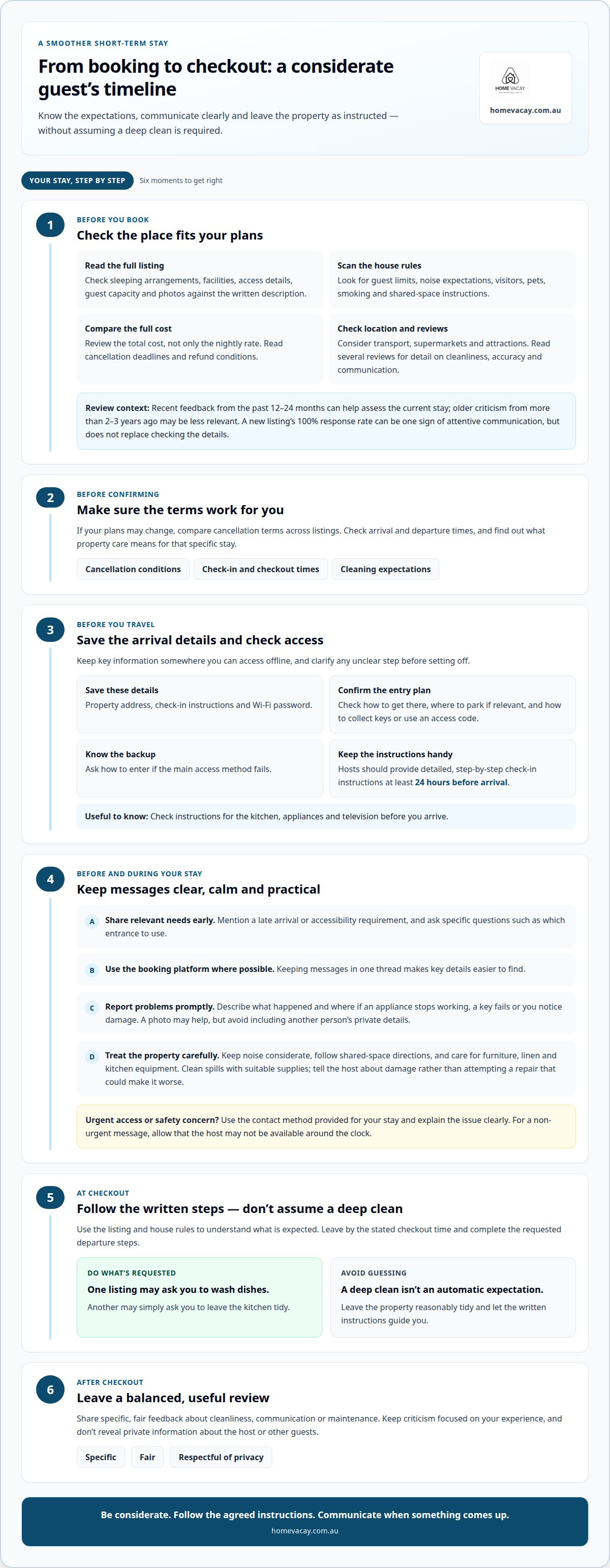
Before booking, read the listing’s house rules, arrival details and cancellation policy. Check the permitted guest numbers, noise expectations, smoking rules and whether visitors are allowed. These details shape your stay and help you decide whether the accommodation suits your plans. Save the property address, check-in instructions and Wi-Fi password somewhere you can access offline.
Review the total cost before confirming, not just the nightly rate. Read the cancellation terms carefully, including deadlines and any conditions that affect refunds. If your plans may change, compare the terms across listings before you book. Also check the location against your itinerary. Nearby public transport, supermarkets and attractions can make a practical difference to your stay.
Check the arrival method and timing before you travel. Instructions should explain how to reach the property, where to park if relevant, and how to collect keys or use an access code. Hosts should provide detailed, step-by-step check-in instructions at least 24 hours before arrival. Keep the manager’s message available, and clarify any unclear step before travelling.
Ask how you’ll enter if the main access method fails. A backup method can prevent a lockout if a key safe is difficult to open or an access code doesn’t work. Before arrival, check instructions for the kitchen, appliances and television too. Knowing how to use them can prevent avoidable confusion after a long trip.
Check the arrival and departure times and instructions for your accommodation. Follow the listed check-in process, leave by the stated checkout time and complete the requested departure steps. Find out what property care means before booking: one listing may ask you to wash dishes, while another may simply ask you to leave the kitchen tidy. Don’t assume a deep clean is expected. Use the written instructions as your guide.
2. Communicating with the property manager
A clear message helps the host understand what you need. Before arrival, share relevant details, such as a late arrival or accessibility requirement. Keep questions specific. For example, ask which entrance to use if the building has several doors. Use the booking platform’s message thread where possible, so key details stay together and are easy to find.
For short-term rentals in Australia, follow the booking terms and house rules, care for the apartment, and report problems promptly. Your responsibilities depend on the arrangements agreed for that stay, so don’t assume every rental has identical expectations. You can raise concerns with the manager and give feedback about your experience. Keep messages calm, factual and focused on a practical next step.
During your stay, contact the host if an appliance stops working, a key fails or you spot damage. Describe what happened and where. A photo can help explain a maintenance issue, provided it doesn’t include another person’s private details. Prompt reporting gives the host a chance to respond and creates a clear record of the problem.
Respecting house rules means more than following written instructions. Keep noise considerate, use shared spaces as directed, and treat furniture, linen and kitchen equipment carefully. If something spills, clean it up using suitable supplies. Don’t attempt a repair that could cause further damage. Tell the host instead, and explain whether the issue affects your use of the space.
A host may not be available around the clock, so don’t expect an immediate reply to a non-urgent message. For an urgent access or safety concern, use the contact method provided for your stay and explain the issue clearly. After checkout, leave a balanced review. Mention useful details about cleanliness, communication or maintenance, and keep criticism specific and fair. Avoid sharing private information about the host or other guests.
If you’re planning a short-term stay, explore accommodation options that suit your travel plans.
3. Reading listing descriptions and house rules
Before booking, read the full listing, not just its headline and first photo. Check the sleeping arrangements, facilities, access details and any limits that could affect your plans. For example, confirm whether the listing describes a separate bedroom or an open-plan sleeping area. Compare the photos with the written details to make sure they describe the same accommodation.
What should guests check in the listing before booking? Review the house rules, property description, photos, guest capacity and details that matter to your stay. Look for instructions about noise, visitors, pets, smoking and shared spaces. Learning how to be a good short term rental guest starts with choosing a place whose expectations suit your plans.
Reviews can add useful detail to a listing. On Airbnb and other platforms, look for comments about cleanliness, accuracy and communication, as well as mentions of noise or safety. A review describing a quiet apartment may matter if you’re working remotely or travelling with children. Read several comments rather than relying on one positive or negative account.
Time matters when weighing feedback. If reviews from the past 12-24 months are largely positive, older criticism from more than 2-3 years ago may be less relevant to the current stay. For a new listing, a quick 100% response rate can be one sign of attentive communication, though it doesn’t replace checking the description and rules. These details help you judge whether the listing matches what you need.
House rules explain how to treat the property during your visit. Note directions about rubbish, shared facilities or household items. If a rule is unclear, send a brief message before you arrive instead of guessing. Follow the host’s recommendations for the building or neighbourhood, and keep useful instructions handy during your stay. If you’re wondering how to be a good short term rental guest, start by understanding the expectations before you book.
4. How should guests communicate with hosts before and during a stay?
Send a short message before arrival if you have a question or a relevant need. Mention practical details, such as travelling with a young child or expecting to arrive later than planned. This gives the host useful context and a chance to share relevant instructions. Keep the message in the booking platform where possible, so arrangements are easy to find.
Make each request specific. Instead of asking for general arrival advice, explain what you need to know, such as where to enter the building or how to access a shared facility. If you need local recommendations, ask about nearby cafés, walking trails or attractions that suit your plans. A focused question is easier to answer than several unrelated requests in one message.
During the stay, use the contact method provided for your booking. If an appliance fails, describe which item is affected and what happens when you try to use it. For a maintenance concern, include the room and a clear photo when useful. Keep the tone factual and allow the host time to respond. Hosts don’t need to be available 24/7, although prompt replies can improve guest satisfaction.
For an urgent access problem, say plainly that you can’t enter and explain where you are. For a non-urgent request, such as asking where to place recycling, send one concise message rather than repeated follow-ups. If plans change, update the host as soon as practical. Clear communication helps both sides respond without confusion.
After checkout, leave a fair review that reflects your actual stay. Mention specific details, such as clear arrival instructions or a maintenance issue that remained unresolved. Balanced feedback helps future guests understand what to expect and gives the host useful information. Keep private details out of a public review, and send sensitive feedback directly through the booking platform.
Ready to plan your next stay? Explore your accommodation options and share any relevant needs through the booking process.
Home Vacay
Home Vacay offers short-term accommodation for business and leisure stays. Choosing a property that suits your plans gives you a helpful starting point for a considerate visit. Its Canberra options include Capitol Apartments in Canberra City, Peaceful Coombs Apartment for Families and Luxury Apartment in Braddon Precinct.
Before booking, consider what matters for your stay, such as your location, group and daily plans. Read the property details and house rules so you understand the arrangements that apply to your chosen apartment. During your stay, use the instructions provided and communicate clearly if you need to raise a question or report an issue.
Browse Home Vacay’s apartments and book directly through the website to find an option suited to your stay.
Make your next stay a thoughtful one
Your next stay is a chance to make the experience easier for everyone who shares the space. Considerate choices can be simple: keep shared areas usable, handle belongings with care, and leave a clear note if something needs attention. These habits help create a respectful rhythm between guests and hosts.
Knowing how to be a good short term rental guest is less about doing extra work and more about being thoughtful and predictable. Follow the arrangements you’ve agreed to, communicate changes clearly, and consider how your choices affect the next person staying there. That mindset can make a difference without turning your break into a checklist.
Before your next booking, think about what will make the stay work well for you and your travel companions. For your upcoming travels, contact Home Vacay about your stay.
Travel with care, and enjoy settling into a place that suits your plans.
Frequently Asked Questions
How much cleaning before checkout is acceptable, fair or standard?
A fair checkout usually means completing the specific tasks set out for your stay, not doing a full professional clean. Put away food, deal with used dishes as instructed and leave the space orderly. Washing linen or scrubbing bathrooms isn’t a default guest task. If the checkout list seems to ask for more than basic departure care, clarify the expectation before checkout.
Is it okay to ask questions before booking?
Yes. A concise question before booking can help you decide whether the accommodation suits your needs. Ask about a practical detail that affects your plans, such as whether the entrance is suitable for someone with limited mobility or whether a particular facility is available. Check the listing first, then ask only about points it doesn’t address clearly.
What are the basic etiquette rules for short-term rental guests?
Respect the space as someone else’s home. Keep belongings out of shared walkways, avoid moving furniture without permission and use appliances as intended. Stick to the agreed guest arrangements, and don’t leave personal items behind at checkout. If you accidentally break something, tell the host rather than hiding it. Small, considerate choices help prevent inconvenience for the next guest.
How should guests follow house rules about noise, visitors, smoking and pets?
Follow the exact rules in the listing and booking messages. If quiet hours are listed, keep conversations and entertainment low during that period. Don’t assume visitors, smoking or pets are allowed just because the listing doesn’t mention them prominently. Where a rule is unclear, ask before making plans. This is especially useful before inviting someone over or travelling with an animal.
What cleaning and rubbish tasks are guests expected to do before checkout?
Use the checkout instructions as your task list. They may ask you to wash dishes, clear food from the fridge or place rubbish in a nominated bin. Separate recycling only when the property provides directions for doing so. Don’t leave perishable food behind or put rubbish somewhere unfamiliar. If a bin is full, message the host for the correct next step.
How can guests avoid damage and report problems at a short-term rental?
Use unfamiliar equipment gently and follow any operating instructions before switching it on. Don’t force a stiff lock, handle or appliance. If something seems damaged or unsafe, stop using it and tell the host promptly. For damage you notice on arrival, report it early so there’s a clear record of when you found it. Avoid attempting repairs yourself.


