

Flexible check-in doesn’t mean you can arrive or leave at any time. What flexible check-in means depends on your booking confirmation and the property’s policy: you may be able to request an arrival or departure outside the usual schedule, subject to availability and any applicable fees.
It’s reasonable to want your stay to fit your travel plans. But early access or a later departure may depend on whether the apartment is ready and the booking schedule allows the change. Check the stated times, availability and any charges so you can plan with confidence.
This guide explains how flexible check-in and check-out work, what can affect the times on offer, and why policies should set expectations clearly. You’ll also see how to understand the difference between a flexible option and a confirmed arrival or departure time.
Key Takeaways
- Flexible arrival or departure times are options, not automatic permission to come and go whenever you like.
- Room readiness, occupancy and staffing can affect whether an earlier arrival or later departure is possible.
- Clear policies should explain the time window, how to request a change and whether a fee may apply.
- Set realistic arrival expectations by distinguishing a preferred time from an approved check-in time.
Clear communication about availability and fees
Flexible arrival and departure times depend on availability, not just a guest’s preferred schedule. Occupancy, room readiness and housekeeping all affect whether an earlier check-in or later departure is possible. For example, if the previous guest has just left and the apartment is still being prepared, it may not be ready for an early arrival. Check the arrival details and plan for this possibility.
Good communication sets out the available time window, how to request a change, and whether an extra fee may apply. It should distinguish a request from an approved arrangement. A guest who needs an early arrival can provide an estimated arrival time in advance, ideally 24 or 48 hours beforehand. That gives the property time to consider occupancy and operational needs.
Any fee for early check-in or late check-out should be explained before you agree. Check when a charge applies and what it covers, such as access before the standard check-in time. If there’s no fee, the terms should say so. If the apartment isn’t ready when you request an early arrival, follow the agreed instructions for what happens next.
Flexible timing does not determine cancellation or booking conditions. Those are set out in the booking terms and confirmation. Read them alongside any separate arrangement for arrival or departure: approval of a timing request does not automatically change the cancellation conditions.
A clear arrival message can confirm the requested time, the approved time, any fee and what to do if the apartment isn’t ready. This helps you know what has been agreed and gives the property time to plan housekeeping around the schedule.
Meaning of flexible hotel check-in and check-out
Hotel check-in and check-out times are set by the booking confirmation and each property’s policy. There’s no universal hotel schedule in Australia. Flexible timing means you may be able to request or select an arrival or departure time that better suits your plans. The options depend on the property’s arrangements.
Flexible timing does not necessarily mean you can arrive before the room is ready or access it at any time. An early check is a request to enter before the listed time, while 24-hour access would mean entry is available throughout the day and night. A flexible option might instead let guests select from particular times during booking.
An early flight can make earlier access useful, but a flexible policy doesn’t mean the apartment will be ready when you land. The property may approve an early arrival only after preparation is complete. If you arrive sooner, you may need to wait or make other plans.
Flexible check-in and self check-in mean different things. Flexibility is about when you arrive; self check-in is about how you get access, such as using a keypad instead of meeting someone. A property can offer self check-in at a set time or flexible timing with another access method.
Departure can also be flexible. A later check-out may suit a guest whose flight leaves in the evening, but it isn’t automatically included. The time between one guest’s departure and the next guest’s arrival is used to prepare the apartment, so a later departure may affect the next booking.
For example, a hotel might offer an 8 am check-in or an 8 pm check-out to suit a 36-hour city visit. Those times illustrate possible options, not a standard promise. The booking confirmation remains the useful reference for the agreed arrival and departure arrangements.
Setting a check-in start and end time
A check-in window gives guests a clear period for arrival. For example, a property might set a window from 3:00 p.m. to 8:00 p.m. That gives travellers room to account for a delayed flight or a longer journey, while keeping arrivals within a defined period. The start time should reflect when rooms can be ready. The end time sets the latest expected arrival, not an invitation to arrive at any hour.
A cut-off can make the arrangement clearer. A 2 pm-10 pm window, for example, tells guests when check-in begins and when the usual arrival period ends. This is different from promising access at any time overnight. If a late check is possible by arrangement, the policy should explain how guests communicate their arrival and what access process applies.
These boundaries support convenience without leaving staff to guess when guests will arrive. They also help housekeeping plan room preparation around expected arrivals and departures. A defined window gives the team a practical schedule to monitor, rather than an open-ended stream of arrivals. That operational structure can enable a more considered hospitality experience.
The available window depends on the property’s room readiness, staffing and arrival arrangements. A shorter period may suit a property with a clear handover process, while a wider period may accommodate guests arriving on different flights. Check the start and end times in the booking details and arrival instructions, then plan transport around them.
Reviewing arrival patterns can help a property decide whether its window still works. If guests increasingly arrive near the end of a 3:00 p.m. to 8:00 p.m. period, the property can assess whether its process supports those arrivals. Guest satisfaction depends partly on expectations matching the actual arrangement. A clear cut-off, plus a defined process for late arrivals, keeps flexible timing useful and manageable.
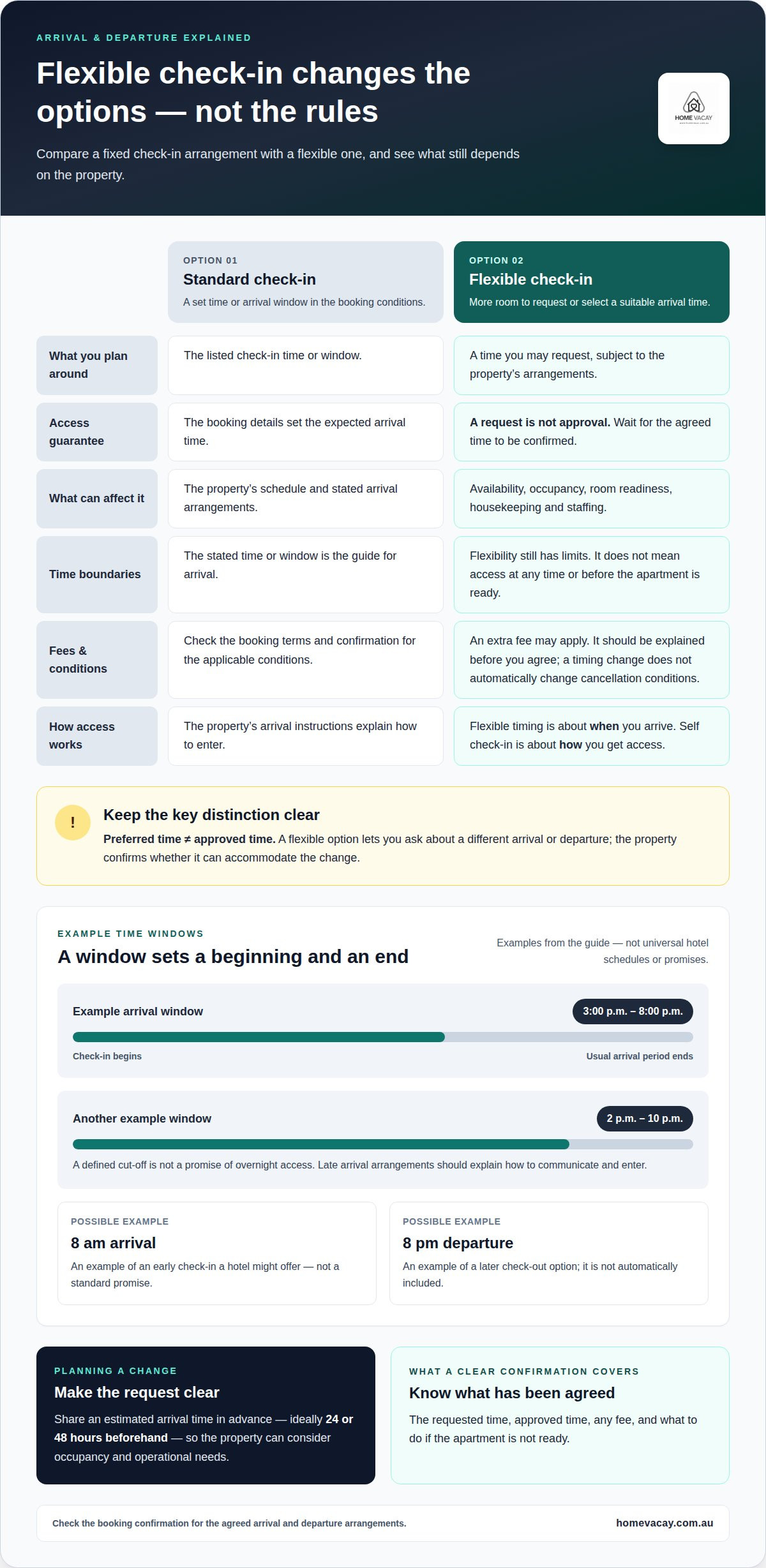
How does flexible check-in differ from standard check-in?
Standard check-in sets a fixed arrival time or window in the booking conditions. Flexible check-in gives guests more room to request a different arrival time. It doesn’t remove the property’s schedule. For example, a 2 pm-10 pm window sets clear boundaries, while a flexible arrangement may allow a suitable change within those limits.
The practical difference is choice, not guaranteed access. With standard check-in, you plan around the listed time. With flexibility, you may request an earlier arrival or another suitable time. The property considers occupancy, room readiness and housekeeping before agreeing. A request isn’t an approved time, so check the booking details for confirmation.
Departure works similarly. A standard check-out time gives housekeeping a predictable window to prepare the apartment for the next booking. A flexible arrangement may allow a later departure if the schedule permits. For instance, a guest with an afternoon flight might request extra time, but this could affect preparation for the next guest.
Neither approach determines how you enter the property. A fixed check-in time can still use self check-in, while flexible timing may require an agreed arrival plan. The key difference is whether the arrival time can vary, not whether someone meets you. Read the access instructions so you know how to enter and when the apartment will be ready.
Flexible options can suit business travel or a family journey with changing arrival plans. They also require clear limits, agreed times and suitable room turnover. A property can balance convenience with operational needs by setting a standard schedule, then considering reasonable requests. Explore available accommodation options to find a base that suits your plans.
Home Vacay
Home Vacay offers short-term apartments for business and leisure stays. Whether you’re travelling for work or spending time away with family, you can book a self-contained place to stay.
When planning your stay, use the booking details to understand the arrival and departure arrangements. Flexible check-in is a timing option, not a guarantee of access outside the agreed schedule. Keep your travel plans and confirmed arrival time in view when choosing accommodation.
Consider what matters most for your stay, from the purpose of your trip to your preferred arrival time. Contact Home Vacay to discuss your accommodation plans.
Plan a stay that suits your arrival
Knowing what flexible check-in means helps you plan around work, family plans or travel connections. Decide which arrival and departure times would make your trip easier, then compare them with the booking information. Clarifying the schedule early can help you choose suitable accommodation and avoid relying on an unapproved request.
Home Vacay offers accommodation options for business and leisure stays. If you’re considering a property, share your travel plans and ask about the details that matter to you. Talk with Home Vacay about your stay.
With a suitable place and a clear plan, you can arrive knowing what to expect and focus on your stay.
Frequently Asked Questions
What Is Flexible Check-in/Check-out?
Flexible check-in or check-out lets you request arrival or departure times outside the standard schedule. The booking terms show which options apply. For example, a booking might offer a choice of arrival slots, while a later departure needs separate approval. Treat a requested time as unconfirmed until the property agrees, and keep the approved arrangement with your travel details.
What happens if the guest wants to arrive later?
If you expect to arrive later than planned, follow the arrival instructions and tell the property your updated estimated time. This helps avoid confusion about access, particularly if the usual arrival window has ended. Keep your confirmation handy and follow any stated late-arrival process. A delayed flight doesn’t automatically change your agreed check-in arrangements, so communicate any change promptly.
Can You Request a Late Check Out or Early Check In?
Yes, you can request an earlier arrival or later departure. Make the request in advance and include the time you need and how it fits your plans, such as an early flight or work commitment. The property considers its schedule before agreeing. If a change involves a fee or affects the booking terms, review those details before accepting.
What Time Is Hotel Check-In and Checkout?
Check-in and check-out times are set by the booking confirmation and the property’s policy, not by one universal Australian timetable. Read the arrival and departure details for your stay. Note the date as well as the time, especially if your travel plans cross midnight. Keep the confirmation accessible so you can refer to the agreed schedule during your trip.
What does flexible check-in mean at a hotel or accommodation?
At a hotel or other accommodation, flexible check-in means you may be able to arrange an arrival time that differs from the standard schedule. It doesn’t automatically mean round-the-clock access. Check whether you can select a time during booking or need to make a separate request. This helps you plan transport without assuming your preferred time is approved.
What are typical flexible check-in times in Australian hotels?
There isn’t one flexible check-in time used by every Australian hotel. Each property sets its own schedule and options. Some offer a defined arrival window; others consider requests for a different time. Check the booking confirmation for the hours that apply to your stay, and distinguish stated flexibility from a requested time that hasn’t been approved.


