

The lowest nightly rate can still make a work trip cost more overall. Cost-effective business accommodation is about the value of the whole stay, not just the price on the booking screen. Meals, transport and laundry can all affect your trip budget, while an unsuitable space can make it harder to work well and unwind.
It’s understandable to start with the nightly rate. But comparing the full trip picture can help you find a stay that fits your plans, feels comfortable and supports both work and downtime. Before booking, weigh your itinerary, practical facilities and arrival arrangements, as well as how the accommodation suits your daily routine.
A self-contained apartment can offer more space and independence on a work trip. Home Vacay offers short-term apartment stays for business and leisure travellers, with direct website booking and flexible check-in and check-out options. Use the steps in this guide to compare your choices and decide what best fits your stay.
Key Takeaways
- Assess cost-effective business accommodation by matching the stay to your itinerary, work routine and trip length.
- Use a checklist for workspace, sleep, meal preparation, storage and arrival arrangements before comparing options.
- Compare apartments, hotels and booking platforms by the kind of stay each suits, including space, service model and booking process.
- Make comparisons fair by using the same dates, guest numbers and stay duration, then review the full booking terms.
- Consider whether a self-contained short-term apartment suits your need for space and independence on a business trip.
What makes business accommodation cost-effective beyond the nightly rate?
A low nightly rate is only one part of a work trip’s accommodation value. Low-cost accommodation has a low booking price; cost-effective accommodation delivers good value across the complete trip. The right choice depends on where you need to be, how long you’ll stay and how you work while away. A cheaper room may be less practical if it adds travel time or doesn’t suit your routine.
Business trips can involve meetings, remote work or time on a project. Each routine affects what makes a stay worthwhile. Compare accommodation against your actual itinerary: where you need to work, how you plan to get around and what you’ll need after work. That gives you a more useful comparison than judging options by price alone.
Which business trip expenses can accommodation influence?
Your accommodation can affect how you handle meals, transport and laundry. A kitchen, if included, gives you the option to prepare some meals. A location that fits your schedule can make your usual transport choices more practical. Laundry access may be useful on a multi-day trip, especially if you’re packing light.
These are factors to compare, not guaranteed savings. Your actual expenses depend on your habits, itinerary and booking terms. Separate confirmed accommodation charges from personal or work-related spending that may arise during the trip. When comparing options, note what the booking total covers and avoid assuming one accommodation type will always cost less.
When does a self-contained apartment suit a work trip?
A self-contained apartment may suit travellers who value space and independence. Separate living space can help create a clearer boundary between work and time off, particularly when your day doesn’t end as soon as you leave the workplace. For a longer stay, kitchen and laundry access, where included, may also help you settle into a routine.
Fit matters more than a blanket rule. For a brief overnight trip, you may have little use for extra living space or facilities. Over several days, those features may become more relevant. Home Vacay offers short-term apartment stays for business and leisure travellers, providing an independent accommodation option to weigh against your trip needs.
How to assess business accommodation for work, rest and trip length
A suitable stay should support the way you’ll spend your days and evenings. Before booking, picture your usual routine: where you’ll work, how you’ll wind down and what you’ll need to manage meals or clothing. Then check the property details against that routine. This helps you judge whether an option is practical, rather than relying on a headline rate or a general description.
What should a business traveller check before booking?
Use the listing and booking conditions to assess the setup. Facilities and terms differ between properties, so confirm that an amenity is included by looking for it in the property information.
- Work setup: Look for details about a practical place to work, such as a suitable table or desk and a comfortable seat.
- Sleep and downtime: Check the sleeping arrangements and consider whether the space will let you rest outside work hours.
- Meals: Review the meal facilities described and decide whether they suit your routine. If you plan to cook, check what the listing says is provided.
- Storage and laundry: Review the storage and laundry details, especially if you’ll be away for several days or travelling with work clothes.
- Occupancy and arrival: Match the listed occupancy to the number of travellers. Read the arrival instructions and booking conditions so you understand the arrangements before setting off.
Your itinerary matters too. If you’ll be working remotely between appointments, a workable indoor setup may be more useful than extra space you won’t use. If you’ll be out for most of the day, your priorities may be different. Choose based on the trip you’re actually taking.
How does stay length change what good value looks like?
For an overnight trip, you may mainly need a comfortable place to sleep and straightforward arrival arrangements. On a stay lasting several days, the details of your daily routine can matter more. Meal planning, laundry needs and time spent unwinding may all influence which facilities are useful to you.
Traveller numbers also affect the space you need. A solo guest working at a laptop has different requirements from colleagues sharing a stay. Consider how everyone will sleep, work and spend time in the accommodation, not just whether the stated occupancy allows the group to stay.
Compare the complete booking period on the same basis, using equivalent dates, guest numbers and duration. Review the stated facilities and booking conditions for each option. A longer booking doesn’t automatically mean a lower rate, so focus on how well the accommodation suits the whole stay.
If a self-contained apartment suits your work and downtime routine, you can explore Home Vacay’s apartment stays, with direct website booking and flexible check-in and check-out options.
Apartment, hotel or corporate platform: compare the full business-stay experience
An apartment and a hotel are types of accommodation. A corporate booking platform is a tool for finding or managing bookings, not a place to stay. Separating the two helps you compare the experience of the stay with the way it’s booked. No option is automatically the cheapest or best. The right fit depends on your trip length, work routine and preferred level of independence.
| Option | What the experience may suit | What to compare |
|---|---|---|
| Apartment | Travellers who value more independent, self-contained space, particularly for stays lasting several days. | Living and work space, self-catering facilities, stated amenities, service arrangements and booking terms. Facilities and service levels vary. |
| Hotel | A brief trip where a straightforward room-based stay suits the itinerary. | Room setup, meal options, services provided, what is included and the booking conditions. These differ between properties. |
| Corporate booking platform | Travel organisers comparing or managing accommodation options for work trips. | How the tool supports searching, comparing and booking. The platform itself does not provide the room, amenities or service model. |
When might an apartment be a practical alternative to a hotel?
A self-contained apartment can appeal if you’d like space to work, prepare some meals where facilities allow, and settle into your own routine outside work hours. That independence may be useful across a multi-day stay. For an overnight visit, a hotel room may better suit a simple itinerary. Neither format guarantees particular facilities or service levels, so compare the details in each listing.
What does a corporate accommodation platform add?
A platform can help a travel organiser view and compare options, particularly when arranging stays for more than one traveller. Its role is the booking process, not the day-to-day accommodation experience. The property determines the space, facilities and service model.
If you’re arranging your own trip, direct booking may be a simple fit. If you coordinate travel for a team, a platform may help organise the search and booking process. Either way, judge cost-effective business accommodation by comparing the stay against your itinerary, trip duration and practical needs, as well as the booking terms.
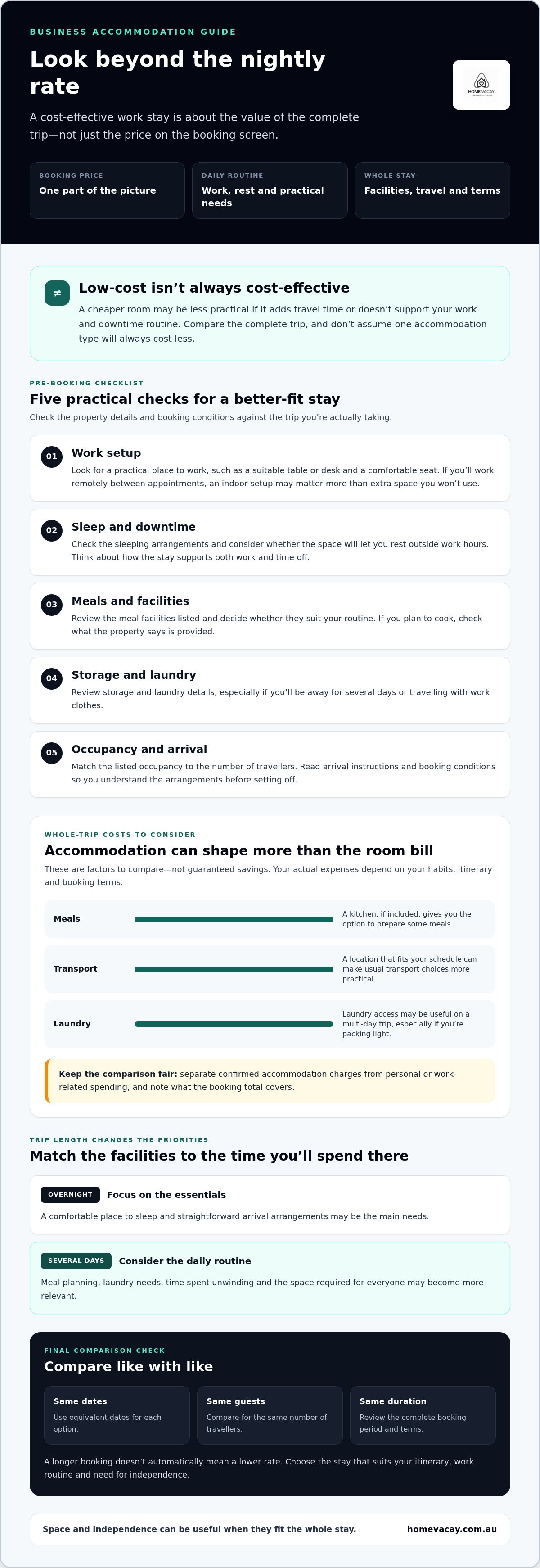
A practical checklist for comparing business accommodation offers
A consistent comparison makes it easier to see what each offer covers. Use the same trip details for every option, then review the booking terms and facilities before deciding. The aim is to choose a stay that fits your plans, not to assume a particular option guarantees savings.
Compare your trip requirements, quoted booking total, facilities and terms in that order to make a more informed accommodation choice.
- Define the trip needs. Note your travel dates, number of guests, length of stay, work routine and essential facilities. Include any arrival or departure requirements.
- Compare equivalent offers. Use the same dates, occupancy and stay duration for each option. Record the complete quoted booking total and what the stated terms cover.
- Review facilities and fit. Check the listing for the work setup, sleeping arrangements, meal facilities and other features you’ll use. Confirm that an amenity is included rather than assuming it is.
- Read the conditions, then book. Review cancellation and payment terms, check-in arrangements, departure requirements and any additional charges stated before making your choice.
How can travellers compare offers consistently?
Keep a simple comparison note for each stay. Record the dates, guest numbers, duration, complete quoted accommodation total and relevant terms. Use the same list of required facilities each time, so differences are easy to spot.
Keep personal travel expenses, such as meals or transport, separate from accommodation charges. Those costs depend on your itinerary and habits. Separating them gives you a clearer view of the booking itself without suggesting that one accommodation offer will reduce your overall expenses.
Which booking details can prevent unwelcome surprises?
Read the arrival instructions carefully, including the stated check-in arrangements and any flexibility offered. Check what’s required at departure, too. Then review when payment is due, the cancellation conditions and any additional charges stated in the booking terms. These details can affect whether an offer suits your plans, especially if your itinerary may change.
Before booking a short stay, compare the property information and conditions with your plans. If an apartment suits your work trip, explore Home Vacay’s short-term apartment stays, with direct website booking and flexible check-in and check-out options.
Choose a Home Vacay apartment for a more considered business stay
Once you’ve compared stay types and booking details, consider how a short-term apartment fits your work trip. Home Vacay offers self-contained apartment stays for business and leisure travellers. They may suit guests who value space and independence, whether travelling alone or sharing a stay. The right choice still depends on your plans and the details of the individual property.
How Home Vacay fits the business traveller’s checklist
A self-contained stay gives you a place to settle into your own routine between work commitments. As you browse, compare each property’s information with your practical needs. Think about the space you’ll use, how you’ll spend time outside work and whether the stated arrangements suit your itinerary. Review the property details to see which facilities and services are included.
Guests can book directly through the Home Vacay website. Flexible check-in and check-out options are available, which can help when planning around travel and work commitments. Read the stated arrangements and conditions so you know how they fit your plans.
What to do before completing a booking
Before you book, review these essentials:
- Dates and guest details: Check that the dates, number of guests and stay duration match your trip.
- Property information: Revisit the details that matter to your work routine, rest and time away from work.
- Booking conditions: Read the terms, including cancellation and payment details, as well as any stated additional charges.
- Arrival plans: Read the check-in information and consider how it fits your itinerary and travel arrangements.
A little care before booking can help you feel more prepared for arrival. It also keeps your comparison focused on what matters: whether the stay suits your trip, rather than whether the nightly rate looks appealing on its own. That’s a practical way to choose cost-effective business accommodation without assuming one format will always offer better value.
For a work trip that calls for a self-contained stay, browse Home Vacay’s apartment options. Compare the details, consider your routine and choose a stay that feels like a good fit.
Make your next work stay a better fit
Good value comes from looking beyond the nightly rate. Compare the complete booking terms using the same dates, guest details and stay length. Then consider whether the space, stated facilities and arrival arrangements suit your work routine and time away from work. This is a practical way to find cost-effective business accommodation without assuming one type of stay is always best.
Home Vacay offers short-term, self-contained apartment stays for business and leisure travellers. You can book directly through the website, with flexible check-in and check-out options. Review each property’s details and booking conditions against your itinerary before choosing.
If an apartment feels right for your trip, browse Home Vacay apartments for your next work trip. Compare the options and choose a stay that suits your plans.
Frequently Asked Questions
What is cost-effective business accommodation?
Cost-effective business accommodation offers good value across the complete work trip, rather than simply having the lowest nightly rate. Consider how the stay fits your itinerary, work routine and trip length, along with its booking terms and stated facilities. For example, a practical workspace or useful meal facilities may matter more to your trip than features you won’t use. The best choice depends on your needs, not a universal ranking of accommodation types.
How do I compare business accommodation costs?
Compare the complete quoted accommodation total for equivalent dates, guest numbers and stay durations. Read the booking terms to see what the quoted amount covers and whether any additional charges are stated. Keep accommodation charges separate from personal expenses such as meals and transport, which depend on your itinerary and habits. Then consider whether the property’s location, facilities and setup suit your work trip. This gives you a clearer comparison than nightly rates alone.
Is an apartment a good choice for a business trip?
An apartment can suit a business trip if you value self-contained space and independence. Separate living space may make it easier to work, rest and follow your usual routine during a stay. The experience varies by property, so read its details rather than assuming it includes a particular workspace, kitchen, laundry facility or service. Compare the apartment with other options based on your trip length, daily plans and the facilities you’ll genuinely use.
Can business accommodation be booked for a short stay?
Yes. Short-term accommodation can suit a brief work visit as well as a longer trip. Home Vacay offers short-term, self-contained apartment stays for business and leisure travellers, with direct booking through its website and flexible check-in and check-out options. Before booking, compare the property details and terms with your dates and itinerary. Check the stated arrival arrangements so they fit your travel plans and work commitments.
What should I check before booking accommodation for work?
Check that the dates, guest details and occupancy suit your trip, then read the property information and booking conditions. Look for details about the work setup, sleeping arrangements, meal facilities, storage and laundry if these matter to your routine. Review payment and cancellation terms, any stated additional charges, arrival instructions and departure requirements. Facilities and conditions vary, so rely on the details provided for the specific property rather than assumptions.
Are self-contained apartments suitable for longer business stays?
They can be suitable if the space and stated facilities match your needs over the full stay. A self-contained apartment may offer independence and room to settle into a routine. Kitchen or laundry access can be useful for some travellers, but check the property information to confirm what’s included. Consider how you’ll work, rest and manage day-to-day needs. A longer stay doesn’t automatically mean a lower rate.
How can I reduce business accommodation expenses without sacrificing comfort?
Start by matching the stay to your itinerary, rather than choosing on nightly rate alone. Compare equivalent dates, guest numbers and durations, then review the full booking total and terms. Consider whether the stated facilities could suit your meal or laundry routine, where available, and whether the location works for your plans. Keep personal expenses separate from accommodation charges. Prioritise the comfort and practical features you’ll use, and avoid paying for extras that don’t suit your trip.


