

A free-cancellation deadline can look reassuring, but it doesn’t always mean every part of your booking will be refunded in every situation. Understanding short stay cancellation policies starts with treating a policy as a timeline of choices, conditions and possible outcomes, not just a single date.
Different terms may set different deadlines, refund amounts or conditions. A flexible option may give you more time to cancel without a stated charge, while a restrictive one may reduce or remove your refund sooner. The details attached to your booking matter more than the label.
This guide explains how cancellation windows and refund terms work, and what to check before you pay. You’ll learn how to compare conditions, record important dates and amounts, and understand what a free-cancellation period does and doesn’t promise.
If your plans change, knowing how to submit a request and what booking details or supporting evidence to keep can make the next steps clearer. Whether you’re arranging a work trip or a family break, reading the terms before you book can help you make a more informed choice.
Key Takeaways
- Understanding short stay cancellation policies means knowing how deadlines, conditions and refund outcomes fit together.
- Compare the terms for your selected property, booking channel and rate rather than relying on policy labels alone.
- Find the cancellation cutoff in your booking details and note what may happen if you cancel before or after it.
- If plans change, follow the stated request process and keep a record of your cancellation request and any response.
- Before paying, check the refund basis, payment timing, exceptions and contact process, then weigh them against how certain your travel dates are.
What short stay cancellation policies cover before you book
A cancellation policy sets out the terms for cancelling or changing a booking, and whether you may receive a refund. Understanding short stay cancellation policies means looking beyond a label such as “flexible” to the conditions for your specific reservation. Terms can vary between properties, booking channels, rate types and travel dates.
Short stays are part of a broad accommodation sector. The overview of short-term rentals offers useful background, but the policy for your booking is the one to read closely. Before paying, look for the deadline, the time zone used, the refund basis, any applicable fees and any stated exceptions.
Which details matter most in a cancellation policy?
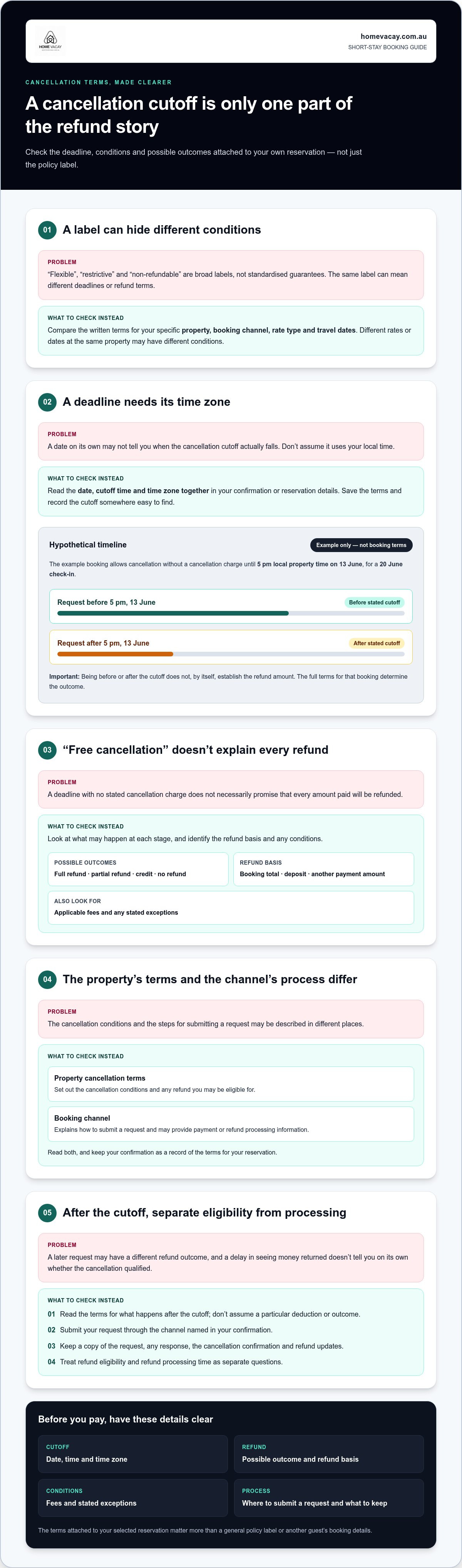
Start with the exact cancellation cutoff. Check the date and time, and whether the deadline follows the property’s local time or another time zone. If you’re close to the cutoff, even a few hours can matter.
Next, check what happens at each stage. The terms may describe a full or partial refund, a credit, or no refund after a certain point. Look at the amount the policy uses as its basis: it might refer to the booking total, a deposit or another payment amount. Note whether a fee applies and whether any circumstances are listed as exceptions. A deadline for cancelling without a stated penalty doesn’t necessarily promise a full refund of every amount paid.
Why can cancellation rules differ between bookings?
A property may set different terms for different rates or dates. For instance, a discounted rate could have stricter conditions than another rate for the same stay. A booking during a high-demand period may also have different terms from one on other dates. Policy labels are useful shorthand, not standard definitions that guarantee the same outcome everywhere.
Keep the property’s cancellation terms separate from the booking channel’s process. The property policy describes the conditions for cancelling and any eligible refund. The channel explains how to submit a request and may provide payment or refund processing information. Read both, and keep the confirmation as a record of the terms for your reservation.
For example, two guests could reserve the same apartment for the same dates through different channels, or select different rates. Their deadlines or refund outcomes may not match. Check your own confirmation rather than relying on a summary from another booking. That small step makes the conditions clearer before plans change.
How cancellation deadlines and refund windows work
A cancellation deadline is a cutoff in your booking terms. The result of cancelling before or after it depends on the policy attached to your reservation. To find the deadline, open your booking confirmation and look for “cancellation”, “refund” or “change” details. If you booked through a platform, check the reservation details there too. Use the confirmed terms for your booking, not a general policy description.
How do you work out your cancellation deadline?
Read the deadline’s date, cutoff time and time zone together. If the policy says to cancel a certain number of hours or days before check-in, count backwards from the check-in time only when the wording makes that calculation clear. Don’t assume the cutoff uses your own local time. Save the confirmation and record the deadline somewhere easy to find.
Hypothetical timeline, not terms for a specific booking: A booking says you may cancel without a cancellation charge until 5 pm local property time on 13 June, for a 20 June check-in. A request submitted before 5 pm on 13 June falls before that stated cutoff. A request submitted after it falls beyond the cutoff. The actual refund in either case depends on the full terms for that booking.
What can change after a cancellation cutoff passes?
Once a deadline has passed, the policy may set a different refund outcome. It could limit eligibility or specify other conditions, but don’t assume a particular deduction or result without reading the booking terms. A late request doesn’t automatically reset the deadline or change the policy. If plans shift, submit your request through the channel named in your confirmation and keep a copy.
Refund eligibility and processing time are separate questions. The policy explains whether a refund may be due and on what basis. The booking channel or payment provider may have its own steps for processing an approved refund. A delay in seeing money returned doesn’t by itself tell you whether the cancellation qualified. Keep the cancellation confirmation and any refund update with your booking records.
Understanding short stay cancellation policies means tracking both the cutoff and what follows it. Home Vacay offers direct booking for self-contained short stays. As you plan, review the details attached to the reservation you select. Explore Home Vacay short-stay apartments.
Flexible, restrictive and non-refundable terms compared
Cancellation labels offer a quick guide, but they aren’t standardised guarantees. “Flexible” at one property may have a different deadline or refund basis from a similarly labelled rate elsewhere. When understanding short stay cancellation policies, compare the written conditions and possible outcomes at each stage, not the label alone.
| Broad term | Timing to check | Possible outcome |
|---|---|---|
| Flexible | The period during which cancellation is allowed under the stated conditions. | A refund may be available for eligible cancellations made before the cutoff. The amount and any conditions depend on the booking terms. |
| Moderately restrictive | Any staged deadlines, and when the terms change as check-in approaches. | The refund may reduce after a cutoff, or become unavailable under the policy. |
| Non-refundable | Whether the rate is described as non-refundable from booking, and any stated exceptions. | A refund may be limited or excluded if you cancel, subject to the specific terms. |
What is the difference between flexible and non-refundable bookings?
Flexible terms allow cancellation within a stated period and under stated conditions. They don’t necessarily mean you can cancel at any time or receive every amount paid back. Non-refundable terms may limit or exclude a refund if you cancel. Read the full wording, including deadlines and exceptions, rather than assuming the label tells you the outcome.
Check the payment conditions too. The amount charged and when it’s due may differ between rates. Compare these details with the cancellation terms so you understand both the cost of booking and the possible result if plans change.
When might a more flexible booking suit your plans?
Consider how settled your travel dates are. A traveller waiting on a work schedule, or a family coordinating several calendars, may value a longer cancellation window. Someone with firm dates and greater tolerance for losing some or all of a payment may weigh the terms differently. Neither option suits everyone.
For example, imagine a work trip that could move at short notice. A rate with a cancellation window might provide more room to respond, but only if the change happens within its stated conditions. A non-refundable rate could have a different payment arrangement and may leave less scope to recover the cost if plans shift. These are hypothetical possibilities, not outcomes for a specific booking.
Travel insurance has its own policy wording, exclusions and claim requirements. It isn’t an automatic substitute for a refund from the accommodation booking. Read the insurance terms separately and don’t assume a changed itinerary will be covered. Compare the booking’s written conditions with your confidence in your dates and how much uncertainty you’re comfortable carrying.
What to do when you need to cancel or change a stay
A change of plans can feel stressful. A clear sequence helps you act calmly and keep a record of what happens. Start with the terms attached to your booking, then follow the cancellation or change process stated in your confirmation or booking account. Understanding short stay cancellation policies can help you identify the relevant deadline, but the outcome still depends on the terms for your reservation.
- Reread the booking terms. Check the deadline, refund conditions and any relevant exceptions.
- Note the cutoff. Record the date, time and applicable time zone so you can act with the stated terms in mind.
- Submit your request through the stated channel. Keep a dated copy or screenshot of what you sent.
- Wait for written confirmation. Save the response and any revised booking confirmation.
How should you submit and document a cancellation?
Use the cancellation method named in your confirmation or booking account. Sending a message or starting a request may not mean the booking has been cancelled. Look for a separate cancellation confirmation, then check its details, including the cancellation date and any refund information. Keep the original confirmation, your request and the written response together. If the booking is changed rather than cancelled, retain the updated confirmation as a record of the new arrangement.
Keep your message factual and include the booking reference and the change you’re requesting. If you speak with someone, make a brief note of the date and what was discussed. A written record can help you follow up if the status or outcome is unclear.
What if illness or disruption changes your plans?
Begin with the booking terms. Look for any exception that may relate to your circumstances, and note whether the policy asks for supporting evidence. Follow the stated process and keep relevant documents and correspondence. An exception isn’t guaranteed, so don’t assume illness or another disruption automatically changes the cancellation outcome.
Insurance is separate. Whether a claim is covered depends on the policy you purchased, its conditions and any evidence it requires. For questions about consumer rights, consult current guidance from the Australian Competition and Consumer Commission (ACCC). That guidance provides general information, but it doesn’t promise a particular outcome for an individual booking.
Once you’ve reviewed the terms, you can plan your stay with a clearer view of the booking conditions. Explore Home Vacay short-stay apartments.
A simple checklist for choosing a short stay with confidence
A quick check before booking can make the terms easier to follow later. Match the cancellation conditions to how certain your travel dates are, and make sure you understand what may happen if plans shift. Understanding short stay cancellation policies is less about choosing the most flexible label and more about knowing what your selected booking allows.
What should you check before confirming a short stay?
Review the terms shown for the exact property, dates and rate you’ve selected. Then work through this checklist before paying:
- Dates: Confirm your check-in and check-out dates are correct.
- Deadline: Note the cancellation cutoff, including its stated time and time zone.
- Refund conditions: Check what the policy says about cancelling before and after the cutoff, and what payment amount any refund is based on.
- Payment timing: See when payment is due and whether the terms describe a deposit or another payment arrangement.
- Exceptions and fees: Read any stated exceptions or cancellation charges. Don’t assume these are the same across different rates or dates.
- Contact route: Note how the confirmation says to submit a change or cancellation request.
Save a copy of the terms displayed during booking, as well as your confirmation. This gives you a handy reference if you need to check a deadline or follow the stated process later. It also helps you compare the actual booking conditions instead of relying on a broad policy label.
How can you feel more prepared after booking?
Think about how settled your plans are. If work dates may move or family arrangements are still taking shape, consider whether the cancellation window gives you enough time to respond. If your dates are firm, focus on understanding the payment terms and possible outcome if you do need to cancel. There’s no single choice that suits every traveller.
Once your booking is confirmed, add the cancellation cutoff to your calendar and set a reminder ahead of it. Keep the confirmation, policy, payment records and any booking correspondence together. If plans change, you’ll have the key details close at hand.
Home Vacay offers self-contained short-stay apartments for business and leisure travel. Review the booking details for your selected stay before reserving, then explore short stays with Home Vacay.
Book your next stay with clarity
Understanding short stay cancellation policies comes down to checking the exact terms attached to your booking. Note the deadline and time zone, what any refund is based on, and how the policy changes after a cutoff. Flexible and non-refundable labels can mean different things, so rely on the written conditions for your selected rate.
If plans change, follow the stated request process and keep the confirmation, correspondence and any updated booking details together. These habits make it easier to understand your options and act with confidence.
Home Vacay offers self-contained stays for business and leisure travel, with direct booking through the website. Review the details for your selected booking before reserving.
Explore a comfortable short stay with Home Vacay. A little preparation can help you look forward to your trip with greater peace of mind.
Frequently Asked Questions
What does a free cancellation period mean for a short stay?
A free cancellation period is the timeframe in which you can cancel under the booking terms without the stated cancellation charge. Check the exact cutoff, time zone and refund basis. “Free” doesn’t always mean every amount paid will be returned in every circumstance. The policy may set conditions or exceptions, so read the wording attached to your reservation rather than relying on the label alone.
Can a short stay booking be cancelled after the free cancellation deadline?
You can usually submit a cancellation request after the deadline, but the policy determines what happens next. The refund may be reduced or unavailable, or other conditions may apply. A request isn’t the same as a confirmed cancellation, so use the stated booking channel and look for written confirmation. If you’re considering a date change instead, check whether the terms explain how changes are handled.
How do I find the cancellation deadline for my accommodation booking?
Check the booking confirmation and the reservation details in the account or channel you used to book. Look for the cancellation section, then read the date, cutoff time and time zone together. If the terms set a period before check-in, only count backwards when the wording makes the calculation clear. Save the confirmation and add the cutoff to your calendar as a reminder.
Will I get a refund if I cancel a non-refundable booking?
A non-refundable booking may limit or exclude a refund if you cancel. The exact outcome depends on the written terms for your rate and any stated exceptions. Read the confirmation carefully and check whether it explains the payment basis or circumstances that affect the refund. If you believe your consumer rights may apply, consult current Australian Competition and Consumer Commission guidance for general information.
What happens if I need to cancel because of illness or travel disruption?
Illness or travel disruption doesn’t automatically change a booking’s cancellation terms. Read the policy for any relevant exception and check whether it requires supporting evidence. Submit your request through the stated channel and keep copies of documents and replies. If you have travel insurance, review its conditions, exclusions and claim requirements separately. Neither an exception nor an insurance claim guarantees a refund.
Can I change my booking dates instead of cancelling?
You can ask to change your dates, but whether a change is allowed and what conditions apply depends on the booking terms. Use the method given in your confirmation or booking account. Wait for written confirmation before treating the new dates as settled. Keep the updated booking details and check whether the change affects payment, cancellation deadlines or other conditions attached to your reservation.
Does Australian Consumer Law guarantee a refund if I change my mind?
No. Australian Consumer Law doesn’t generally guarantee a refund simply because you change your mind. Consumer guarantees may apply if a service has a problem, but whether they apply depends on the circumstances. Read the cancellation terms and seek current guidance from the Australian Competition and Consumer Commission (ACCC) if you’re unsure about your rights. This is general information, not legal advice about an individual booking.
Is travel insurance a substitute for a flexible cancellation policy?
No. Travel insurance and accommodation cancellation terms are separate. A policy may cover some reasons for cancelling, but cover depends on what you bought, its exclusions and any evidence or claim steps required. Don’t assume a change of plans will be covered. Compare the booking’s cancellation conditions with the insurance policy wording, and consider whether each fits your travel plans and tolerance for uncertainty.


