

The easiest accommodation to book for one night may not be the best fit for a longer work trip. Extended stay business travel accommodation should support more than a place to sleep. It should help the traveller maintain a comfortable routine while they’re away.
A hotel-style stay can be convenient, but after several nights, balancing work, downtime and everyday practical needs takes more planning. The right choice depends on the trip length and how the traveller likes to organise their day. A self-contained short-term apartment can provide a more settled base, while direct booking and flexible check-in and check-out options can help with planning.
This guide compares apartments and hotels for extended work travel, explains what to consider for the traveller’s routine and sets out practical steps to take before booking. Use it to choose a stay that feels manageable, whether the trip is for a short project or a longer assignment.
Key Takeaways
- Choose extended stay business travel accommodation around the traveller’s routine, trip length and work needs.
- Separate essential requirements from personal preferences to make accommodation choices clearer.
- Compare apartment and hotel formats by considering space, daily routine and the style of stay that suits the assignment.
- Before booking, align travel dates, guest details and practical expectations.
- Consider a self-contained short-term apartment as a settled base for business travel, with direct booking and flexible check-in and check-out options.
Extended stay business travel accommodation: what should it make easier?
Extended-stay business accommodation is a trip-planning choice: a place selected to support the traveller’s work and daily routine over a stay that goes beyond a quick overnight visit. There’s no universal number of nights that makes a trip an extended stay. A better guide is whether the accommodation suits the demands of the assignment.
For a single overnight meeting, convenient access and a comfortable place to sleep may be enough. A trip with several workdays brings other considerations into focus. The traveller may need to plan meals, make use of time between commitments and find opportunities to unwind. Choosing a suitable base can make these everyday parts of the trip easier to manage, not just the work calendar.
Accommodation needs depend on the trip purpose, schedule, traveller and expected length of stay. Someone attending training may have a different routine from a person on a temporary assignment or travelling between consecutive meetings. An apartment-style stay is one format to consider. The Aparthotel concept combines apartment living with hotel services, though what’s provided varies by property. Compare the actual stay format with the traveller’s needs rather than assuming every option offers the same experience.
When does a business trip call for a longer-stay setup?
A project spanning several workdays, a block of training, a temporary assignment or consecutive meetings can all call for more than a place to sleep. Repeated nights away make the rhythm around work more noticeable. Consider how the traveller will start and finish each day, manage gaps in the schedule and settle in between commitments. The demands of the trip matter more than a fixed night-count threshold.
What changes when work travel lasts beyond an overnight visit?
An overnight stop can be built around arriving, sleeping and leaving. A longer trip makes accommodation a base for several workdays. Think about how the traveller prefers to manage meals, where downtime fits into the schedule and how much personal space helps them recharge. Needs vary, so don’t assume every apartment includes the same facilities. Home Vacay’s self-contained short-term apartments offer business travellers a practical option for a more settled daily routine.
Which accommodation features matter most on an extended work trip?
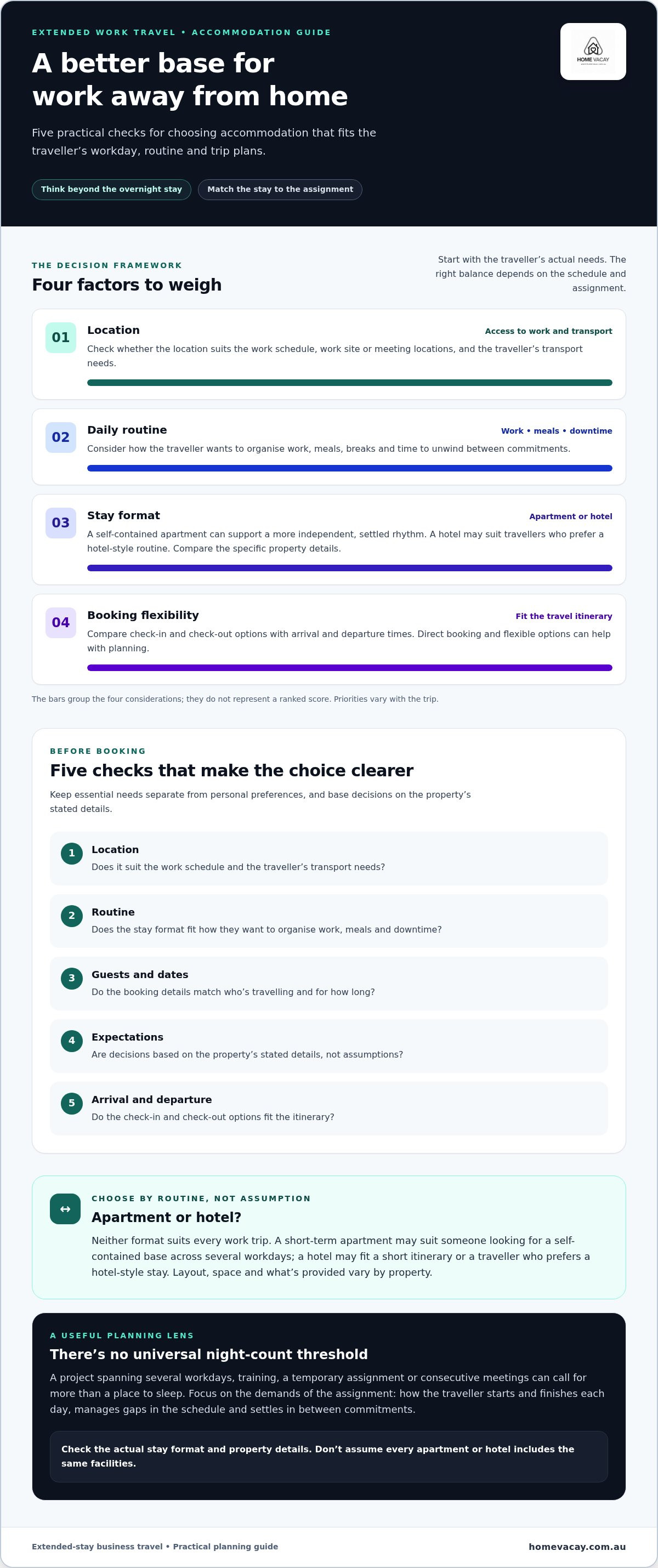
The most useful features depend on what the traveller needs to do each day. Start with four areas: location, routine, stay format and booking flexibility. A convenient location may mean easier access to a work site or meetings. A suitable stay format should fit how the traveller prefers to organise work, meals and downtime. Flexible check-in and check-out can also help align the booking with travel plans.
Separate essentials from preferences. Access to the work location may be essential for a tight schedule, while a particular style of accommodation may simply be a personal preference. A self-contained apartment can support a more independent daily rhythm than a hotel, but details vary between properties. Check the information for the specific stay rather than assuming particular facilities are included.
How can accommodation support a workday away from home?
Think through the day, not just the overnight stay. Will the traveller work at a business site, attend meetings elsewhere or need time for remote work? Consider how they’ll manage breaks and downtime around their schedule. Match the property details to those actual needs. For example, note whether the traveller’s plans leave time to return to the accommodation between commitments, or whether they’ll be away all day. The timetable can matter as much as the accommodation type, especially when work starts early or finishes late.
Which practical details should bookers compare?
Before booking, align the trip dates, guest numbers and booking arrangements. Compare check-in and check-out options with arrival and departure times. Distinguish stated property details from assumptions, and keep the traveller’s essential needs in view. If the work schedule changes, review whether the travel dates and accommodation arrangements still fit. Clear details make it easier to choose a stay that suits the itinerary and set expectations before the trip.
Use this checklist to compare short-term apartments:
- Location: Does it suit the work schedule and the traveller’s transport needs?
- Routine: Does the stay format fit how they want to organise work, meals and downtime?
- Guests and dates: Do the booking details match who’s travelling and for how long?
- Expectations: Are decisions based on the property’s stated details, not assumptions?
- Arrival and departure: Do the check-in and check-out options fit the itinerary?
For a practical base on a work trip, explore Home Vacay’s short-term apartment stays. Self-contained accommodation can help create a more settled daily routine.
Apartment or hotel for extended business travel: how do they compare?
Neither format suits every work trip. A hotel may fit a short itinerary or a traveller who prefers a hotel-style stay. A short-term apartment may suit someone looking for a self-contained base across several workdays. Compare how each option fits the traveller’s routine, then review the details of the individual property before deciding.
| Consideration | Short-term apartment | Hotel |
|---|---|---|
| Daily routine | A self-contained format can support a more independent, settled rhythm. | A hotel stay may suit travellers who prefer a hotel-style routine. |
| Space and layout | Layout and available space vary by property. Review the listing against the guest’s needs. | Room layout and space vary by property and room type. |
| Stay style | Can feel more like a private base for time between work commitments. | May appeal to guests who value the hotel environment and its services. |
| Best fit | Consider for multiple workdays or a preference for an independent stay. | Consider for a shorter itinerary or a preference for hotel services. |
This is a general comparison, not a promise about what any particular stay includes. The right choice depends on the trip, traveller preferences and property details. Read the listing and booking information rather than assuming that every apartment or hotel offers the same features.
When might a short-term apartment suit a business traveller?
For a trip spanning multiple workdays, a self-contained apartment can offer a practical base and a more independent daily rhythm. It may suit a traveller who wants to settle into a routine between meetings or project work. The format alone doesn’t establish which features are included. Review each property’s details against the guest’s needs, including any requirements that are essential to the trip.
When might a hotel better match the trip?
A shorter itinerary may not require the same settled routine, so a hotel could be a straightforward fit. It may also suit a traveller who prefers hotel services as part of their stay. Preferences and property details matter here too. Neither option is automatically better for business travel. Match the format to the schedule, the traveller and the expectations for the trip.
Home Vacay offers self-contained short-term apartments for business and leisure stays. This format can be worth considering for extended stay business travel accommodation when the traveller values an independent base. Review the specific stay details to make sure it fits the guest’s needs.
How to plan extended stay business travel accommodation
A clear plan helps travellers and bookers choose a short-term stay that fits the assignment, rather than booking around dates alone. Work through these steps together, from the trip brief to the final booking review.
- Step 1: Set out the trip brief. Note the purpose of travel, confirmed dates, number of guests and expected daily schedule. Include known arrival and departure times where possible.
- Step 2: Sort needs by priority. List essential accommodation requirements separately from preferences. For example, access to a work location may be essential, while a particular stay style may be a preference.
- Step 3: Match the format to the routine. Consider how the traveller will manage workdays, meals and downtime. A self-contained apartment may suit someone seeking an independent base, while another traveller may prefer a different format.
- Step 4: Review the property information. Compare the stated details with the guest’s requirements. Don’t assume a feature is included unless the booking information says so. Check that the dates and guest details are accurate.
- Step 5: Plan the booking and arrival. Agree who is responsible for booking and how the stay fits company processes. Review the booking arrangements and check-in and check-out options against the itinerary.
- Step 6: Revisit the details before travel. Make sure the traveller has the booking information and knows the planned arrival arrangements. Share itinerary changes promptly with the person managing the booking.
Good coordination keeps expectations clear. The traveller can describe their daily routine and practical needs, while the booker aligns those requirements with dates, guest details and company processes. Direct booking through the website gives guests a way to arrange their stay directly. Flexible check-in and check-out options are also useful planning considerations, particularly when travel times shape the arrival or departure day.
What should a business traveller prepare before booking?
Bring the trip brief, guest details and a realistic outline of the work schedule. Separate must-haves from nice-to-haves, then compare them with the accommodation information. For instance, note which details could affect the workday, such as the planned arrival time or the need to be near a work location. This gives the traveller and booker a shared basis for choosing, without relying on assumptions about what a stay includes.
How can employers make extended stays easier to manage?
Agree who travels, who books and how accommodation decisions fit the organisation’s usual process. Keep the traveller and booker aligned if dates or plans change. A business travel accommodation guide can also help organise the practical details before booking.
Ready to match your work trip with a practical short-term stay? Explore Home Vacay apartments and review the booking details against your travel plans.
Book a short-term apartment that fits your business stay
The best stay is the one that works for the person travelling and the shape of the trip. Consider the assignment, expected dates, number of guests and daily routine together. A self-contained apartment may suit a traveller who wants an independent base across several workdays. Property details still matter, so match the specific stay to the guest’s needs rather than relying on assumptions about what an apartment includes.
For extended stay business travel accommodation, clear expectations help everyone plan. The traveller can share what their workdays look like, while the person booking can compare the dates, guest requirements and stay information. This is a practical way to choose a short-term accommodation format suited to the trip, whether the stay is for business or leisure.
What can guests expect from Home Vacay?
Home Vacay provides self-contained apartments for short-term business and leisure stays. Accommodation is booked by the night, making it a short-term option rather than a long-term residential lease. Guests can book directly through the website. Review the details for the chosen property to understand what that stay offers and how it fits the traveller’s plans.
Check-in and check-out flexibility is another useful part of planning. Consider arrival and departure times alongside the work itinerary, especially if meetings or travel plans shape the first or last day. Thinking this through before booking helps set clear expectations for the stay.
What is the next step for planning a stay?
Bring the trip brief back to the accommodation choice. Confirm the dates and guest details, consider the traveller’s daily routine, then browse the available accommodation and compare the property information with those needs. This preparation can make it easier to choose a stay that suits the assignment without overcomplicating the booking process.
For an upcoming work trip, explore Home Vacay accommodation and consider how a self-contained apartment could support a more settled stay. Direct website booking and flexible check-in and check-out options are useful details to factor into your plans.
Choose a stay that works with your next work trip
The right extended stay business travel accommodation depends on more than the number of nights. Match the stay format to the traveller’s schedule, trip purpose and everyday routine. Compare apartment and hotel options against the guest’s needs, and use the property details to set clear expectations before booking.
For a work trip that calls for a more settled base, Home Vacay offers self-contained short-term apartments for business and leisure travellers. Guests can book directly through the website, with flexible check-in and check-out options to consider when planning arrival and departure around the itinerary.
To plan your next work trip, explore Home Vacay accommodation and compare the available stay details with your travel needs.
Frequently Asked Questions
What counts as extended stay business travel accommodation?
Extended stay business travel accommodation is a stay chosen to support work and daily routines over a trip that goes beyond a quick overnight visit. There’s no universal number of nights that defines it. A multi-day project, training programme or temporary assignment may call for a different setup from a single meeting. Focus on the traveller’s schedule, trip purpose and practical needs when deciding what accommodation fits.
Is an apartment suitable for an extended business trip?
An apartment can suit an extended business trip, particularly if the traveller values a self-contained base and a more independent daily routine. It may feel different from a hotel between work commitments. Suitability depends on the traveller’s needs and the details of the individual property. Review the listing carefully rather than assuming specific facilities or features are included in every apartment stay.
How do I choose accommodation for a long work trip?
Choose accommodation by matching the trip dates, purpose, guest needs and daily schedule with the stay format. Start by separating essential requirements from preferences. Consider the work location, arrival and departure plans, and how the traveller wants to manage time outside work. Then review the property information and booking details. This helps you compare options based on the actual trip, not assumptions about what a stay includes.
Are short-term apartments better than hotels for business travel?
Neither option is automatically better. A short-term apartment may suit a traveller who wants a self-contained and independent base for several workdays. A hotel may suit someone on a shorter itinerary or who prefers a hotel-style stay. Compare the formats against the traveller’s routine, preferences and schedule, then assess each property on its own details. The right choice is the one that fits the assignment.
Can my employer book accommodation for an extended work trip?
Yes, an employer can arrange accommodation for a work trip, subject to its own booking and approval processes. Agree who will make the booking, confirm the traveller’s dates and guest details, and share any essential accommodation needs before choosing a stay. Keep the traveller and booker informed if the itinerary changes. Clear communication helps align the booking with the work schedule and arrival plans.
What should I check before booking a business apartment?
Check that the dates and guest details are correct, then compare the property’s stated information with the traveller’s essential needs. Review the booking arrangements and check-in and check-out options against the itinerary. Don’t assume a feature is available unless it’s described in the property information. Home Vacay offers self-contained short-term apartments for business and leisure stays, with direct website booking and flexible check-in and check-out options.


