

For accommodation while renovating a house in Australia, you can stay in an unaffected part of your home, move in with family or friends, or arrange a short-term stay elsewhere. Minor repairs may require two to four weeks of temporary accommodation, while major renovations and extensions can take four weeks to six months.
Living through renovations may be manageable if you can still use essential rooms and facilities. Choosing accommodation while renovating a house in Australia becomes more important when access to the kitchen, bathroom or laundry is disrupted.
This guide compares accommodation while renovating a house in Australia, highlighting flexible choices including options like Home Vacay, and explains how to match your stay to the work. Consider the facilities your household needs, plan around renovation stages and compare options based on your routine and the likely length of the disruption.
Key Takeaways
- Plan how you’ll prepare meals, do laundry and bathe before renovation work disrupts those facilities.
- Match your stay to the project’s scope and timeline, and weigh the comfort of staying off-site against the disruption of living on-site.
- Compare accommodation options by considering the length of your stay, household needs and what facilities you’ll use each day.
- House-sitting may help reduce accommodation costs, while pet care can be part of the arrangement.
2. Access to kitchens, laundry and bathrooms
Before work starts, list which kitchen, laundry and bathroom facilities will remain usable. Match each disruption to a daily task: preparing meals, washing clothes, storing clean clothing and bathing. For example, a kitchen renovation may remove access to cooking appliances, while laundry work can interrupt washing and drying. This room-by-room plan helps you decide whether staying at home is practical or another arrangement would make daily routines easier.
If the kitchen or laundry is unavailable, a covered veranda, pergola or garage may provide space for temporary facilities. Set up an outdoor cooking area and a separate place to wash clothes. Keep everyday utensils, washing supplies and a change of clothing within easy reach. This can help your household manage basic tasks without carrying items between rooms.
If your home has more than one bathroom, you may be able to stage the work and keep one operating while the other is renovated. Agree on the work sequence before the first bathroom is taken out of use. A clear plan helps everyone know which facilities remain accessible at each stage.
If the only bathroom will be unavailable, plan bathing before demolition begins. Adults may be able to use a gym shower as a temporary option. For households with small children, arrange alternative accommodation for about 10 days when the only bathroom is out of action. Having a separate bathroom can make washing, bedtime and morning routines easier during this period.
For laundry, decide where clothes will be washed, dried and stored while the usual area is unavailable. A garage may offer space for temporary laundry facilities, while a covered veranda may suit a simple outdoor setup. Keep clean and dirty clothing apart, and make sure the arrangement works for your household’s washing needs. Planning laundry alongside meals and bathing gives you a more practical picture of daily life during the work.
3. Accommodation during renovations and extensions
A major renovation or extension can leave a home without essential services for a few days or as long as half a year. Temporary accommodation for a major project may be needed for four weeks to six months, depending on the work and contractor scheduling.
Tax treatment depends on how the property is used and the purpose of each expense. Don’t assume private renovation costs or temporary accommodation are tax-deductible.
Council and building requirements for temporary structures can depend on the property, structure and intended use. Consider these factors before placing a caravan, granny flat or shed on site.
A caravan may keep you near the project, but it can expose occupants to construction noise from 6am and obstruct builders. Shipping containers can provide on-site temporary accommodation, and some can be fitted with a bed, shower and toilet. A granny flat or shed may offer another space, but consider its facilities and effect on the work area.
Build your budget around the expected stay and your household’s needs. Include accommodation, meals, laundry, transport and storage. Allow for possible changes to the project timeline, and consider whether essential facilities will remain available.
You can stay in the house if the work leaves safe access and essential services available. Structural repairs, fire or flood damage, and mould or asbestos remediation can make a home unsuitable. Mould or asbestos remediation may require evacuation for two to six weeks.
Home insurance may include a loss-of-use benefit for temporary accommodation after an insured event, such as fire, flood, storm, burst pipes or water damage, if the property is uninhabitable. This is different from renovation costs: cover for damage caused by renovation work depends on the policy and circumstances.
Moving out adds accommodation and transport needs; staying on-site can mean construction noise and interference with builders. For a furnished off-site stay, browse short-stay apartment options as one alternative during the work.
4. How much does temporary accommodation cost in Australia during a home renovation?
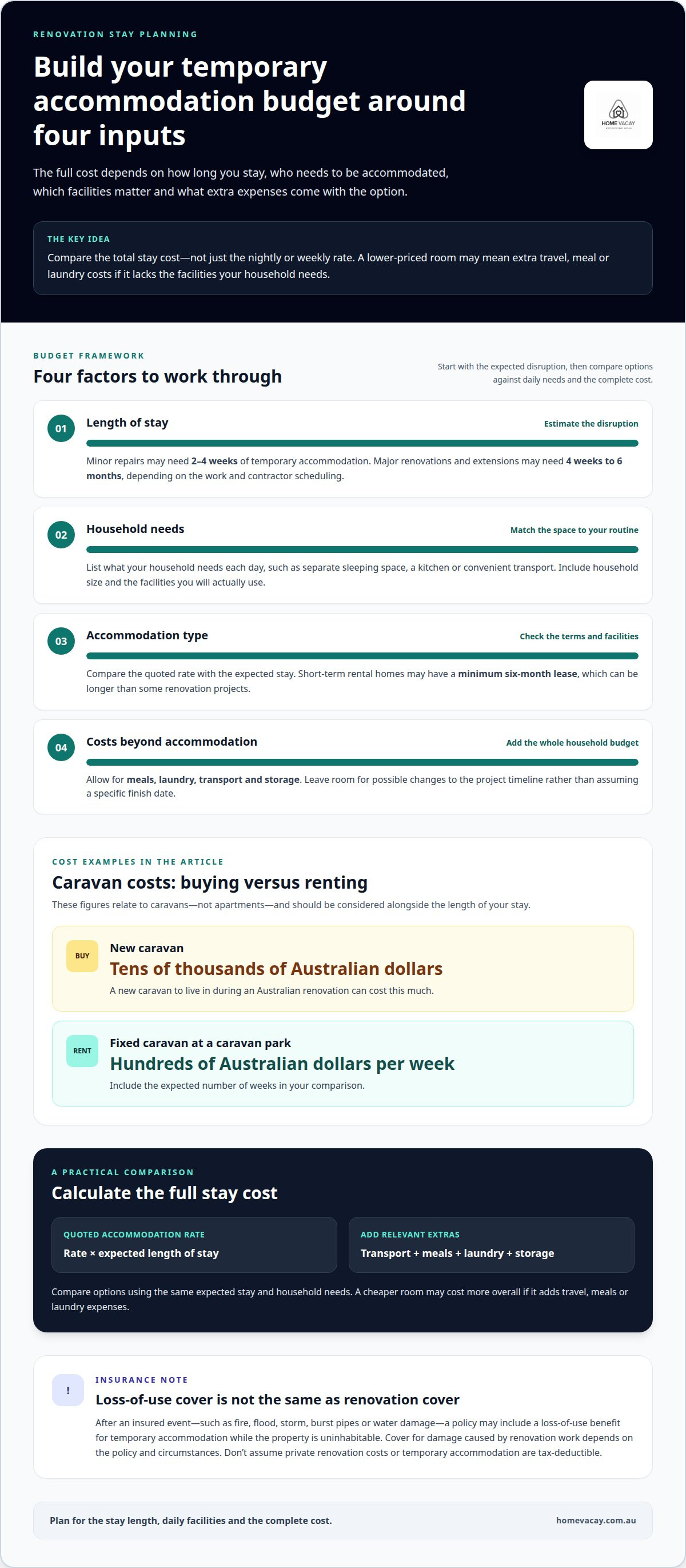
There isn’t one fixed cost for a renovation stay. Your total depends on the accommodation type, length of stay, household size and facilities required. In Sydney, compare the full stay cost, not just the nightly or weekly rate. A cheaper room may add travel, meals or laundry costs if it lacks the facilities your household needs.
A caravan is one option with distinct costs. Buying a new caravan to live in during an Australian renovation can cost tens of thousands of Australian dollars. Renting a fixed caravan at a caravan park can cost hundreds of Australian dollars per week. These figures relate to caravans, not apartments, and your budget should also account for the length of your stay.
For a furnished apartment or short-term rental, calculate the total using the quoted rate and expected length of stay. Add relevant transport, meals, laundry and storage expenses to compare options fairly. A short project may not suit a longer rental arrangement: landlords of short-term rental homes may expect a minimum six-month lease, longer than some renovation projects.
Build a simple budget before booking. First, estimate how long essential rooms or services will be unavailable. Then list your household’s needs, such as separate sleeping space, a kitchen or convenient transport. Compare accommodation options with those needs and the likely stay length. Leave room for delays without assuming the project will finish on a specific date.
For insured events such as fire, flood, storm, burst pipes or water damage, a home insurance policy may include a loss-of-use benefit for temporary accommodation while the property is uninhabitable. This may affect your accommodation budget, but it doesn’t make every renovation expense an insurance cost. Keep accommodation records and distinguish repair expenses from everyday household spending.
4. What are the cheapest accommodation options while renovating a house in Australia?
House-sitting can be a low-cost option during renovations. House-sitters in Australia typically live rent-free, although they may need to care for pets. Some arrangements may require only an agency registration fee. Consider whether pet care suits your household and whether the dates fit the renovation schedule. House-sitting can work well when you have a clear agreement about looking after the home.
Staying with family or friends can also avoid the cost of separate accommodation. Agree on practical details early, including how long you’ll stay, where everyone will sleep and whether pets can come along. Sharing a home may work for a short kitchen renovation but feel cramped during a longer extension. Agreeing on an end date and household routine helps everyone plan.
If part of your house remains usable, staying there may avoid accommodation costs. This depends on whether you can safely access the areas you need and manage daily routines around the building work. A bedroom and working bathroom, for example, may make staying home practical when work is limited to another part of the house. If essential facilities are unavailable, the lowest-cost option may not meet your household’s needs.
Compare the overall impact of each arrangement, not just the accommodation charge. A free stay may involve extra travel, meals away from home or pet-care tasks. A caravan or temporary on-site setup also needs to suit the work area and your household. Write down the expected stay length, daily travel and available facilities, then compare each option with your routine. This gives you a clearer view of practical costs beyond the headline rate.
If a furnished stay suits your plans better than house-sitting, explore short-stay accommodation options as another way to plan your time away.
Home Vacay: Capitol Apartments in Canberra City
Home Vacay offers short-term apartment stays for business and leisure travellers. If your renovation plans also involve travel, a furnished apartment can provide a separate base while work continues at home.
Choose accommodation based on where you need to be and the routines you want to maintain. Consider sleeping arrangements, daily travel and the facilities your household prefers. This can help you decide whether an apartment fits your plans or another arrangement is more practical.
Explore Home Vacay’s apartment stays or contact Home Vacay to discuss your plans.
Plan your next stay around the life you need to keep moving
Renovation planning is also a chance to protect daily routines that should continue. Before setting move-out dates, compare the expected disruption with work, school, caring responsibilities and regular appointments. Decide which routines need to stay close to home and which can shift temporarily. This calendar makes accommodation while renovating a house in Australia a considered part of your project plan.
Keep your intended dates, booking details and moving arrangements in one record. Share it with everyone in your household and update it when project milestones change. A shared plan makes the transition easier to coordinate, especially when people need to travel, work or manage family commitments.
Home Vacay can help you explore whether its apartment options fit your plans. Contact Home Vacay about your stay and take the next step at a pace that feels right.
Frequently Asked Questions
What accommodation options are available during home repairs in Sydney?
Options include staying in an unaffected part of the home, moving in with family or friends, house-sitting or booking a short-term stay. A household having one room repaired, for example, may be able to stay elsewhere in the house, while work affecting several rooms may call for a separate place. Compare each option with your location needs, pets, work routines and access to everyday facilities.
How do short-term rentals, hotels, serviced apartments, and staying with family compare for renovation accommodation?
A short-term rental can suit households that want a private space and a home-like routine. Hotels usually offer a simpler base, while serviced apartments can provide apartment-style space alongside hotel services. Staying with family may reduce accommodation expenses, but requires agreement on space, pets and household routines. Compare kitchen access, laundry arrangements, sleeping space and travel to work or school before choosing.
How can you arrange temporary accommodation around renovation stages and reduce disruption?
Match your accommodation dates to the rooms and services affected at each stage. List the work sequence, then mark when bedrooms, bathrooms or access routes will be unavailable. If work moves from one part of the house to another, a flexible stay can help you avoid moving more than once. Keep essential documents, medicines and everyday items together for an easier transition.


