

A month away doesn’t automatically call for a residential lease. If your dates are fixed and you want a furnished, self-contained space, temporary accommodation may be a flexible fit for a work trip, family visit or time between homes.
It’s understandable to want the comfort of a home without taking on a longer-term rental arrangement. To compare options fairly, look beyond the nightly rate: check what’s included, how check-in works and what happens if your plans change.
This guide explains how to weigh an apartment stay against a residential lease and what to check before booking. Home Vacay offers self-contained apartments for short-term business and leisure stays. Availability depends on your dates and intended length of stay, so confirm the details before you commit.
Key Takeaways
- A month-long booking doesn’t automatically mean you need a residential lease. Match the accommodation type to your dates and purpose.
- When comparing temporary accommodation Canberra options, check the total booking amount and confirmed inclusions, not just the nightly rate.
- Compare furnishings, flexibility and agreement terms. Short-stay bookings and residential leases may have different conditions.
- Before booking, confirm your dates, guest numbers, cancellation terms and check-in arrangements with the provider.
- A self-contained apartment may suit a temporary visit. Check that the specific property meets your needs before committing.
Temporary accommodation for a month: what to decide before you book
Temporary accommodation is a furnished stay booked for a limited period, rather than an arrangement intended to become your permanent home. The length of a booking alone doesn’t determine whether it is a residential tenancy. Short-stay accommodation and residential leases can have different agreements and conditions, so check the terms for the specific property. This isn’t legal advice.
Start with the reason for your stay and how settled your plans are. A work assignment may call for a comfortable place to return to after each day. A temporary move, family visit or extended holiday may make having your own space a priority. Decide whether you need a self-contained apartment, then confirm that the provider can accommodate your dates and intended length of stay. Don’t assume a property is available for a full month.
When does a short stay suit a month away?
A short-stay booking may suit a temporary visit if you don’t need or want to commit to a longer-term lease. Check the property’s booking conditions, including any minimum or maximum stay and the rules for changing dates. Confirm what applies to your specific booking rather than relying on a general description of flexible accommodation.
What should you confirm before comparing options?
Write down your requirements before browsing. This makes it easier to compare like with like, instead of assuming every furnished apartment has the same setup.
- Exact dates: Note your arrival and departure dates, then ask whether the property can host you for the full period.
- Guest numbers: Confirm how many people will stay and check that the sleeping arrangements suit everyone.
- Accessibility: Identify any access requirements and ask the provider to confirm whether the property meets them.
- Essential facilities: List what you’ll rely on, such as a kitchen, workspace, storage or laundry, and verify each feature for the specific apartment.
- Booking conditions: Check what’s included, the cancellation terms and the check-in and check-out arrangements before committing.
Separate must-haves from nice-to-haves. If you’re travelling for work, a suitable place to work may matter more than extra living space. For a family visit, sleeping arrangements or kitchen access may come first. Don’t assume a feature is included because it appears in a photo or another property’s listing.
The term Serviced apartment describes a furnished accommodation category, but the label doesn’t confirm what a particular booking includes. Ask the provider about the actual facilities and conditions for your dates. Once those details are clear, you can compare options against what will make your stay comfortable.
How furnished apartment stays and residential leases differ
A furnished apartment booking and a residential lease can both provide a place to stay, but they’re arranged for different purposes. A short-stay booking is usually made for specified dates under the provider’s booking terms. A residential lease is an agreement for a home, with its own terms and legal framework. Don’t assume the same rights or obligations apply to both.
| What to compare | Furnished apartment stay | Residential lease |
|---|---|---|
| Duration | Booked for a confirmed period, subject to the property’s conditions. | Often arranged for a longer or ongoing housing need. |
| Furnishings | Furniture is generally part of a furnished stay. Check what’s actually provided. | Furnishings depend on the property and agreement. |
| Inclusions | Facilities, utilities and household items vary by property and booking terms. | Responsibilities and inclusions are set by the tenancy agreement and applicable rules. |
| Flexibility | Changes and cancellations depend on the booking conditions. | Changes or ending the agreement follow its terms and relevant tenancy requirements. |
| Agreement type | A booking confirmation or short-stay agreement may set out the conditions of the stay. | A residential tenancy agreement sets out the rental arrangement. |
This is a general comparison, not a determination of your rights. The agreement and circumstances matter. If you need a legal interpretation, seek guidance from a qualified professional or relevant tenancy advice service.
What may be included in a furnished short stay?
“Furnished” doesn’t tell you exactly what you’ll find in the apartment. Confirm which furniture, kitchen facilities, utilities and household items are included. Ask about anything you’ll rely on for several weeks, such as cooking equipment or a suitable workspace. Written confirmation gives you a record of what’s included and helps you avoid relying on assumptions or photos.
Inclusions can vary even between apartments offered by the same provider. Read the listing and booking terms, then ask about any gaps before confirming your stay.
When might a residential lease be more suitable?
If your housing need is longer-term or open-ended, it may be worth exploring residential arrangements instead of booking successive short stays. Compare the actual agreement terms and consider getting qualified advice if you’re unsure which arrangement applies. A booking doesn’t become a lease simply because it lasts a certain number of days. The booking period and legal nature of an agreement are separate questions.
For a temporary visit, a self-contained apartment may be a practical alternative to a residential arrangement. You can review Home Vacay’s apartment stays and confirm the dates, inclusions and booking terms for the property you’re considering.
Compare month-long accommodation options by value, comfort, and flexibility
A low nightly rate doesn’t always mean a better-value stay. Compare the total confirmed booking amount with what’s included, what you’ll need to arrange yourself and what happens if your plans change. A furnished apartment, hotel room or residential arrangement may suit different needs. No one option is right for every month away.
List the practical features that will shape your day. Separate essentials from preferences, then check each listing or ask the provider to confirm what’s available in that specific property.
Which facilities matter during a longer temporary stay?
Consider how you’ll use the space, not just how it looks in photos. For a work trip, check whether the confirmed setup supports quiet work and your daily routine. For a family stay, look at the sleeping arrangements and whether the kitchen facilities suit the meals you plan to prepare. Storage and laundry may also matter over several weeks, but don’t assume they’re included.
- Essential: Features you need to feel comfortable and manage daily routines.
- Useful: Extras that would make the stay easier but aren’t deal-breakers.
- Unconfirmed: Anything missing or unclear in the listing. Ask before comparing or booking.
This ranking helps you weigh comfort against cost without placing value on features you won’t use. It also makes differences between properties easier to spot.
How can you compare booking terms fairly?
Keep a short comparison record for each option. Note the total amount confirmed for your dates, inclusions, any extra charges or deposit, when payment is due, and the cancellation conditions. Check the check-in arrangements and what options are available if your plans change. If a detail is absent or unclear, ask the provider for written clarification before you commit.
- Is the quoted total for the full stay, and does it include the listed facilities?
- Are any charges or deposits separate from the booking amount?
- When is payment due, and what are the cancellation conditions?
- How are check-in and check-out arranged, and what happens if dates need to change?
A like-for-like comparison depends on confirmed inclusions and booking terms, not the headline rate alone. That’s especially useful when comparing temporary accommodation Canberra options, where listings may describe different facilities and conditions. Verify the details, then choose the stay that best fits your priorities and the flexibility you need.
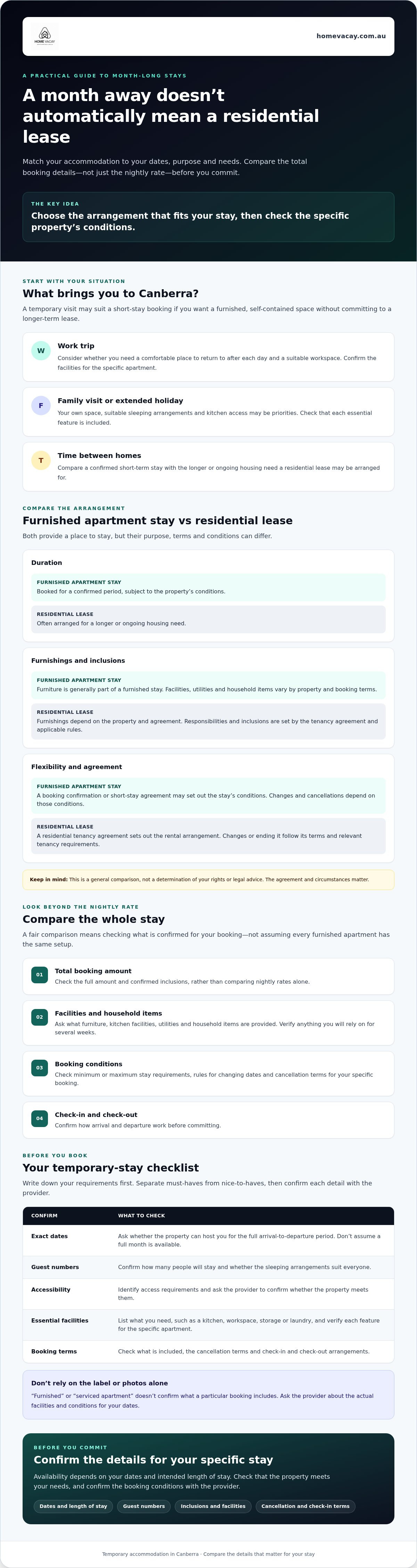
Use this checklist before booking temporary accommodation for a month
A few checks before booking can make a longer stay easier to plan. Work through these steps and keep the provider’s written replies with your booking details.
- 1. Define your needs. Note your dates, guest numbers, reason for staying and essential facilities. Include accessibility needs and any arrival considerations.
- 2. Shortlist suitable properties. Compare options against your must-haves, not just photos or a headline rate. Remove any property that can’t meet a key requirement.
- 3. Verify the details. Ask the provider to confirm availability for your full date range and guest numbers, and whether the property can be booked for that duration.
- 4. Compare the terms. Review the confirmed inclusions, total booking amount, payment conditions, cancellation terms and arrival arrangements side by side.
- 5. Book once the details are clear. Save the booking confirmation and written answers somewhere you can find them before and during your trip.
What should you ask the accommodation provider?
Keep your questions specific. Ask which utilities, facilities and household essentials are included in the confirmed booking. Clarify when payment is due, what the cancellation conditions are, and how check-in and check-out work. If an important detail is missing or unclear, request confirmation in writing before committing. That gives you a record to refer to if you need to check the agreed arrangements.
How do you prepare for a smooth arrival?
Before travelling, make sure your booking confirmation and arrival instructions are easy to access, including on your phone. Confirm any access requirements directly with the provider. Flexible check-in and check-out options may be available, but don’t assume you can arrive at any hour. Check the confirmed inclusions, then pack any personal items you’ll need that aren’t provided.
A little preparation can help you arrive with fewer unanswered questions. You can explore Home Vacay’s self-contained apartments and check whether a suitable property is available for your dates and intended length of stay. Confirm the inclusions and booking terms for your specific apartment before booking.
Find a Home Vacay apartment for your temporary stay
Home Vacay offers self-contained apartments for short-term business and leisure stays. An apartment may suit you if you want a space of your own during a temporary visit. The right fit depends on your dates, guest numbers and practical needs, so check the details for the specific property rather than assuming every apartment has the same features.
Guests can book through the Home Vacay website. Flexible check-in and check-out options are available, but arrangements may vary by booking. Confirm what applies to your stay, including how you’ll access the apartment and when you can arrive and depart.
Is a Home Vacay apartment right for your month away?
Think about how you’ll use the space. A business traveller may want to check that the confirmed facilities suit their work routine. Leisure guests might focus on sleeping arrangements, kitchen facilities or other essentials for their visit. Review the property information and ask about anything you can’t confirm from the listing. Availability for a month-long stay isn’t guaranteed, so confirm your full date range and intended length of stay before making plans.
A self-contained apartment may suit a temporary visit, but suitability comes down to the details. Check that the confirmed setup matches your requirements, whether you’re travelling alone, with family or for work.
What to do before confirming your booking
Before committing, review the property details and confirm that the apartment is available for your exact dates and guest numbers. Check the final booking terms, including inclusions, cancellation conditions, payment arrangements and check-in and check-out details. If an important feature or condition isn’t clear, ask Home Vacay to confirm it directly. Keep the response with your booking information for easy reference.
Careful checks can help you choose a stay that suits your plans. If you’re considering temporary accommodation Canberra, review the available stays and ask about your intended dates. Explore Home Vacay stays when you’re ready, then confirm the property details and booking terms before you book.
Choose a stay that fits your month away
A month-long stay doesn’t automatically call for a residential lease. The right choice depends on your dates, purpose and how you want to live while you’re away. A furnished apartment can provide a self-contained space for a temporary visit, while a residential arrangement may better suit a longer or open-ended housing need.
Before you commit, compare the confirmed total and inclusions, then check the booking conditions, cancellation terms and arrival arrangements. Ask the provider to confirm availability for your full date range and intended stay length. Clear details make it easier to choose accommodation that fits, without assuming every property offers the same facilities or flexibility.
Home Vacay offers self-contained apartments for short-term business and leisure stays, with direct booking through its website and flexible check-in and check-out options. Arrangements and availability depend on the property and your dates. Explore Home Vacay stays and check your dates, then confirm the details before booking. With a little planning, you can find a comfortable base for your time away.
Frequently Asked Questions
Can I book temporary accommodation for one month?
A one-month stay may be possible if the property accepts your dates and intended booking length. Availability varies, so confirm the full date range and guest numbers with the provider before making plans. Home Vacay offers self-contained apartments for short-term stays, but you’ll need to check whether a suitable apartment is available for your specific month.
Is a one-month accommodation booking the same as a residential lease?
No, the length of a booking alone doesn’t make it a residential lease. Short-stay accommodation and residential arrangements can have different agreements, conditions and legal treatment. Read the terms that apply to your booking rather than assuming a month-long stay has converted into a lease. If you need help interpreting an agreement, seek advice from a qualified professional or tenancy advice service.
What should I look for in a furnished apartment for a month?
Start with the practical details you’ll rely on throughout the stay. Check sleeping arrangements, kitchen facilities, workspace, storage and laundry against your needs. Confirm accessibility requirements and guest numbers, too. Don’t assume a feature is included because it appears in a photo or another property’s listing. Ask the provider to confirm important details for the specific apartment and keep the reply with your booking information.
How much does temporary accommodation for a month cost?
There isn’t one set cost for a month-long stay. The total depends on the property, dates, guest numbers, booking length and confirmed inclusions. Ask for the full amount for your exact stay, then check whether any charges or deposits are separate and when payment is due. For temporary accommodation Canberra, compare confirmed totals and terms rather than relying on a nightly rate alone.
What happens if I need to change my dates after booking?
What happens depends on the booking conditions for your property. Check the change and cancellation terms before you book, including any deadlines or charges that may apply. If your plans shift, contact the provider promptly to ask what options are available. A change isn’t guaranteed, so wait for confirmation before assuming revised dates or arrangements have been accepted.
Are utilities and household essentials included in a month-long apartment stay?
Inclusions vary by property and booking. Check which utilities, kitchen facilities, furniture and household essentials are confirmed, and ask about anything you’ll need that isn’t clearly listed. For a stay lasting several weeks, get the details in writing before committing. That way, you can plan what to bring and compare options based on what’s actually included.
When should I book temporary accommodation for a month?
Start looking once you have a clear idea of your dates and guest numbers. There’s no single booking lead time that suits every trip, and availability can vary by property. Contact the provider to confirm whether the full date range and intended stay length can be accommodated. Before paying, review the final booking terms, inclusions, cancellation conditions and arrival arrangements.


