

Your move-out is Friday, but the next home won’t be ready for another week. A gap like this can leave you balancing boxes, work and family routines while trying to find a comfortable place to stay. With a little planning, temporary housing between moves can be a steady bridge rather than another source of uncertainty.
It’s difficult to plan when you don’t know exactly how long the gap will last. The right option depends on your dates, household and daily routines, as well as where your belongings will be while you’re between homes.
This guide explains how to compare temporary stay options and organise the key details, from booking dates to storage and everyday essentials. We’ll look at the trade-offs between staying with family, choosing a hotel or booking a short-term apartment. A self-contained apartment can provide a practical base while your next home is being prepared. Home Vacay offers direct website booking and flexible check-in and check-out options. The aim is to make the transition easier to manage, even when your moving dates don’t line up neatly.
Key Takeaways
- Pinpoint what’s creating the gap between homes, from settlement timing to renovations, before deciding how long you may need to stay.
- Compare temporary housing between moves by privacy, space, meal preparation and how well each option suits your household.
- Use a short checklist to match guest numbers, daily routines and booking terms to your likely stay.
- Coordinate accommodation dates with removal bookings, storage and access to your next home to keep the transition manageable.
- Consider a short-stay apartment as a practical base, and choose the format that fits your move dates and household needs.
Temporary housing between moves: understand the gap before choosing a stay
Temporary housing between moves is a short-term place to stay after leaving one home and before moving into the next. It gives individuals, couples or families a base while their next home is being prepared or moving arrangements are completed.
This is a transitional stay, not a long-term lease or permanent housing solution. You’re arranging a place for a defined period, even if the exact end date is uncertain. Short-term accommodation arrangements can have different terms, so read the agreement carefully. For general background on the relationship between landlords and tenants, see understanding tenancy law.
When does a gap between homes call for temporary accommodation?
Move-out, settlement and move-in dates don’t always fall on the same day. A lease may end before a new home is ready, a property may need renovation, or a relocation may mean arriving before the next home is available. Some gaps can be planned well in advance; others follow an unexpected delay. Whatever the reason, you’ll need somewhere to stay while the next step is settled.
A temporary base can ease the pressure to make rushed decisions about permanent housing. It gives you somewhere to maintain daily routines while access, paperwork or preparation at the next home is completed. Think of it as a bridge, not a substitute for deciding where you’ll live longer term.
What should you work out before looking for a place?
Start with the dates. Estimate how long you may need to stay, then mark which dates are confirmed and which could shift. If the handover or renovation timing is uncertain, allow for that in your planning instead of treating an estimate as a fixed move-in date.
Next, note who needs to stay and what everyday life will involve. A person working remotely may prioritise quiet and a reliable routine; a family may need enough room for everyone to settle. List essentials to keep close, such as work equipment, school items, medication and clothing. Decide what can go into storage or travel directly to the next home.
- People: Who will stay, including children or other household members?
- Routines: What do work, study, meals and rest require each day?
- Priorities: How much privacy and space will make the stay manageable?
- Arrival: What check-in arrangements and times will fit your moving day?
These answers give you a useful brief for comparing accommodation. They help you focus on what matters for this particular gap, rather than treating a short transitional stay like a permanent housing decision.
Compare temporary housing options between moves by stay length and household needs
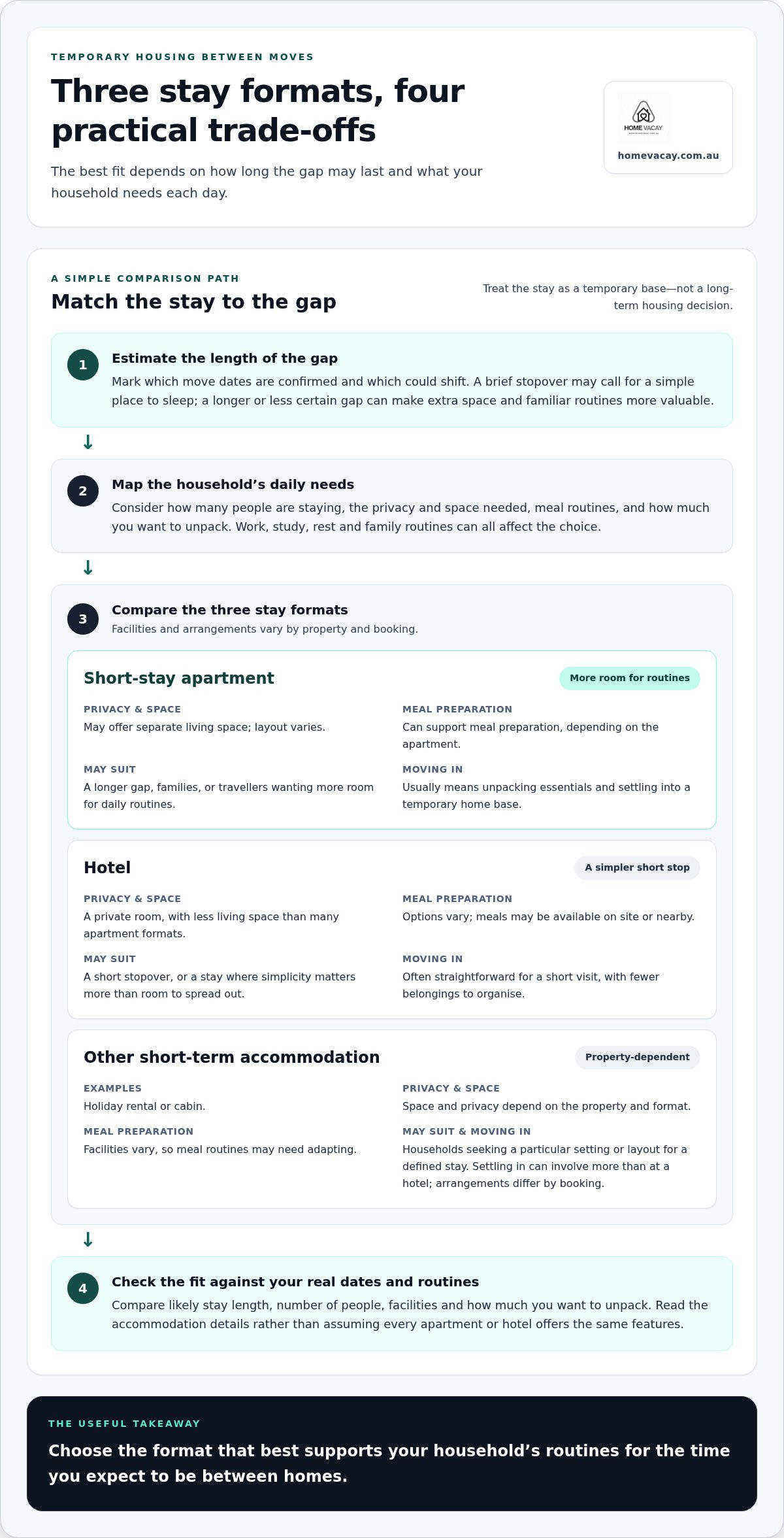
The best fit depends on how long the gap may last and what your household needs each day. A brief stopover may call for a simple place to sleep. A longer or less certain gap can make extra space and familiar routines more valuable. Use this comparison to narrow your options, then review the details of the accommodation you’re considering.
| Option | Privacy and space | Meal preparation | May suit | Moving in |
|---|---|---|---|---|
| Short-stay apartment | May offer separate living space; layout varies. | Can support meal preparation, depending on the apartment. | A longer gap, families or travellers who want more room for daily routines. | Usually involves unpacking essentials and settling into a temporary home base. |
| Hotel | Private room, with less living space than many apartment formats. | Options vary; meals may be available on site or nearby. | A short stopover or a stay where simplicity matters more than room to spread out. | Often straightforward for a short visit, with fewer belongings to organise. |
| Other short-term accommodation, such as a holiday rental or cabin | Space and privacy depend on the property and format. | Facilities vary, so meal routines may need adapting. | Households seeking a particular setting or layout for a defined stay. | Can involve more settling in than a hotel; arrangements differ by booking. |
When might a short-stay apartment suit the gap?
A separate living area can give household members more room to manage different routines while sharing a temporary base. Families may value space for meals and downtime, while business travellers may want somewhere to switch off after work. Home Vacay offers self-contained short-term apartment stays for business and leisure travellers, including families. Explore short-term apartment stays as one option for a planned gap between homes.
How do hotels and other short stays compare?
A hotel can suit a brief stop when you want a private place to rest and don’t need much room beyond the essentials. Other formats offer different balances of space, privacy and everyday convenience. Don’t assume every apartment has the same facilities or every hotel provides the same services. Compare the likely stay length, number of people and how much you want to unpack before choosing.
Keep the purpose of your stay in mind, too. A planned gap between homes is different from an urgent housing need. If you’re facing a housing crisis, emergency housing information outlines support options. For an ordinary move, compare the practical trade-offs above and choose the format that best supports your household’s routines.
Choose temporary housing between moves with a practical stay checklist
A clear checklist helps you compare places against real household needs, not just labels such as apartment or hotel. When choosing temporary housing between moves, assess the likely stay, daily routines and booking terms together. The option you choose should work for the people staying and the dates you can reasonably plan around.
Which stay details matter most for your household?
Start with the number of guests and likely length of stay. A solo traveller with a short gap may need something different from a family sharing a base while a home is being prepared. Consider where people will work, rest and eat, and whether children’s routines need to continue. Check the accommodation details against your list rather than assuming a property has the facilities you need.
If you’re travelling with a pet, include that in your comparison and read the accommodation’s stated terms. Privacy and space matter too, especially if household members keep different schedules. Decide what will make the stay manageable, then separate essentials from preferences.
How can you assess date flexibility before booking?
Write down the dates you know, the dates you’re estimating and what might change them. For example, your move-out date may be confirmed while access to the next home is still uncertain. Read the booking terms for changes, cancellations, arrival arrangements and check-in and check-out times. Don’t assume you can shorten or extend a stay unless the terms allow it.
Compare the whole stay plan, not only the accommodation format. Include travel between the accommodation, work or school, and the next home. Consider where essential belongings will be and how arrival and departure fit around the removal schedule. This can help you spot practical complications before booking.
Quick checklist before booking temporary accommodation:
- Confirm the number of guests and check the accommodation’s occupancy details.
- Estimate the stay length and mark which dates are still uncertain.
- Match privacy and space to work, rest, meals and family routines.
- Read the stated terms for pets, if relevant.
- Check arrival arrangements, check-in and check-out times, and cancellation or date-change terms.
- Consider transport, belongings and move-day timing as part of the same plan.
This checklist gives you a consistent way to compare options. A hotel may suit a brief stop, while a short-stay apartment may better suit a household that wants room for different routines. Home Vacay offers short-term apartment stays for business and leisure travellers, with flexible check-in and check-out options. Use your checklist to see how an apartment stay fits your dates and needs.
Plan accommodation, storage and move dates as one transition
A smooth move depends on coordinating several things: leaving your current home, staying somewhere temporary, keeping essentials close and getting belongings into the next place. Put those details into one shared plan. It makes clashes easier to spot, particularly if access dates change.
What should you organise before leaving your current home?
Confirm the handover date, when you need to leave and how you’ll access your temporary accommodation. Then plan for the first night away. Keep clothing, documents, medication, chargers and work items separate from belongings going into storage. If household members have appointments or different travel needs, include those journeys in the plan too.
How do you prepare for the move into your next home?
Keep the expected move-in date and updates in one shared calendar or document. Arrange for stored belongings to be moved once access to the next home is confirmed. Pack a small transition kit with everyday items you’ll need before the rest of your belongings arrive.
Use this sequence to connect the key dates:
- 1. Confirm the gap. Record your move-out date, expected access to the next home and any dates that could shift.
- 2. Set the accommodation dates. Choose a stay that covers the known gap, and note the booking’s arrival and departure arrangements.
- 3. Sort belongings by access. Set aside daily essentials. Plan separately for items that can be stored or moved directly to the next home.
- 4. Coordinate transport. Align removal and storage arrangements with the home handover and your accommodation check-in, allowing time to travel between them.
- 5. Keep the plan current. Share date updates with everyone involved in the move and adjust related arrangements as details are confirmed.
- 6. Prepare for arrival. Keep the transition kit with you, then schedule the delivery of stored belongings around confirmed access to your next home.
This approach makes accommodation part of the move plan, alongside belongings, travel and access. A short-term apartment can provide a comfortable base during the gap. Home Vacay offers short-term stays for business and leisure travellers, with flexible check-in and check-out options. Explore short-term apartment stays as you organise the transition.
Book a short-stay apartment for a smoother bridge between homes
Bring the main decisions together: your expected dates, who’s staying, the accommodation format that suits your routines and how the stay fits around removals and storage. A short-stay apartment can be a practical temporary base while you wait to move into your next home. It supports the transition, but it isn’t a substitute for a long-term housing arrangement.
What should you have ready before booking?
Before confirming a stay, gather the details that will help you choose. Have your expected arrival and departure dates and guest count ready. Note essential requirements, such as privacy for work or space for your household’s daily routines. Then review the booking details and stated terms, including arrival arrangements and check-in and check-out times.
Keep your accommodation confirmation with your removal and storage plans. A shared folder or calendar makes the details easier to find on moving day, especially if dates change. If an important date is still an estimate, make that uncertainty clear in your plan rather than treating it as confirmed.
- Dates: Expected arrival and departure, with any uncertain milestones noted.
- Guests: The number of people staying and their essential needs.
- Stay format: The accommodation style that best fits your routines and likely length of stay.
- Move logistics: Removal, storage and access details kept alongside the booking information.
- Booking terms: The stated conditions and arrival arrangements reviewed before confirming.
How can a short stay make the transition feel easier?
A settled base can give you some structure during an in-between period. You can maintain everyday routines while your belongings are stored or the next home is being prepared. That can make the gap feel more manageable, even when the move dates don’t line up neatly.
Home Vacay offers short-term apartment stays for business and leisure travellers, including families. You can book directly through the website, with flexible check-in and check-out options. Review the dates and terms of your booking alongside your arrival and departure plans.
If an apartment stay fits your move plan, take a look through Home Vacay’s short-term apartments. Choose a stay that aligns with your dates and household needs, then keep the booking details close as you organise the final steps between homes.
Make your move gap feel more manageable
A gap between homes is easier to plan when you treat accommodation, belongings and key dates as one transition. Start with confirmed and estimated dates, then compare options against your household’s routines, privacy needs and likely stay length. Keep essentials accessible and coordinate storage and removal arrangements around access to your next home.
The right temporary housing between moves provides a comfortable base for the gap, not a long-term housing solution. A short-stay apartment may suit business or leisure travellers who want a place to settle while their next home is being prepared.
Home Vacay offers short-term stays with direct website booking and flexible check-in and check-out options. If an apartment fits your plans, explore Home Vacay’s short-stay apartments and review the booking details as you organise your move.
With a clear plan and a welcoming place to stay, you can focus on the next step and make the transition feel steadier.
Frequently Asked Questions
What is temporary housing between moves?
Temporary housing between moves is a short-term place to stay after leaving one home and before moving into the next. It can suit people facing a gap caused by settlement timing, lease dates, renovations or relocation. The stay provides a base for everyday routines while permanent arrangements are completed. It’s different from a long-term lease or permanent housing solution, so consider the booking period and terms separately.
How long should I book temporary accommodation for between homes?
Book for the period you can reasonably estimate, using confirmed move-out and move-in dates as your guide. If one date is uncertain, allow for a possible delay in your planning and read the booking terms before confirming. Don’t assume you can shorten or extend a reservation. Coordinate accommodation dates with removal and storage arrangements, then keep updated dates together so you can review the plan if circumstances change.
Is a short-stay apartment better than a hotel while moving?
Neither option is best for every move. A hotel may suit a brief stop when you want a simple place to rest and don’t need much space. A short-stay apartment may suit a longer gap or a household that values room for separate routines. Compare privacy, space, meal preparation, arrival arrangements and the effort of moving in. Features and included services vary, so review the details of each stay.
Can I book temporary accommodation if my move-in date is uncertain?
You can plan a booking around your best estimate, but read its terms before confirming. Check the stated conditions for date changes, cancellations, arrival arrangements and check-in and check-out times. Keep confirmed dates separate from estimates in your move plan. Don’t assume you can extend or shorten a stay; any change depends on the booking terms. Home Vacay offers direct website booking and flexible check-in and check-out options.
What should I look for in temporary housing between moves?
Match the accommodation to your guest count, likely stay length and daily routines. Consider the privacy and space you need for work, rest and meals. Review arrival arrangements, check-in and check-out times, and the booking’s cancellation or change terms. If you’re bringing a pet, include that in your search and read the accommodation’s stated terms. Also factor in transport to work, school, appointments and your next home.
How do I manage my belongings while staying in temporary accommodation?
Separate what you’ll need during the stay from belongings that can be stored or moved separately. Keep essentials such as clothing, medication, documents, chargers and work items easy to reach. Coordinate removal and storage arrangements with accommodation dates and access to your next home. A small transition kit can make the first night and daily routines simpler. Keep booking, storage and moving confirmations together for easy reference.
What happens if my new home is not ready by the planned move-in date?
If the move-in date shifts, update your shared plan and review the accommodation booking terms straight away. Those terms determine whether dates can be changed, and you shouldn’t assume a stay can be extended. Re-coordinate storage, removal and access arrangements around the updated date. Keep essentials with you while plans are adjusted. If the delay is uncertain, distinguish confirmed information from estimates so household members can work from the same plan.


