

The best short-term stay isn’t always a hotel. Short-term accommodation is typically temporary lodging for less than three months. Booking short-term accommodation in advance can help you compare places and secure a stay that suits your plans.
A work trip, family holiday and temporary move each call for different things. You might need a central base for work, room for family or somewhere comfortable while you settle in. The right choice depends on your length of stay, destinations and accommodation needs.
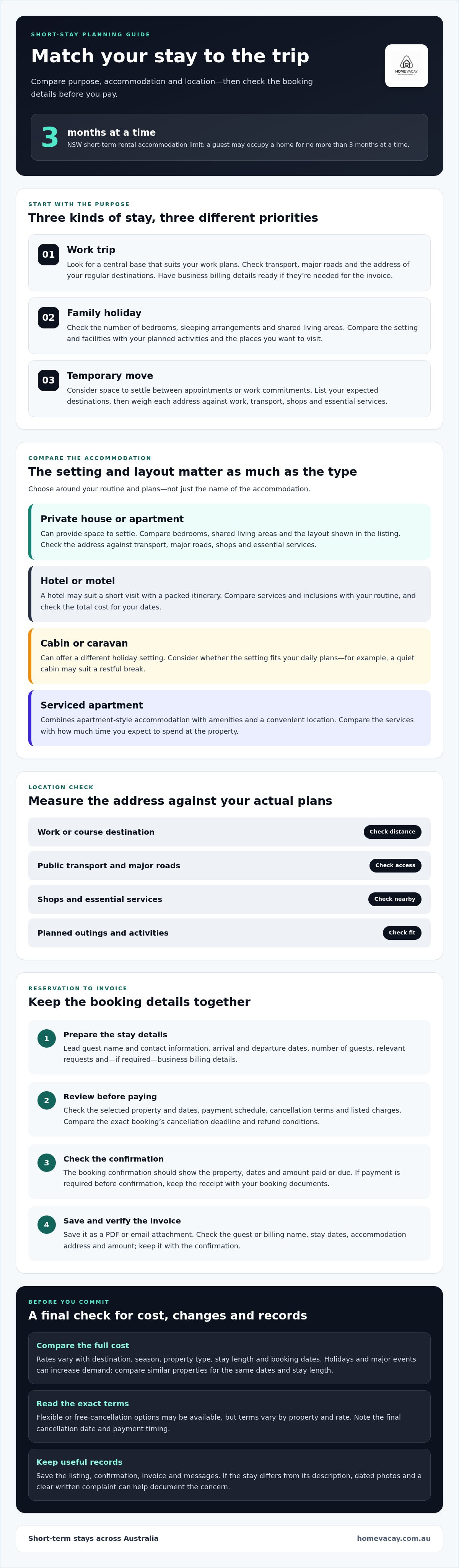
This guide compares common accommodation types and locations across Australia. You’ll also learn how to make a reservation and receive an invoice, so you can plan your stay with a clearer idea of what to expect.
Key Takeaways
- Match your stay type to the purpose of your trip, from a work visit to a family holiday or temporary move.
- Compare locations by their distance to work, public transport, services and the places you plan to visit.
- In NSW, short-term rental accommodation can give a guest the right to occupy a home for no more than 3 months at a time.
- Have your stay details ready when completing a reservation form, then follow the booking steps to receive an invoice.
Short-term stays for work, holidays and relocation
Work trips, holidays and temporary moves call for different accommodation. Compare each option’s setting, layout and location with your plans before choosing.
Booking short-term accommodation in advance gives you time to compare options and choose one that suits your itinerary. Popular accommodation can book out quickly during holiday periods or major events. If you’re travelling for a course or work placement, arrange your stay early and have your arrival dates ready while comparing options.
Private Houses and Apartments
A private house or apartment can give you space to settle between work commitments, family outings or appointments during a move. Check the number of bedrooms, shared living areas and layout shown in the listing. A family, for example, may need separate sleeping spaces, while a solo worker may prefer a quiet area to prepare for the next day.
Before deciding, compare the address with your regular destinations. Consider public transport, major roads, shops and essential services. The location should suit both your arrival and the routine you expect during your stay.
Holiday and Unique Stay Options
Options range from hotels and motels to private homes, apartments, cabins and caravans. A hotel may suit a short visit with a packed itinerary, while a cabin or caravan can offer a different holiday setting. Compare the location, sleeping arrangements and facilities with your planned activities.
For a break away from busy areas, consider how the setting fits your daily plans. A quiet cabin may suit a restful holiday, while a centrally located apartment can make planned outings easier. Choose accommodation around what you’ll do, rather than relying on the type alone.
Serviced apartments can suit travellers seeking apartment-style accommodation with amenities and a convenient location. Compare the services with your routine: will you spend most of the day out, or need more time at the property? For a relocation, list your expected destinations, then weigh each address against work, transport and nearby services.
Completing a reservation form and receiving an invoice
A reservation form records the guest, stay dates and agreed booking details. Enter the lead guest’s name and contact information, arrival and departure dates, number of guests and any relevant requests. Before submitting, check the selected property and dates. For a work trip, include the business billing details required for the invoice.
Before paying, review the payment schedule, cancellation terms and any listed charges. The booking confirmation should show the property, dates and amount paid or due. Keep it with the invoice. If payment is required before confirmation, save the receipt with your booking documents.
Australian booking platforms may offer flexible or free-cancellation options, but terms vary by property and rate. Before choosing, compare the cancellation deadline and refund conditions for the exact booking.
When you book well ahead, plans can change before arrival. Choose cancellation terms that suit your circumstances, note the final cancellation date and keep the confirmation email. If your dates shift, follow the booking’s stated process promptly and save messages about any changes.
Local requirements vary across Australia. Before paying, review the listing and any relevant local registration information provided for the property. Make sure the address, host information and accommodation description match the reservation. Keep copies of the listing and confirmation for easy reference.
If the stay differs from its description, keep dated photos, messages and the booking confirmation. Send the host or booking platform a clear complaint describing the issue and the outcome you’re seeking. Follow the platform’s complaint process and save its response. These records provide a useful account if the concern needs further review.
After completing the reservation, save the invoice as a PDF or email attachment. Check the guest or billing name, stay dates, accommodation address and amount. A work traveller can file it with trip paperwork, while a family can keep it with the booking confirmation. This makes the record easier to find after the stay.
What is short-term rental accommodation?
Short-term accommodation is temporary lodging for a limited stay, such as a work visit, holiday or time between homes. In NSW, a short-term rental accommodation arrangement gives a person the right to occupy residential premises for no more than 3 months at a time, according to NSW Government. The arrangement’s terms help distinguish a short stay from other accommodation arrangements.
Rates vary with destination, season, property type, stay length and booking dates. Holiday periods and major events can increase demand, while a property’s location and features also affect its rate. Hotels may apply surcharges during special event periods, including the Australian Grand Prix, Australian Open Tennis, cricket season and AFL season. Compare the total cost for your dates and accommodation type.
Some providers offer lower rates for longer stays or bookings made well ahead. Hotels may also offer more cost-effective rates for extended visits, and some discuss rates with guests planning a longer stay. A furnished apartment may suit someone seeking a home-like setup, while a hotel may better match a preference for hotel services. Compare the conditions and inclusions as well as the rate.
To book a short stay, start with your destination and expected arrival and departure dates. Choose an accommodation type, then compare its location with your work, transport or holiday plans. Read the reservation terms before committing. If your schedule might change, pay close attention to cancellation conditions and payment timing.
There’s no single cost that applies across Australian cities or seasons. Compare similar properties for the same dates and stay length, then consider how local demand, location and accommodation type affect the total. Events and holidays can change available options and rates. An earlier booking or longer stay may be priced differently, so compare the full booking terms before deciding.
Comparing accommodation types and locations
Compare the type of stay with its location, not just the listing photos. Across Australia, hotels, private rooms and entire apartments offer different amounts of space, services and day-to-day routines.
Melbourne hotels and motels are available across the city and major regional centres. Short-stay apartments are concentrated in inner and bayside suburbs. Near the University of Melbourne’s Parkville and Southbank campuses, options include private rooms, shared rooms and entire homes. Start by considering where you’ll spend your days.
- For a work trip: Map the accommodation against your workplace, public transport and major roads. A central address may shorten the commute, while a private apartment can provide more space between workdays.
- For a campus visit: Compare the walking or transport route to Parkville or Southbank. A private room may suit a solo guest, while an entire home offers more shared space.
- For a regional stay: Compare hotels and motels in the regional centre with nearby accommodation. The best fit depends on whether your plans are based in town or further afield.
- For extra amenities: Serviced apartments may suit guests seeking flexible accommodation. Compare the location and included services with your routine.
Next, compare the address with the places you’ll visit. Someone working near central Melbourne, for example, may prefer an inner suburb, while a visitor spending time along the bay may prioritise a bayside location. Check the route to work or planned activities, as well as access to shops, services and public transport. A shorter distance on a map doesn’t always mean an easier daily trip.
Compare listings using the same criteria: sleeping arrangements, private or shared spaces, location and services. Then decide which factors matter most for your stay. A family may prioritise bedroom arrangements, while a solo traveller may value proximity to work. This approach clarifies the differences between properties and helps you focus on accommodation that suits your plans.
For a Canberra stay, compare short-stay apartment options against your travel purpose and preferred location.
Home Vacay: Capitol Apartments in Canberra City
Home Vacay offers Capitol Apartments in Canberra City for travellers planning a short stay in the capital. It serves as a practical option when work, events or holiday plans bring visitors to the region, highlighting the benefits of booking short term accommodation in advance.
For a family stay, Peaceful Coombs Apartment for Families provides another local alternative. Travellers who prefer the Braddon area can consider Luxury Apartment in Braddon Precinct. Comparing each location with your itinerary helps align your accommodation with where you will work, visit or spend time.
Guests can choose between these properties based on their travel purpose and preferred neighbourhood. A central stay may suit plans focused on the city, while Coombs or Braddon may better match other itineraries. Reviewing property details and reservation terms ensures a smooth planning process.
When organising a short stay, exploring available apartments and securing reservations early ensures the best choice of dates and locations for your trip.
Shape your next stay around your plans
Make accommodation part of your trip planning. Before booking short-term accommodation in advance, write down what would make an ordinary day easier: a quiet place to prepare for work, room to unwind after an event or a comfortable base between family outings. These priorities can guide your choice more clearly than a long list of amenities.
Keep your plans in one place. Note your arrival arrangements, the address and any details you’ll need during the stay. For work travel, consider how the accommodation will support your routine. For a holiday, think about the pace and setting you want. A little preparation can make settling in simpler.
If Canberra is on your itinerary, contact Home Vacay to plan your stay. Take the next step at a pace that suits you, and look forward to a stay shaped around your plans.
Frequently Asked Questions
What’s the best accommodation for my holiday or weekend trip?
The right choice depends on your group, itinerary and preferred pace. A hotel can suit a short visit centred on attractions, while a private holiday rental may provide more room to share meals and downtime. For a weekend with several planned outings, compare each option with your activities. Choose the location and layout that make your plans easiest to follow.
How far in advance should you book short-term accommodation in Australia?
Book once your dates and destination are settled, especially around holidays and major events. Popular locations may have fewer suitable options as arrival dates approach. If your plans depend on a work start date or move-in date, reserve once those dates are firm. Keep your confirmation accessible so you can refer to the booked dates and conditions.
When are short-term accommodation prices cheapest to book in Australia?
There’s no single cheapest booking period across Australia. Rates depend on destination, demand, accommodation type and length of stay. Compare the full cost for your intended dates, then consider whether different dates or a longer stay suit your plans. A lower nightly rate may not mean a lower total if the stay length or booking conditions differ.
What is the difference between booking hotels, holiday rentals, serviced apartments and hostels in advance?
Hotels offer private rooms and hotel-based services; holiday rentals are private homes or apartments. Serviced apartments combine apartment-style space with amenities, while hostels commonly offer shared accommodation. Before booking, compare sleeping arrangements, privacy, facilities and location. A solo traveller seeking a private room, for example, may weigh options differently from friends looking to share.
What are the deposit, payment and cancellation rules for short-term accommodation in Australia?
Payment, deposits and cancellation conditions depend on the booking terms and type of arrangement. In NSW, guests don’t have to pay a bond for short-term rental accommodation, but a host and guest may agree to a security deposit under the Australian Consumer Law. Read the payment timing, refund conditions and cancellation deadline before accepting a booking.
How can you check whether an Australian short-term rental is legitimate and legally registered?
Check that the property address, host details and booking terms match across the listing and confirmation. In NSW, a short-term rental property must be registered through the NSW Planning Portal before being advertised or offered, according to NSW Government. Review the registration information associated with the listing, and keep the confirmation and host communications with your travel records.


