

A short stay can still bring a full set of costs. In Australia, furnished short-term stays can range from one night to a few weeks, so how to budget for a short-term stay depends on more than the nightly rate. Season, length of stay and spending beyond accommodation all shape the total.
It’s easy to focus on the booking cost and overlook the smaller expenses that add up around it. A useful budget accounts for predictable costs, day-to-day spending and occasional extras, while reflecting how long you’ll be away.
This guide explains how to plan for seasonal price changes and local events, then organise fixed, variable and occasional expenses. You’ll also see how duration affects your budget: a longer stay can shift which costs matter most and how you spread them across the trip. With these details in view, you can set a realistic budget before you settle in.
Key Takeaways
- Allow for seasonal demand and local events when planning accommodation costs. In Sydney, the City of Sydney imposes a 180-day cap on non-hosted short-term rental properties.
- Separate predictable accommodation costs from changing daily spending and occasional extras to build a more complete budget.
- Compare the total cost across your planned stay, not just the nightly rate. Duration can change how costs add up.
- Use nightly and weekly figures as different ways to compare accommodation, then consider how location, season and length of stay affect the total.
1. Adjusting prices for seasons and events
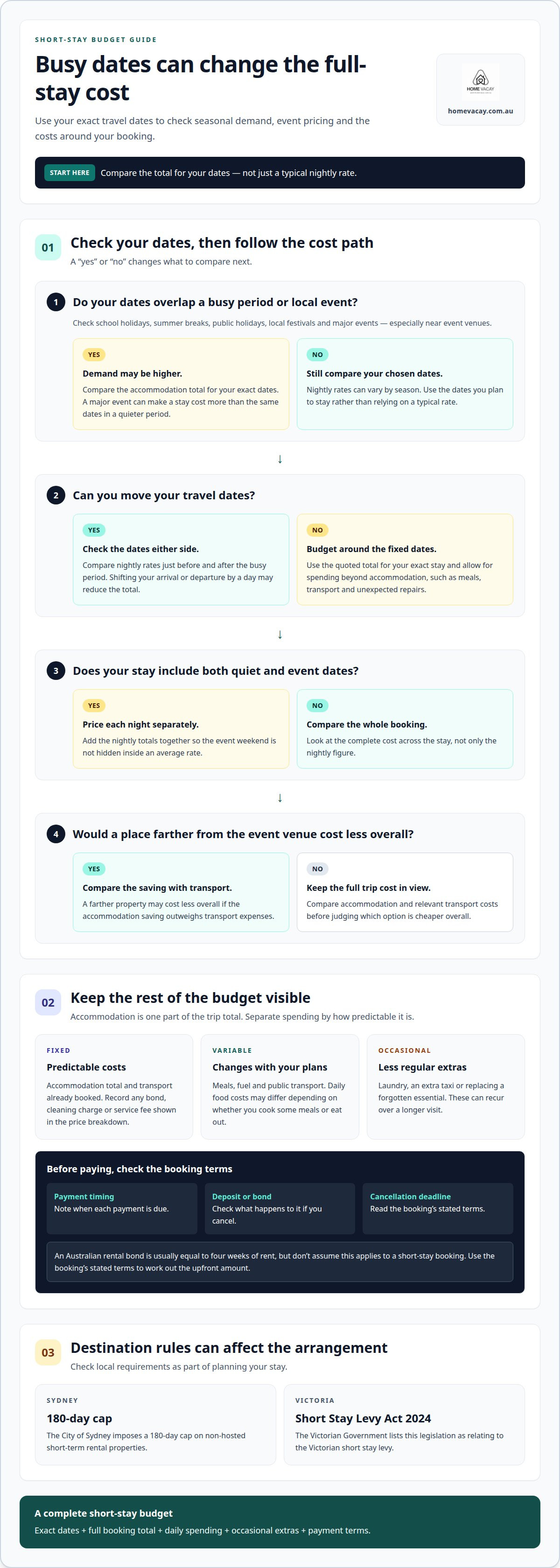
Start by matching your travel dates to the destination’s busy periods. School holidays, summer breaks and major events can increase accommodation demand, particularly near event venues. A stay during a major public event, for example, may cost more than the same dates in a quieter period. Compare the total for your exact dates, not just a typical nightly rate.
Build a simple seasonal calendar before choosing dates. Mark public holidays, school breaks and local festivals in your destination, then compare nightly rates across your preferred dates. If your plans are flexible, check dates just before and after a busy period. Shifting your arrival or departure by a day may reduce the total.
Seasonal pricing also affects the costs behind a rental. More guests can mean more cleaning, supplies and wear on furniture. Allow room in your overall trip budget for meals, transport and unexpected repairs, rather than treating the accommodation rate as the full cost. If a stay spans both a quiet week and an event weekend, calculate each night separately and add the totals.
Before booking, read the cancellation deadline, deposit or bond terms, and payment schedule. Note when each payment is due and what happens to a deposit if you cancel. An Australian rental bond is usually equal to four weeks of rent, but don’t assume this applies to a short-stay booking. Use the booking’s stated terms to calculate how much you’ll need upfront.
To manage accommodation costs, compare flexible dates and, where practical, avoid peak event periods. Check whether a longer booking changes the overall rate, and compare the complete cost rather than the nightly figure alone. A property farther from an event may cost less overall if the savings outweigh transport expenses.
Include local rules in the planning process. The City of Sydney imposes a 180-day cap on non-hosted short-term rental properties. The Victorian Government lists the Short Stay Levy Act 2024 as legislation relating to the Victorian short stay levy. These examples show why destination-specific requirements can affect short-stay arrangements.
Repeat your seasonal comparison before paying if your dates change. A revised arrival date could bring a public holiday or event into the booking. Recheck the accommodation total, payment timing and cancellation terms together. This keeps your budget aligned with your actual dates instead of a rate from another season.
2. Fixed, variable and occasional expenses
Build your budget in three parts. Fixed expenses are predictable costs, such as the accommodation total and transport already booked. Variable expenses change with your plans, including meals, fuel or public transport. Occasional expenses are less regular, such as laundry, an extra taxi or replacing a forgotten essential. Keep each group separate so one busy day doesn’t obscure the overall picture.
Start with the booking total and payment dates. Record any bond, cleaning charge or service fee shown in the price breakdown, along with when each amount is payable. For an Airbnb booking, use the displayed total rather than multiplying only the nightly rate. Then estimate daily spending on food and transport. A family cooking some meals, for example, may budget differently from a guest eating out each day.
What extra fees and taxes apply to short-term accommodation in Australia? Guest charges depend on the booking and location, so review the itemised total for cleaning, service charges and any levy before paying. Owners should consider how rental income may affect their tax position, as tax obligations can depend on individual circumstances. This tax is separate from a guest’s booking costs.
Keep guest spending separate from owner operating costs. Property management expenses, repairs and strata charges can affect an owner’s revenue planning, but they aren’t automatically separate charges for a guest. Some Australian councils charge higher rates for short-term rentals than for standard residential properties. Those council costs relate to the property, not necessarily the booking total.
Set aside a small buffer in your budget for occasional needs. The right amount depends on your circumstances, travel plans and what the accommodation provides. This can be especially useful on a longer visit, when laundry or local transport costs may recur over several days. A simple spreadsheet or notes app can track planned and actual spending without mixing guest costs with property expenses.
3. Short-term stay duration
Short-term rentals in Australia usually cover stays from a few days to several weeks. Furnished accommodation can suit a one-night stop, a work trip or a longer family visit. Learning how to budget for a short term stay starts with setting arrival and departure dates, then counting every booked night. This gives you a clear basis for comparing options.
Hotel, serviced apartment, hostel and holiday rental prices depend on location, dates and what each stay includes. Compare the total charge for the same dates and guest numbers, including listed fees. A hostel room and a self-contained apartment serve different needs, so compare like with like before deciding.
To estimate the total for your destination and stay, multiply the nightly rate by the number of nights, then add listed charges and expected daily spending. A work trip may involve regular travel to a workplace, while a family visit may need a larger grocery allowance. A practical way to understand how to budget for a short term stay is to compare the complete cost across your intended dates.
Duration also changes which expenses matter most. On a brief visit, transport between your accommodation and planned activities can take up a significant share of the budget. During a longer stay, groceries, laundry and repeated local journeys may add up. Review the full-stay total and payment schedule, then choose an option that suits your plans and budget.
Consider booking terms before paying. Short-term rental requirements differ across Australian states and local councils, and strata bylaws may affect stays in some buildings. Read the cancellation terms, payment timing and any bond conditions. Keep the booking details together so you can refer to the agreed dates and terms if your plans change.
4. What is the average nightly and weekly cost of short-term accommodation in Australian cities?
There isn’t one useful average for every Australian city and short-term stay. A nightly rate varies with location, travel dates, accommodation type, guest numbers and included features. A compact room in a city centre and a family-sized apartment in another location aren’t like-for-like comparisons. Treat any average as a starting point, not a quote for your dates.
Build a fair comparison by using the same dates, guest numbers and accommodation type for each option. Record the displayed nightly rate, then note cleaning charges, service fees and other listed costs separately. This shows whether a lower headline rate also means a lower total. Keep the comparison focused on the same booking conditions.
To estimate a weekly figure, multiply the nightly rate by the number of booked nights in your week-long trip. Add fixed booking charges once, rather than repeating them for every night. Then include transport and meals to estimate the broader travel budget. For a longer visit, compare the full-stay total as well as the weekly equivalent.
Destination and timing shape the result. A stay near central Melbourne may suit a business traveller attending meetings, while a family exploring the national capital may value more space. For either example, compare similar locations and property sizes across the same dates. Event periods and school holidays can also affect demand, so check the actual travel window rather than relying on a city-wide figure.
Use a simple table with columns for city, dates, nightly rate, extra charges and total stay cost. Add a note about key inclusions, such as kitchen facilities or parking, so the comparison reflects what matters to your trip. When planning how to budget for a short term stay, explore short-stay accommodation options with Home Vacay as part of your city comparison.
There is no consistent price ranking among hotels, serviced apartments, hostels and holiday rentals. Rates depend on location, dates, guest numbers and included features. Compare the same booking conditions and include cleaning charges, service fees and other costs to judge the total.
A single average is not useful across Australian cities because nightly rates vary by location, dates, accommodation type, guest numbers and inclusions. Estimate a weekly cost by multiplying the nightly rate by the booked nights, then add fixed charges once.
Home Vacay
Home Vacay offers short-term accommodation options for business trips and family stays. For a Canberra visit, compare Capitol Apartments in Canberra City, Peaceful Coombs Apartment for Families and Luxury Apartment in Braddon Precinct against your dates, group needs and overall budget.
Choosing where to stay is one part of budgeting. Location and apartment type can help you weigh accommodation against transport, meals and other plans. Consider which option best suits the purpose of your visit and the costs you’ve already listed.
For a Canberra short stay, explore the available apartment options and choose the one that suits your plans. Contact Home Vacay to discuss your stay.
Make your next stay easier to plan
Your budget is most useful when it supports the kind of trip you want, not just the cheapest available booking. Decide what matters most, such as a convenient location, room for the family or a comfortable base between work commitments. Use those priorities to guide your accommodation choice and the rest of your plans.
A clear spending limit can make decisions simpler. Keep some flexibility for changes, and choose an option that fits your travel needs and overall budget. Planning how to budget for a short-term stay then becomes part of preparing for the experience, rather than a source of stress.
For a Canberra stay, Home Vacay offers accommodation options for business and leisure travellers. Contact Home Vacay to plan your stay and take the next step towards a stay that suits your plans. Your trip can begin with a budget and a place that feels right.
Frequently Asked Questions
What costs should you include when budgeting for a short-term stay in Australia?
Include accommodation, transport, meals, groceries, laundry and activities in your trip budget. Separate costs paid before departure from spending during the stay, so you know how much cash you’ll need at each stage. For example, a family arriving late may need a meal before grocery shopping is practical. Also allow for travel between your accommodation and planned destinations.
How much should you budget for groceries, eating out, transport, and laundry during a short stay?
Base these estimates on your itinerary, household size and preferred routine. List the meals you expect to cook, when you plan to eat out and the journeys you’ll make each day. A business traveller eating near a work venue may spend differently from a family preparing breakfast in the apartment. Estimate laundry costs based on how often you expect to wash clothes.
How do season, weekends, events, and booking lead time affect accommodation prices in Australia?
Prices can rise when more travellers want the same dates, such as during school holidays, weekends or a major event. Booking lead time also affects your options: popular dates may have fewer places available closer to arrival. Compare the same accommodation type and dates at different points in your planning, then base your budget on the current total for your preferred stay.


