

An extra hour or two can make departure day feel far less rushed. In Australia, hotel check-out is commonly around 11 am, with late check-out often extending to 1 pm or 2 pm. To work out how to arrange a late check-out, ask when booking or early in your stay, and establish the new departure time and any fee before planning around it.
It’s a practical option if you have a later flight, a meeting or need extra time to pack. The longer you stay beyond the usual check-out time, the more the fee may increase. A very late departure could cost more than a brief extension.
This guide explains what late check-out means, when to ask and how to make a clear request. You’ll also learn what can affect approval and how accommodation providers may calculate fees, so you can plan your final day with fewer surprises.
Key Takeaways
- Room availability and the time needed to prepare it for the next guest can affect whether an extension is possible.
- Choose a preferred departure time and mention whether a shorter extension would also work.
- Ask how the surcharge is calculated, as it may depend on the room rate and how long you stay.
- If you need more time than a late departure allows, consider whether a different accommodation arrangement better suits your plans.
1. What is Late Check-Out in a Hotel?
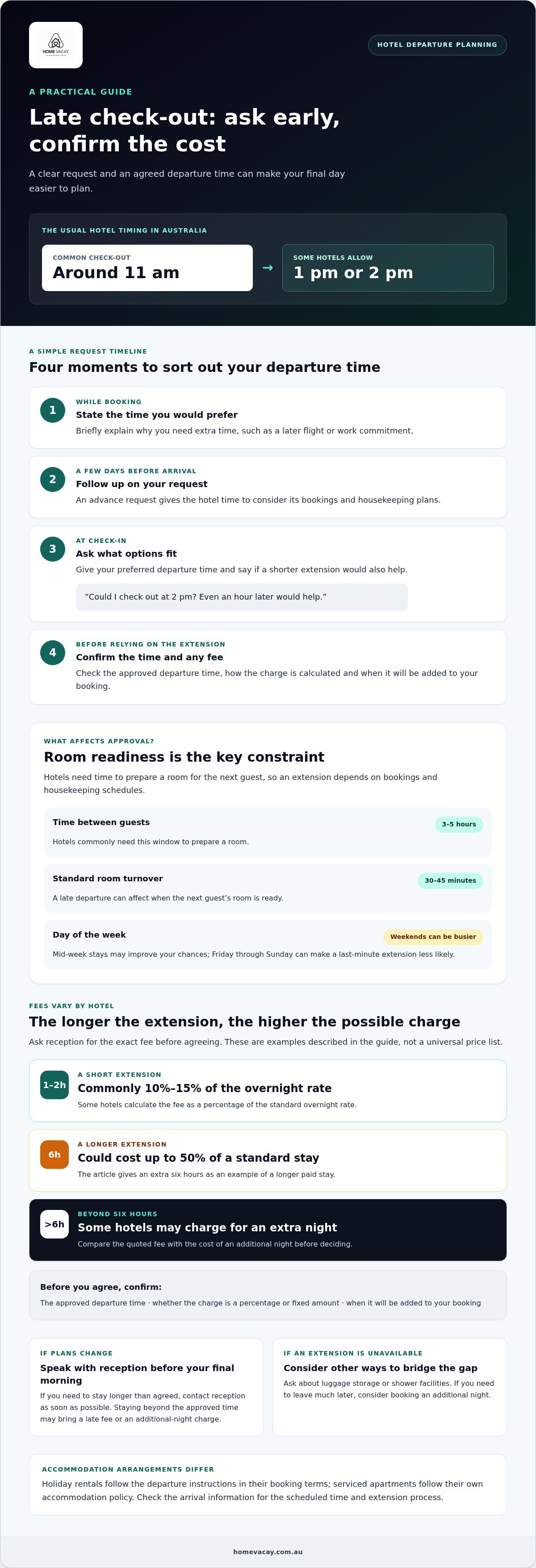
Late check-out lets you remain in your hotel room beyond its scheduled departure time. In Australia, hotel check-out is commonly around 11 am, while some hotels allow departure at 1 pm or 2 pm. The extra time can help if your flight leaves later or you need space to pack at an easier pace.
Availability depends on the hotel’s bookings and housekeeping schedule. Hotels commonly need a three-to-five-hour window between guests to prepare rooms. A standard room turnover can take 30 to 45 minutes, so a late departure can affect when the next guest’s room is ready.
Weekday stays may improve your chances, as hotels can be less busy mid-week than at weekends. Friday through Sunday is often busier, making a last-minute extension less likely. If your dates are flexible, consider a mid-week departure and ask for extra time before you arrive.
Early check-in follows a similar room-readiness process. Hotel check-in is typically around 3 pm, within a usual range of 2 pm to 4 pm. Ask about arriving early when you book, especially if you need to settle in before a meeting or family activity.
Holiday rentals and serviced apartments may have different check-out arrangements from hotels. A holiday rental’s departure instructions are set by its booking terms, while a serviced apartment follows its own accommodation policy. Read the arrival information to find the scheduled departure time and any process for requesting an extension.
If a hotel can’t offer late check-out, ask about luggage storage or shower facilities. These options may help bridge the gap between leaving your room and catching a later flight. If you need to leave much later, consider booking an additional night.
2. How and when to request a late check-out
If you’re deciding how to arrange a late check-out, make the request while booking your hotel. If you’ve already booked, follow up a few days before arrival. Briefly explain why you need the extra time, such as a late flight or work commitment.
Raise the request early in your stay, too. Asking at check-in gives staff time to consider the booking schedule and housekeeping plans. If your plans change later, speak with reception before your final morning rather than waiting until you’re ready to leave.
A clear, flexible request can open up more options. For example, say, “Could I check out at 2 pm? Even an hour later would help.” State your preferred time, but let staff know if a shorter extension would also work.
- Request your preferred time while booking.
- Follow up a few days before arrival.
- Confirm the agreed departure time and any conditions with reception.
Knowing how to arrange a late check-out also means choosing the right time to ask. Friday through Sunday can be busier, so request an extension in advance instead of relying on a last-minute conversation. A concierge or travel agent may also be able to help negotiate, particularly if they have an established relationship with the hotel.
Keep the conversation simple during hotel check-in: state your preferred time, explain your plans briefly and ask what options fit. If your travel includes Canberra, you can explore places to stay as part of planning your trip.
3. Late check-out fees and surcharges
Late check-out fees vary by hotel and the extra time you need. Some hotels calculate the charge as a percentage of the standard overnight rate. For a departure within an hour or two of the usual time, a common charge is 10% to 15% of that rate.
A longer extension can cost more. A hotel might charge up to 50% of a standard stay for an extra six hours. If you need to remain more than six hours beyond the usual check-out time, some hotels charge for an extra night instead.
Ask reception to explain the fee before you agree. Confirm the approved departure time, whether the charge is a percentage or a fixed amount, and when it will be added to your booking. A longer extension may cost more. Compare the quoted fee with the cost of an additional night before deciding.
For example, if your approved check-out is 11 am and you need the room until 1 pm, ask whether the hotel treats that as a short extension or a longer paid stay. If your plans run into the afternoon, ask how the charge changes with the extra hours. This gives you a clearer basis for choosing the option that suits your schedule.
If you stay beyond the approved check-out time, the hotel may apply a late fee or charge for an additional night. The amount depends on how long you keep the room and the hotel’s fee structure. Contact reception as soon as your plans change rather than leaving later without an agreement.
For an upcoming Canberra trip, plan your accommodation alongside your departure schedule, so your last day fits your travel plans.
Home Vacay: Capitol Apartments in Canberra City
Home Vacay offers Capitol Apartments for short stays. If a later departure matters to your travel plans, consider the check-out arrangements as you choose your accommodation and schedule.
For a family visit, consider Peaceful Apartment for Families. The Luxury Apartment in the Precinct is another fantastic option for your stay. Choose accommodation that suits your trip, then plan your final day around its check-out arrangements.
For details about Home Vacay’s stays across Australia, visit homevacay.com.au to learn how to arrange a late check-out for your next booking.
Make your departure day part of the plan
A relaxed final day starts with accommodation that suits the whole trip, not just the night you arrive. Before booking, consider what you’ll need after leaving, such as somewhere to keep your bags or time to reach the airport. This broader plan can help you decide whether extra time in the room is essential.
If you’re still working out how to arrange a late check-out, treat it as one part of your travel planning. Set your preferred departure time, consider an alternative in case a room extension isn’t possible, and keep your travel arrangements flexible where you can.
For a Canberra stay, Home Vacay offers Capitol Apartments in Canberra City, Peaceful Coombs Apartment for Families and Luxury Apartment in Braddon Precinct. Choose the option that fits your visit, then plan your departure around its check-out arrangements.
Contact Home Vacay with your questions and take the next step towards a well-planned Canberra stay.


