

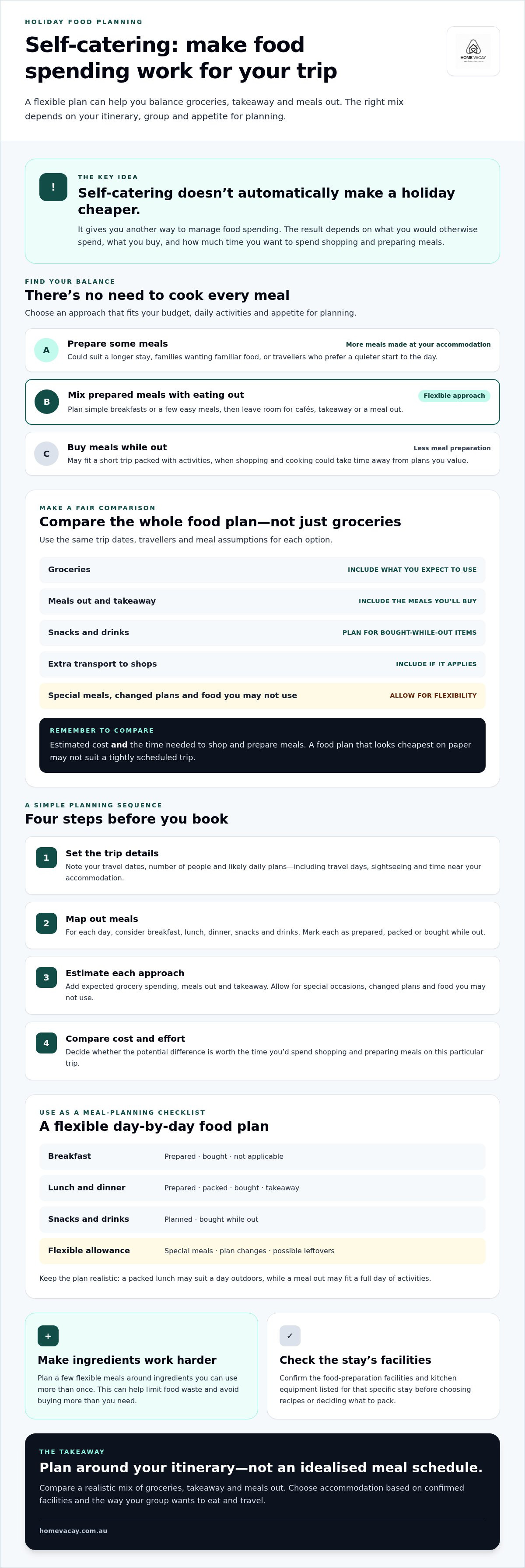
Self-catering doesn’t automatically make a holiday cheaper. The real value comes from planning meals around your itinerary, rather than trying to cook every day. Saving money on holiday with self-catering starts with a realistic idea of when you’ll be out, when you’ll want an easy meal in and what your group will actually eat.
Holiday food spending can be hard to predict, and meal planning may sound like one more task to fit in. A little preparation can make it simpler. Estimate your food budget before booking, then compare a realistic mix of home-prepared meals, takeaway and eating out. You can make a flexible plan without mapping out every breakfast, lunch and dinner.
This guide explains how to compare accommodation options, plan practical meals and manage grocery spending without buying more than you need. You’ll also find ways to decide whether self-catering suits your group and travel plans. If you’re considering a self-contained apartment, check the listing to confirm which food-preparation facilities and kitchen equipment are available for your stay.
Key Takeaways
- Estimate food spending using your trip dates, group size and likely plans, then compare a realistic mix of groceries, takeaway and meals out.
- Saving money on holiday with self-catering doesn’t mean cooking every meal. Choose an approach that fits your budget, daily activities and appetite for planning.
- Check the stay’s food-preparation facilities before choosing recipes or deciding what to pack.
- Plan a few flexible meals around ingredients you can use more than once to help limit food waste.
- Compare accommodation options by how well their confirmed facilities and booking details suit the way you want to eat and travel.
Why self-catering can help you save money on holiday
Self-catering means preparing some or all of your meals at your accommodation, where its facilities permit. It gives you another way to manage food spending: instead of buying every meal while you’re out, you can choose which meals to prepare and which to enjoy elsewhere.
Self-catering gives you the option to balance grocery spending with meals out, but it doesn’t guarantee a cheaper holiday. The result depends on what you’d otherwise spend on food, what groceries you buy and how much time you want to spend preparing meals.
Accommodation is one part of a trip budget. Food is another, alongside transport, activities and other expenses. Self-catering can change the food portion, but it won’t automatically reduce other costs. The types of lodging available can differ in how they support meal preparation, so check a property’s listing rather than assuming facilities or equipment are included.
Which holiday costs can self-catering change?
Focus on the meals you’re likely to replace. A planned grocery shop for breakfast and a simple dinner is different from frequent top-up shops, snacks on the go and takeaway bought when plans change. Track these separately in your estimate. Potential savings vary with group size, trip length and usual meal habits. A group may share ingredients across meals, while a short stay may leave little time to use what you buy.
When does preparing meals make sense?
Preparing a few meals can be easier to fit into a longer stay, especially for families who want familiar food or a quieter start to the day. It may also suit travellers who want particular ingredients on hand. On a short trip packed with activities, shopping and cooking could take time away from the plans you value. You don’t need to prepare every meal to make self-catering worthwhile.
The best balance is personal. You might plan simple breakfasts and one or two easy meals, then leave space for cafés, takeaway or a meal out. That keeps food spending more considered without turning your holiday into a strict meal schedule. If you’re considering a self-contained short-stay apartment, confirm the food-preparation facilities and kitchen equipment listed for that specific stay before deciding what to cook.
Saving money on holiday with self-catering: how to assess the costs
A useful comparison starts with your actual trip, not a standard daily food budget. Use the same dates, travellers and meal assumptions for each option. Keeping the trip length and meal plans consistent makes it easier to see what changing how you eat could mean for your budget.
Try this simple process before booking:
- Set the trip details. Note your travel dates, number of people and likely daily plans. Include days spent travelling, sightseeing or staying close to your accommodation.
- Map out meals. For each day, consider breakfast, lunch, dinner, snacks and drinks. Mark each as prepared, packed or bought while out. Keep the plan realistic. A packed lunch may suit a day outdoors, while a meal out may fit a full day of activities.
- Estimate each approach. Add your expected grocery spending, meals out and takeaway. Allow for a special occasion, changed plans and food you may not use. Don’t count a full grocery shop as savings if some of it is likely to go to waste.
- Compare the totals and effort. Consider the time needed to shop and prepare meals as well as the estimated costs. Decide whether the potential difference is worth that time for this particular trip.
Build a simple holiday food budget
Use a blank list to keep your estimate grounded in your group’s needs. For each day, note how many people are eating and assign a plan to every meal. A simple template could be:
- Breakfast: prepared / bought / not applicable
- Lunch and dinner: prepared / packed / bought / takeaway
- Snacks and drinks: planned / bought while out
- Flexible allowance: special meals, plan changes and possible leftovers
Add your own estimates beside each category. This makes gaps easier to spot, such as snacks missing from the grocery plan or lunches likely to be bought during busy days.
Compare the full cost, not just the grocery shop
Groceries are only one part of the calculation. Include meals out, takeaway and any extra transport needed to reach shops. Consider how much holiday time you’re comfortable spending on shopping and meal preparation, too. The cheapest food plan on paper may not suit a tightly scheduled trip.
Keep accommodation costs and booking conditions in a separate comparison. Check the selected listing for relevant food-preparation facilities and equipment, and review the booking details directly. If a self-contained stay suits your plans, you can explore Home Vacay accommodation and confirm the property details before deciding.
Self-catering, eating out or a mix: which approach suits your trip?
There’s no single meal plan that suits every holiday. A day spent exploring may call for lunch bought while you’re out, while a quieter morning might make a simple breakfast at your accommodation an easy choice. The best fit can change by meal, day and traveller. For saving money on holiday with self-catering, balance food spending against the time and flexibility you want during your trip.
| Approach | Budget control | Convenience | Planning effort | May suit |
|---|---|---|---|---|
| Self-catering | More control over planned food purchases | Meals are available around your schedule | Shopping and preparation are needed | Quieter days or stays with suitable confirmed facilities |
| Eating out | Less control over meal choices and spending | No meal preparation or grocery shopping | Little food planning needed | Packed itineraries and meals that are part of the experience |
| A flexible mix | Choose which meals to plan ahead | Balances prepared meals with convenience | Some planning, with room to change plans | Trips with varied activities and preferences |
When is self-catering the more practical choice?
Preparing a few meals may work well when your accommodation has suitable food-preparation facilities. Confirm the listing details before planning around them. Simple breakfasts, a packed lunch or an easy dinner can fit a relaxed day without requiring elaborate cooking. Consider your arrival time, how easily you can get groceries and whether your activities leave room to shop or prepare food.
For example, if you arrive late or have an early start, a planned meal or snack may be more useful than a full shop and cooking session. Keep the plan light. A couple of convenient meals can offer flexibility without taking over the trip.
When is eating out worth including?
Eating out can be part of the holiday, not just an alternative to cooking. Leave room for a food experience, a meal with family or a special occasion. It can also make sense on a day packed with activities, when shopping and preparation would interrupt plans or leave everyone short on time.
Choose meal by meal. You might prepare breakfast, buy lunch while exploring and decide on dinner as the day unfolds. This flexible approach gives you options without assuming that cooking always costs less or that eating out is always easier. The right balance depends on your itinerary, preferences and how much time you want to spend on food.
How to plan simple self-catering meals without holiday food waste
A relaxed meal plan starts with the length of your stay and the facilities confirmed in your accommodation listing. Don’t plan recipes around equipment you haven’t checked. A few flexible meals are often easier to manage than a full schedule, especially if your plans change or you decide to eat out.
Use this simple sequence to shape your shop:
- Check your stay. Confirm which food-preparation facilities and kitchen equipment are available for your booking.
- Match meals to your itinerary. Pick quick options for arrival day and evenings after busy activities. Keep some meals open for eating out or changing plans.
- Choose ingredients that work twice. Build more than one meal around versatile items, such as using the same vegetables in a salad and a simple cooked meal.
- Shop lightly at first. Buy enough for the first planned meals, then top up once you know your appetite, schedule and what’s available nearby.
This measured approach makes saving money on holiday with self-catering more practical. It helps avoid buying a full week of groceries before you know how the trip will unfold.
Choose meals that suit your itinerary
Keep arrival-day food simple, particularly if you expect to get in late or need time to settle. After a full day out, an easy dinner can be more appealing than a recipe with several steps. A packed lunch may suit an outing, but only if you can keep it stored safely until you eat. Otherwise, plan to buy lunch while you’re out. Leave room for spontaneous plans.
Shop and store food with less waste
Before shopping, check the listing again. Don’t assume particular equipment or storage is supplied unless it’s confirmed. Make a short list, check quantities against the number of people eating and avoid large packs that are unlikely to be used during a brief stay. Choose ingredients that can feature in more than one meal, then plan when you’ll use perishables.
Store food safely and follow current advice from Food Standards Australia New Zealand (FSANZ), particularly for foods that need temperature control. Use leftovers promptly and only if they’ve been handled and stored safely. Before departure, plan to use suitable remaining ingredients rather than leaving them behind. If you’re considering a self-contained stay for a trip with simple meal plans, explore Home Vacay accommodation and check the listing details before booking.
Choose a self-contained stay that supports your holiday budget
A self-contained apartment can give you the option to prepare some meals, but it doesn’t guarantee a lower overall holiday spend. The best fit depends on your trip plans, meal preferences and the facilities confirmed for the property. Treat saving money on holiday with self-catering as a planning choice, not an automatic result.
What to check in an accommodation listing
Read the listing closely before planning meals or comparing stays. Look for specific details rather than assuming a kitchen or particular equipment is included. If something you need isn’t clear, ask the host or booking provider before booking.
- Food preparation: Confirm which facilities and kitchen equipment are listed, and whether they suit the meals you have in mind.
- Group and dates: Check that the stated guest capacity and available stay dates match your plans.
- Booking conditions: Review the conditions that apply to the selected stay, including any details that could affect your plans.
- Unanswered questions: Ask about any relevant facility or equipment before you rely on it for meal preparation.
This check can help you avoid planning meals around something that isn’t available. It also gives you a clearer basis for comparing stays.
Make the final choice fit your style of travel
Compare accommodation options using the same trip dates, group size and requirements. Then consider how you actually want to spend your time. If you enjoy preparing a few familiar meals, suitable confirmed facilities may offer welcome flexibility. If your days are full or you’d rather eat out, extensive meal planning may not add much value.
Keep the food plan flexible. Choose a stay and meal approach that leave room for rest, activities and a change of plans, rather than committing to cooking every day. The right choice should support the holiday you want, as well as your budget.
Home Vacay offers self-contained short-stay apartments for leisure and business travellers, with direct booking available through its website. Browse Home Vacay short-stay apartments if this type of stay could suit your plans. Check the listing details for the selected apartment before booking, particularly the food-preparation facilities and equipment.
Make your next holiday budget work for you
Saving money on holiday with self-catering is about choosing meals that suit your plans, not cooking every day. Compare food options using your own itinerary, then keep your meal plan flexible. Check the accommodation listing for confirmed food-preparation facilities before you shop or settle on recipes.
A self-contained apartment may offer useful meal flexibility for leisure and business trips, but the right choice depends on how you want to spend your time. Home Vacay offers short-term apartment stays and flexible check-in and check-out options. Confirm the details for your selected stay before booking.
Explore short-stay apartments with Home Vacay and check the listing details against your plans. With a little preparation and room to change course, you can make space for both a considered budget and a holiday that feels like your own.
Frequently Asked Questions
Is self-catering always cheaper than eating out on holiday?
No, self-catering isn’t always cheaper than eating out. The outcome depends on your group size, stay length, usual meal habits and whether the accommodation has suitable facilities. Compare a realistic grocery plan with the meals you’d otherwise buy, using your own itinerary. Include shopping time, any extra transport to reach shops and food you may not use. Treat any estimated saving as personal, not guaranteed.
How do I calculate whether self-catering will save money on holiday?
Start with the number of travellers and days away, then list which breakfasts, lunches, dinners, snacks and drinks you’d prepare, buy or eat out. Estimate each category using your own likely choices. Add grocery spending and any extra transport for shopping. Compare the total with what you’d expect to spend on the same trip without preparing meals. Leave room for changes, and avoid relying on generic price estimates.
What should I check before booking self-catering accommodation?
Read the specific accommodation listing and confirm which food-preparation facilities and equipment are included. Don’t assume every property has the same setup. Check that the stated guest capacity and stay dates suit your group, then review the relevant booking conditions. If anything about the facilities or equipment is unclear, ask the host or booking provider before booking. Plan meals around what’s confirmed, including any facilities needed to prepare or store food safely.
Can I save money with self-catering on a short holiday?
You may, but a short stay doesn’t automatically make self-catering better value. Consider how many meals you’d realistically prepare, how much time shopping and cooking would take, and whether your itinerary keeps you out for most of the day. A simple breakfast or packed lunch may be practical, while other meals stay flexible. Compare your expected spending for each approach and choose what suits your plans, rather than assuming cooking is always cheaper.
How can I self-cater on holiday without wasting food?
Plan a few simple meals around your stay length and choose ingredients you can use in more than one dish. Start with a small shop, then top up if needed. Check the listing for confirmed preparation and storage facilities before buying food that depends on them. Store food safely and follow current Australian food-safety advice from Food Standards Australia New Zealand. Before leaving, use suitable leftovers or dispose of them safely.
Is a self-contained apartment a good choice for a family holiday?
It can suit a family that values space and the option to prepare some meals, but the right fit depends on your group and plans. Check the stated guest capacity, confirmed facilities, available stay dates and booking details before deciding. You don’t need to cook every meal to make use of meal flexibility. Compare the stay with your family’s routine and itinerary, and consider whether preparing a few familiar meals would make the trip easier.
Can I mix self-catering with eating out on holiday?
Yes, you can prepare some meals and eat out for others. A mixed plan can fit around sightseeing, rest and special occasions. Choose a few simple meals to prepare, then leave other meals open for eating out or changing plans. Estimate groceries, takeaway and meals out separately using your own likely choices. This helps you compare options without treating the decision as all or nothing. The right balance depends on your itinerary, group and priorities.


